
The Body Clock
Why does light affect melatonin?
Light is the single strongest signal your body uses to time melatonin release. Specialised cells in the eye detect brightness, quite separately from normal vision, and pass that information to the brain's master clock, which controls the pineal gland. Brightness, timing and duration of light exposure all matter, not just its colour.
6 min read · Published 24 September 2026
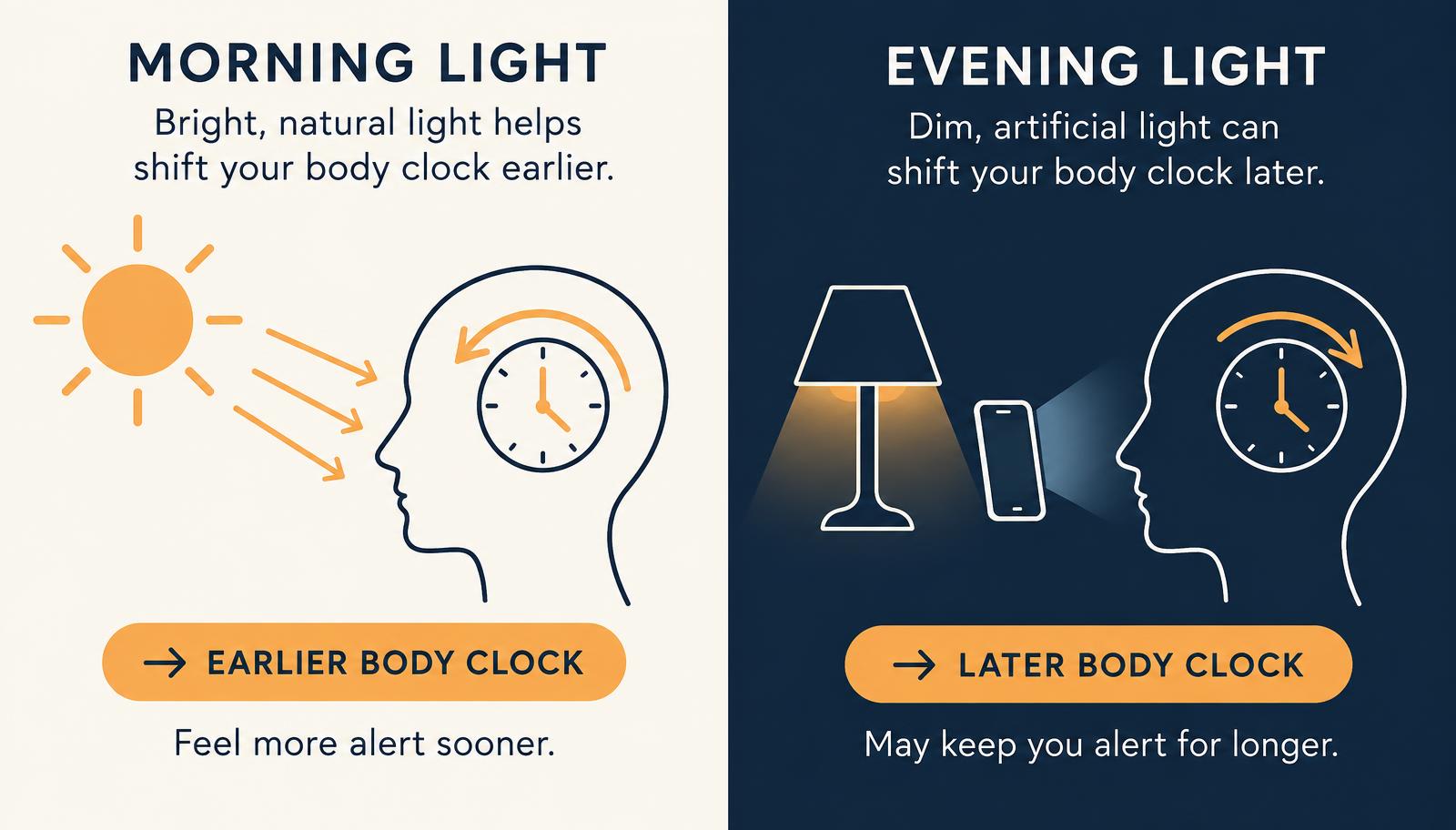
In short
- Light is the dominant cue that tells the body whether it is day or night.
- Specialised retinal cells, not the ones used for seeing detail, detect ambient brightness.
- This information reaches the suprachiasmatic nucleus, the brain's master clock, before affecting the pineal gland.
- Brighter light has a stronger suppressing effect on melatonin than dim light.
- Timing and duration of exposure matter as much as the type or colour of the light.
- Individual sensitivity to light varies from person to person.
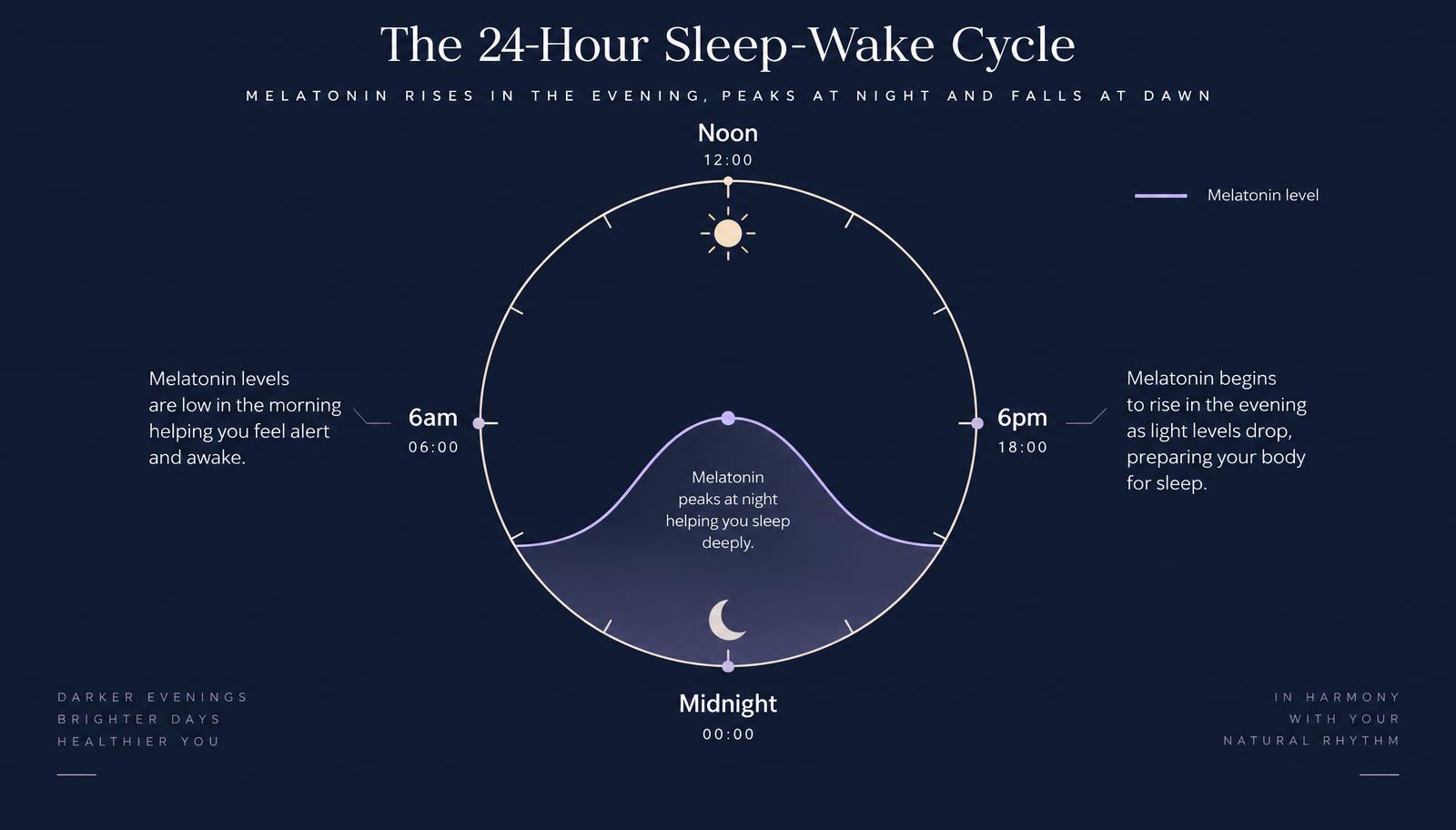
Melatonin is often called the hormone of darkness, and that description points to the real reason it matters so much: light, more than anything else, controls when it is released. Understanding why light has this power helps explain a great deal about sleep, from jet lag to why late nights on a screen can leave you feeling wired.
The short version is that the body needs a reliable way to know what time of day it is, and daylight is the most consistent signal available in nature. Our guide What is melatonin? introduces the hormone itself; this article focuses on why light is so central to controlling it.
Light travels through the eye, not just to the retina for vision
When light enters the eye, most of it is used by the retina to build the images we consciously see, through cells called rods and cones. But a separate population of cells in the retina, known as intrinsically photosensitive retinal ganglion cells, has a different job. Rather than contributing to sharp vision, these cells simply measure how bright the overall environment is.
This distinction matters because it means the timing system does not rely on you consciously noticing brightness. It responds to the general light environment even when you are not paying attention to it, which is one reason a bright room late at night can affect your body clock even if you do not feel you are staring into strong light.
The pathway to the brain's master clock
Signals from these light-detecting cells travel along a dedicated pathway to a small structure deep in the brain called the suprachiasmatic nucleus. This structure acts as the body's master clock, coordinating the timing of many internal processes, including the release of melatonin from the pineal gland.
When the suprachiasmatic nucleus detects daylight, it suppresses signals that would otherwise allow the pineal gland to produce melatonin. When darkness falls and that light input fades, the brake is lifted and melatonin can rise. This pathway is described in more mechanical detail in How does melatonin work?, which covers the hormone side of the process.
Brightness matters more than most people expect
Not all light has an equal effect. Outdoor daylight, even on an overcast day, is typically far brighter than indoor lighting, sometimes by a factor of ten or more. Because of this, indoor light is generally a much weaker signal to the body clock than daylight, even though a room can feel perfectly bright to the naked eye.
- Bright outdoor daylight has the strongest effect on suppressing melatonin.
- Ordinary indoor lighting has a much weaker effect, though it is not negligible.
- Dim, warm lighting in the evening has the least suppressing effect.
- The eyes adapt to brightness levels, which can make it hard to judge intensity by feel alone.
Timing and duration matter as much as colour
There has been a great deal of attention on the colour of light, particularly blue-toned light from screens. Colour does play a role, since the light-detecting cells in the eye are especially responsive to certain wavelengths. However, timing and duration of exposure are just as important, and are often overlooked.
Bright light early in the day, when the body clock is expecting it, tends to reinforce a stable rhythm, a topic covered in Morning light and your body clock. The same brightness late at night, when the body clock is expecting darkness, can delay the rise of melatonin and shift the whole system later. Duration matters too: a brief glance at a bright screen has a different effect from hours spent under bright light close to bedtime, which is explored in Evening light, screens, and sleep.
Everyday sources of light exposure worth noticing
Because the body clock responds to overall light exposure rather than to any single source, it is worth thinking beyond phones and laptops when considering evening brightness. A well-lit kitchen while preparing a late meal, a bathroom with strong overhead lighting used just before bed, or a landing light left on through the night can all contribute more than people expect.
- Overhead ceiling lights, which are often far brighter than lamps positioned lower in a room.
- Bathroom and kitchen lighting used in the hour or two before bed.
- Streetlights or security lighting shining through thin curtains or blinds.
- Television screens, which can be as disruptive as phones when watched at close range in a dark room.
None of this means every light source needs to be eliminated. It simply means that someone trying to understand why their evenings feel unusually alert might look at the whole room, not only their phone.
Individual differences in light sensitivity
People vary in how strongly their melatonin responds to a given amount of light. Some individuals are highly sensitive to evening light and find their sleep timing shifts easily, while others are more resistant. Age is one factor, since the amount of light reaching the retina can change over the lifespan, and general chronotype, or natural tendency towards earlier or later sleep timing, plays a part too.
Why this matters for everyday life
Understanding that light, not the clock on the wall, is the main driver of melatonin timing helps explain many everyday experiences: why a late night scrolling in bed can leave you feeling alert rather than sleepy, why dark winter mornings can make it harder to feel properly awake, and why travelling across time zones disrupts sleep so thoroughly. These themes are explored further in What happens when your sleep schedule shifts? and How to build a more consistent sleep schedule.
Light exposure across a typical day
Thinking about light exposure across a whole day, rather than only the evening, gives a fuller picture of how the body clock receives its signals. Bright morning light helps anchor the rhythm and reinforce daytime alertness. Consistent, moderate daylight through the middle of the day maintains that alignment. It is largely the light received in the last couple of hours before intended sleep that carries the greatest risk of delaying melatonin, simply because that is when the body clock is expecting darkness to begin.
Viewed this way, managing light exposure is less about avoiding light altogether and more about matching light and darkness to when the body clock expects each of them.
A worked example: two bedrooms compared
Imagine two people going to bed at the same time, in the same town, on the same night. One sleeps in a room with blackout curtains and no electronic devices left glowing, while the other has thin curtains facing a streetlight and a charging phone that lights up occasionally with notifications. Even though both intend to sleep at the same hour, the second person's ongoing low-level light exposure through the night could plausibly interfere with the depth and consistency of their melatonin signal, even if it does not fully wake them.
This example illustrates why bedroom conditions matter as much as evening routine. A well-managed pre-bed routine can be partly undone by a bedroom that continues to let light in throughout the night, a topic explored further in Bedroom light, noise and temperature.
How the changing seasons affect this picture
Because the underlying light-detection system responds to real ambient brightness, the changing length and intensity of daylight across the year in the UK has a genuine effect on melatonin timing for many people. Long summer evenings, with strong daylight persisting well past a typical bedtime, can make it harder for melatonin to rise as early as it might in winter, while short, dim winter days can leave the system with far less morning light to work with.
Neither pattern is inherently a problem, but recognising that the seasons themselves shift the raw material the body clock has to work with can help explain why sleep sometimes feels easier in one season than another, even when routine and habits have not changed.
Common questions
Does artificial light affect melatonin as much as sunlight?
Generally no, because most indoor artificial light is far dimmer than daylight. However, bright artificial light in the evening, especially over a sustained period, can still measurably affect melatonin timing in many people.
Is blue light uniquely harmful to melatonin?
Blue-toned light does have a stronger effect on the light-detecting cells involved in this pathway, but brightness and timing of exposure are also major factors. Dim blue light in the evening may matter less than very bright light of any colour.
Can closing your eyes block the effect of light on melatonin?
Closed eyelids reduce but do not fully eliminate light reaching the retina, since some light still passes through. A fully dark room is a more reliable way to avoid unwanted light exposure during sleep.
Sources
Written by The Melatonin UK editorial team.
Published 24 September 2026. This article is general information about sleep and the body clock. It is not medical advice, and it does not replace a conversation with your GP or pharmacist.
Read next
The Body Clock
Morning light and your body clock
Morning daylight is one of the strongest signals for anchoring your body clock, helping set the timing for alertness during the day and melatonin release later that night. It is especially useful because it comes early in the light-sensitive window the body clock relies on. UK winters make this harder, but there are realistic ways to get more usable light.
6 min readRead the guide →
The Body Clock
Evening light, screens, and sleep
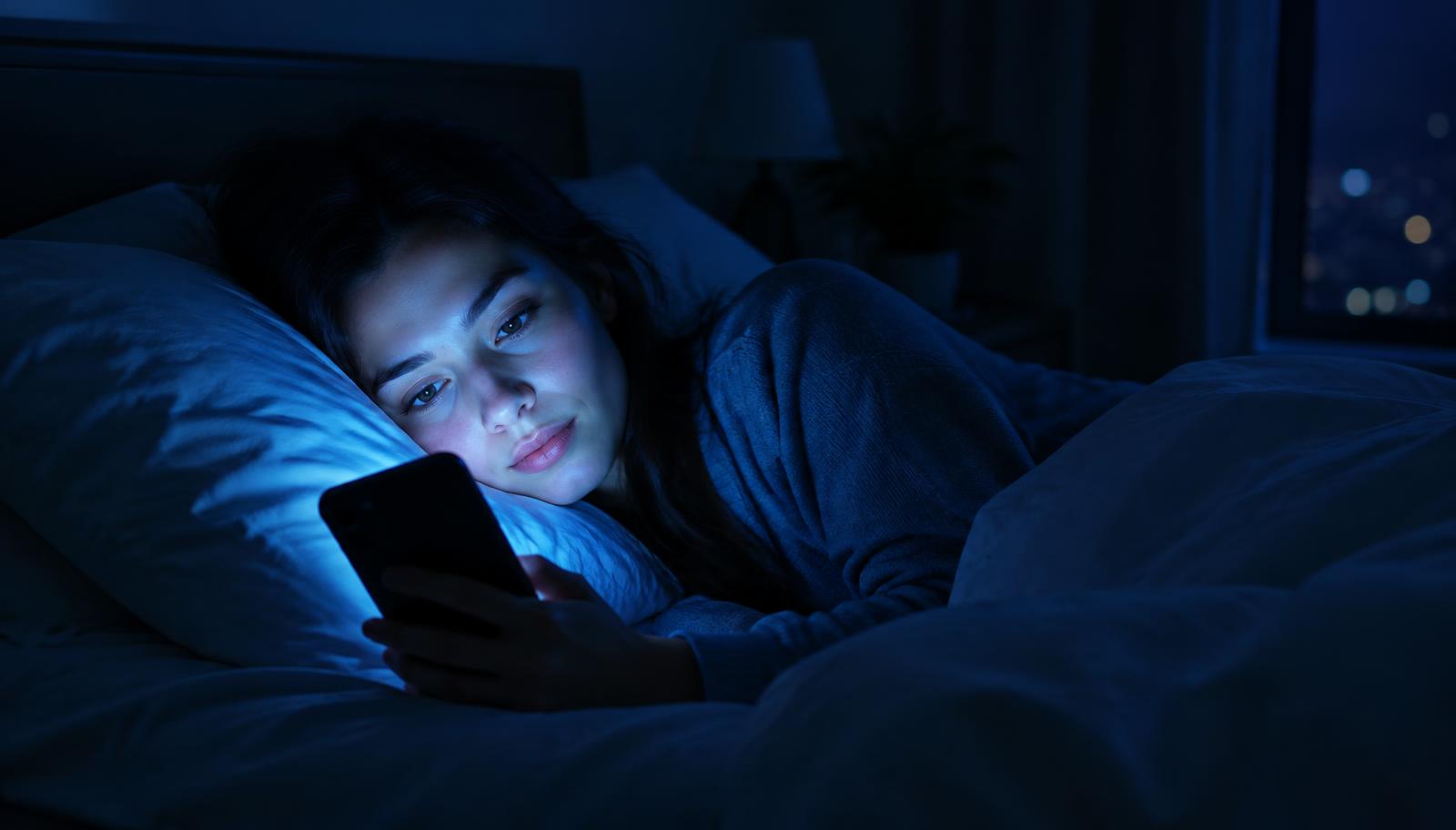
Evening light can delay the rise of melatonin and shift the body clock later, particularly when it is bright and prolonged. The evidence for screens specifically is more mixed than commonly assumed, and factors like stimulating content and general arousal often play as large a role as the light itself. Both light and what you are doing on the screen are worth considering.
6 min readRead the guide →
The Body Clock
What happens when your sleep schedule shifts?
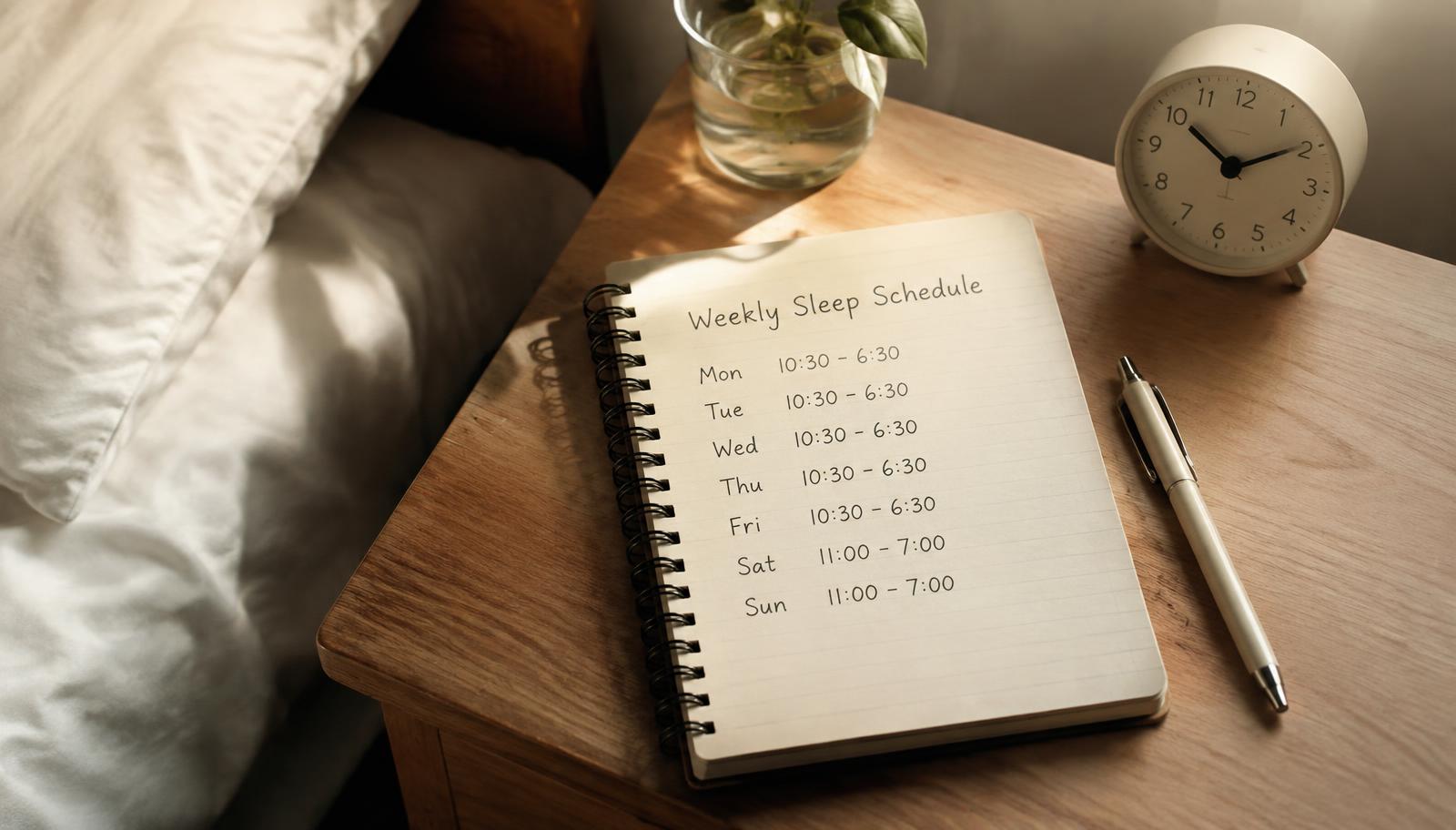
When sleep and wake times change from day to day, such as with weekend lie-ins or late shifts, the body clock and its light cues fall out of step with the actual clock time. This mismatch, sometimes called social jet lag, can leave you feeling tired and out of sorts even without crossing time zones. Because the body clock adjusts gradually, resetting it typically takes several days of consistent cues rather than happening overnight.
6 min readRead the guide →