
The Body Clock
What happens when your sleep schedule shifts?
When sleep and wake times change from day to day, such as with weekend lie-ins or late shifts, the body clock and its light cues fall out of step with the actual clock time. This mismatch, sometimes called social jet lag, can leave you feeling tired and out of sorts even without crossing time zones. Because the body clock adjusts gradually, resetting it typically takes several days of consistent cues rather than happening overnight.
6 min read · Published 24 September 2026
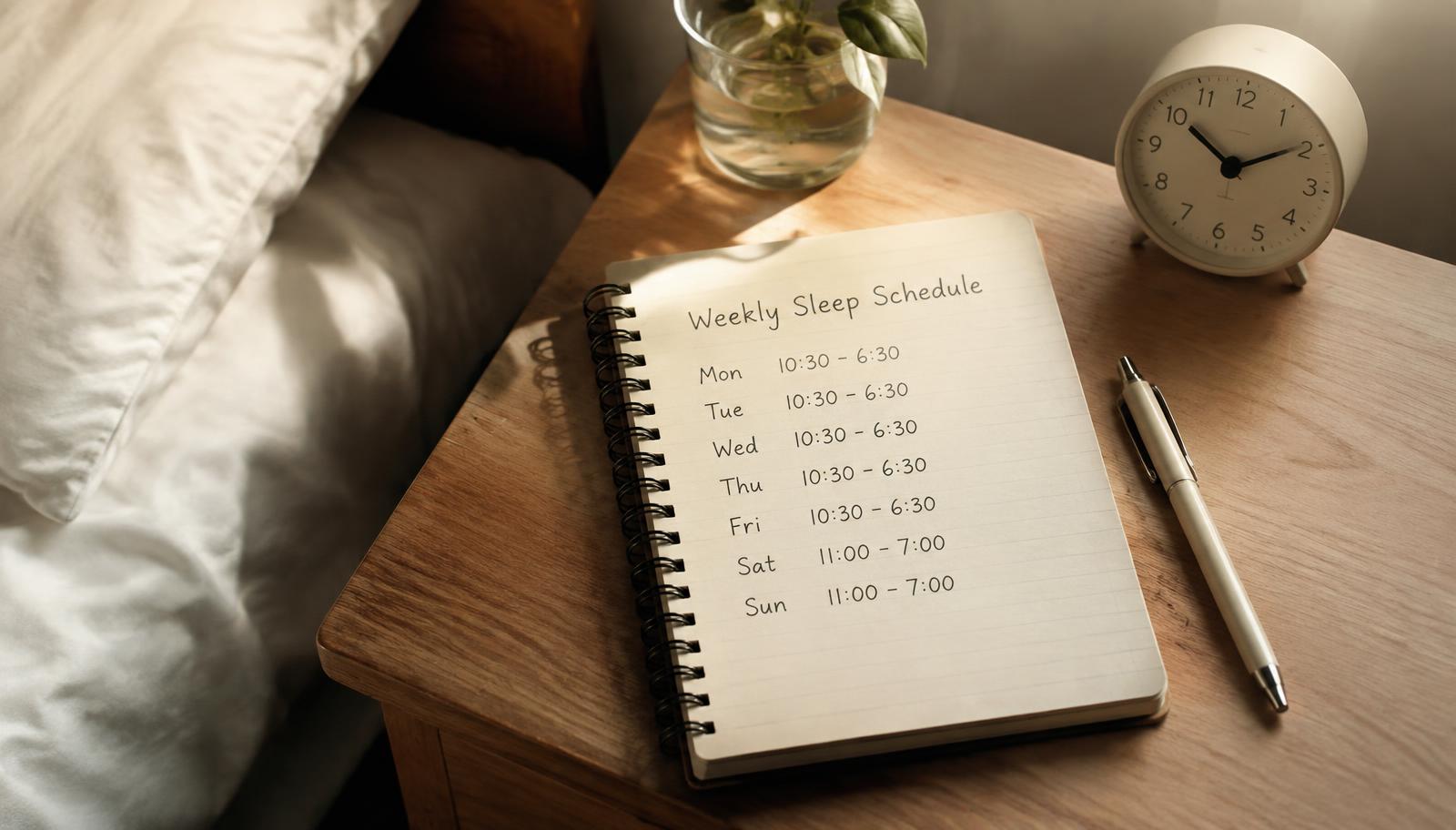
In short
- The body clock relies on consistent daily timing, particularly of light exposure, to stay aligned.
- Social jet lag describes the mismatch created by irregular sleep timing, such as weekend lie-ins.
- Shift work creates a similar but often larger and more sustained mismatch.
- The body clock adjusts by roughly an hour or so per day, not instantly.
- Frequent schedule shifts can leave the body clock in a near-constant state of catching up.
Many people notice that even without travelling anywhere, a few nights of irregular sleep timing can leave them feeling groggy and out of sync. This is not simply about losing hours of sleep; it reflects the body clock being pulled away from its usual rhythm, a mismatch that has real, if usually temporary, effects.
What social jet lag actually is
Social jet lag describes the gap between the sleep timing your body clock is aligned to during the working week and the different timing you might adopt at weekends or on days off, such as staying up later and sleeping in. The term borrows from jet lag because the underlying mismatch is similar, even though no time zones are involved.
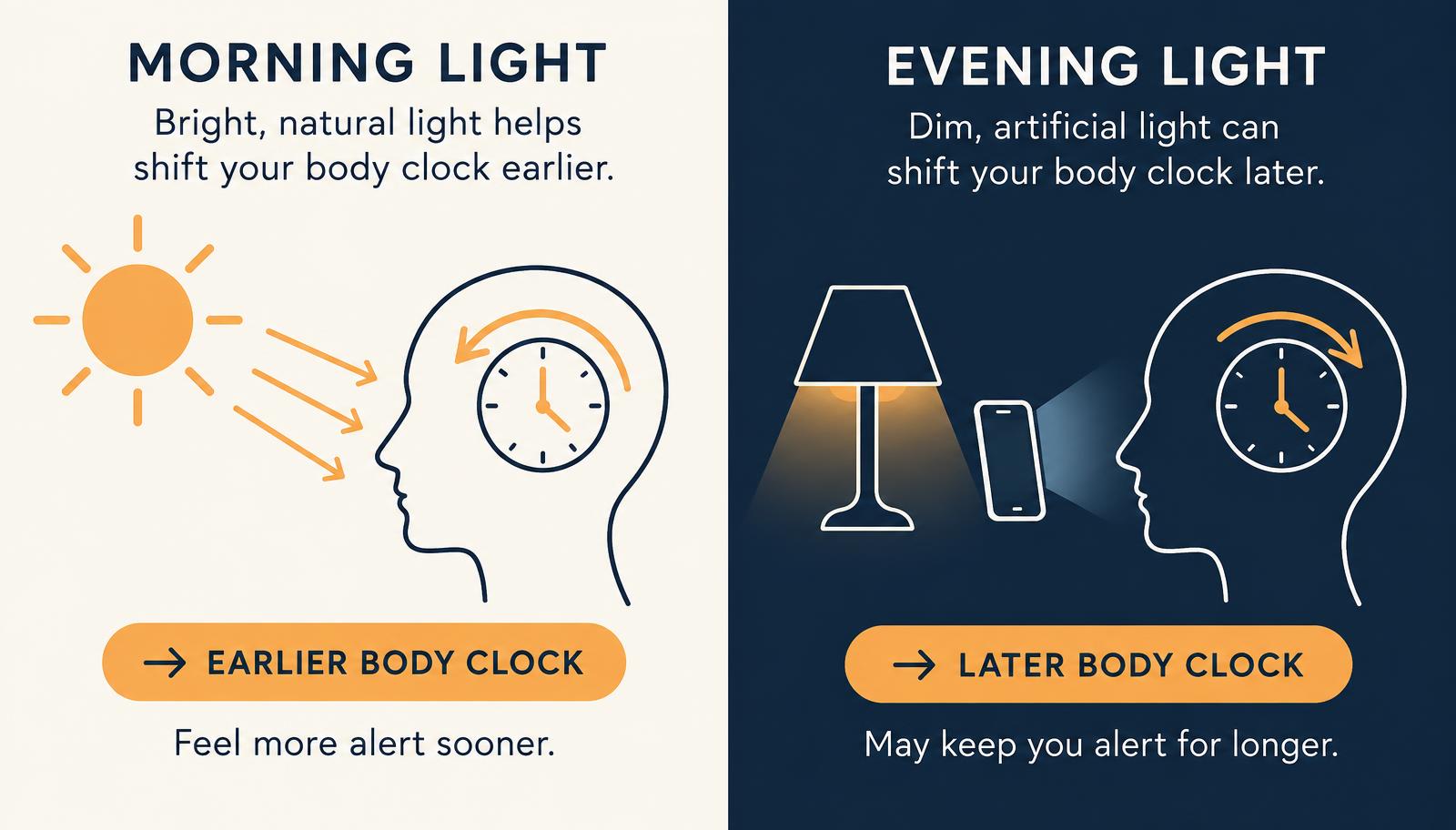
This happens because the body clock does not simply follow whatever hours you choose; it is shaped by cues, especially light, as explained in Why does light affect melatonin? A late weekend lie-in changes when you get morning light, which can shift the timing of your internal clock, not just how many hours you slept.
Why weekend lie-ins can backfire
A lie-in can feel like a well-earned rest, and occasionally it is genuinely restorative. But a large shift in wake time, especially combined with staying up later the night before, delays the morning light signal the body clock relies on, described in Morning light and your body clock. The result is a body clock that drifts later over the weekend, making Monday's earlier start feel like a mild form of jet lag.
- Staying up more than an hour or two later than usual delays the body clock.
- Waking significantly later reduces or delays useful morning light exposure.
- The combined effect can leave the body clock a few hours out of step by Monday.
- Smaller, more consistent weekend adjustments tend to cause less disruption than large swings.
Shift work and sustained mismatch
Shift work, particularly night or rotating shifts, creates a more significant and often ongoing version of this same problem. Working through the night while daylight continues outside pits the body clock's natural preference for wakefulness during daylight against the demands of the schedule, and this conflict can be very difficult to fully resolve as long as shifts continue to rotate. This is covered in more depth in Sleep and shift work.

Why resetting the body clock takes days, not hours
The suprachiasmatic nucleus, the brain's master clock described in Why does light affect melatonin?, adjusts gradually in response to new light patterns rather than resetting instantly. Typical estimates suggest the body clock can shift by roughly an hour or so per day when given consistent new cues, which is why crossing several time zones, or making a large change to sleep timing, tends to take multiple days to settle.
A week in the life: how small shifts add up
It can help to picture a typical week. Someone wakes at seven on weekdays, then stays up until two in the morning on Friday and Saturday nights, sleeping until eleven on both weekend mornings. By Sunday evening, their body clock has effectively been asked to run on a schedule several hours later than the working week, and going to bed at the usual time on Sunday night can feel almost impossible because melatonin has not yet begun to rise in line with the earlier bedtime. Monday's alarm then arrives while the body clock still believes it is the middle of the night, producing the familiar groggy, jet-lagged feeling often called the "Sunday scaries" or "social jet lag hangover".
This example is common rather than unusual, and it illustrates why the size of the swing matters more than simply how many hours of sleep were obtained in total. Two nights of extra sleep at the weekend do not necessarily leave someone feeling rested if the timing of that sleep has pulled the body clock away from where it needs to be for the working week ahead.
Who tends to notice the effects most
Not everyone experiences social jet lag to the same degree. People whose natural body clock already leans towards later sleep and wake times, sometimes described informally as "night owls", often experience a bigger gap between their body clock's preferred timing and the earlier schedule that work or school demands, which can make weekend catch-up sleep more tempting and the resulting mismatch larger. Teenagers and young adults are also frequently affected, partly because natural shifts in body clock timing during adolescence tend to favour later sleep.
Reducing the impact of a shifting schedule
Where some choice is possible, keeping wake time relatively consistent, even on days off, tends to limit how far the body clock drifts. Where shift patterns are fixed by work, prioritising consistent light and dark cues around sleep, as far as practically possible, can help. Practical, gradual approaches to steadying a sleep schedule are covered in How to build a more consistent sleep schedule.
Children, families, and shifting schedules
Households with children often experience a version of this same mismatch, though the direction is sometimes reversed compared with teenagers and adults. A child who stays up late during a holiday, or whose bedtime slips during a run of late evenings out, can end up waking at their usual early time regardless, since a young child's body clock and early rise are often quite firmly set. The result is a similar overall pattern of tiredness and a harder time settling the following night, even though the mechanism is not identical to an adult sleeping in on a Saturday.
Term time versus holiday routines can create a comparable effect on a larger scale. A fortnight of relaxed holiday bedtimes and later mornings can leave a child's body clock meaningfully out of step with the earlier start that term time demands, which is one reason many parents notice a bumpy few days when school resumes after a break, similar in kind to the Monday effect described above.
Clock changes and daylight saving
The twice-yearly clock changes in the UK are a useful, if smaller, illustration of the same principle. Moving clocks forward an hour in spring effectively asks the body clock to advance, similar to travelling one time zone east, and many people notice feeling slightly out of sorts for a few days afterwards. Moving clocks back an hour in autumn asks for a delay, which tends to be felt as slightly easier, in keeping with the general pattern that delaying is usually more comfortable than advancing.
Because the change is only an hour, most people adjust within a few days without any deliberate effort, but the same underlying process is at work as with a larger jet lag or a shift-work transition: light and behaviour need a little time to line back up with the new clock time.
Screens, evening habits, and gradual drift
Beyond obvious weekend lie-ins, small daily habits can nudge a sleep schedule later almost imperceptibly. Staying up a little longer each night to finish an episode, scroll social media, or answer one more email can add up over a week or two into a noticeably delayed bedtime, even without ever consciously deciding to change routine. Because the drift happens gradually, it often goes unnoticed until the accumulated shift starts causing real difficulty getting up for work or school.
Evening light from screens plays a part in this drift too, since bright light late at night can delay the natural rise in melatonin that would otherwise support an earlier bedtime, a topic covered in Evening light, screens and sleep. Recognising this pattern early, before a schedule has drifted by several hours, makes correcting it considerably easier.
Common questions
Is social jet lag as serious as travelling across time zones?
The mechanism is similar, but the degree of mismatch in social jet lag is often smaller than crossing several time zones, since it usually involves a shift of one to a few hours rather than many. Repeated most weekends, though, it can still add up to persistent tiredness.
Can I catch up on sleep at the weekend to fix a bad week?
Extra sleep can help address short-term sleep debt, but a large weekend lie-in can also shift the body clock later, which may make the following week's early starts feel harder rather than easier.
How long does it take to adjust to a new fixed schedule?
This varies between individuals, but many people need several days to around a week of consistent timing and light exposure before their body clock settles fully into a new schedule.
Sources
Written by The Melatonin UK editorial team.
Published 24 September 2026. This article is general information about sleep and the body clock. It is not medical advice, and it does not replace a conversation with your GP or pharmacist.
Read next
The Body Clock
Why does light affect melatonin?
Light is the single strongest signal your body uses to time melatonin release. Specialised cells in the eye detect brightness, quite separately from normal vision, and pass that information to the brain's master clock, which controls the pineal gland. Brightness, timing and duration of light exposure all matter, not just its colour.
6 min readRead the guide →

The Body Clock
Morning light and your body clock
Morning daylight is one of the strongest signals for anchoring your body clock, helping set the timing for alertness during the day and melatonin release later that night. It is especially useful because it comes early in the light-sensitive window the body clock relies on. UK winters make this harder, but there are realistic ways to get more usable light.
6 min readRead the guide →
Better Sleep
How to build a more consistent sleep schedule
A more consistent sleep schedule is usually best built gradually, anchored around a fixed wake time rather than a fixed bedtime, supported by consistent light exposure. Small, sustainable adjustments over days or weeks tend to work better than sudden changes. The goal is a rhythm the body clock can rely on, not a single perfect night.
6 min readRead the guide →