
Sleep Questions
Why do I struggle to fall asleep?
Difficulty falling asleep usually comes from a mismatch between several systems: how much sleep pressure has built up, how alert or wound-up your mind and body are, and whether your body clock is timed for sleep at that hour. Caffeine, alcohol, and worry about sleep itself can all make things worse. Working out which factor fits you best is more useful than assuming a single cause.
7 min read · Published 24 September 2026
In short
- Falling asleep depends on sleep pressure being high and mental and physical arousal being low at the same time.
- A body clock that is timed later than your bedtime can make sleep feel impossible even if you are tired.
- Caffeine, alcohol close to bedtime, and screens can all interfere with the process.
- Worrying about not sleeping tends to increase arousal and make falling asleep harder still.
- Persistent, distressing difficulty falling asleep is worth raising with a GP or pharmacist.
Lying awake, unable to drift off, is one of the most common sleep complaints there is. It can feel like a single problem, but falling asleep actually depends on several systems lining up at once: how much pressure to sleep has built up during the day, how calm your mind and body are, and whether your internal body clock is timed for sleep at that particular hour. When any one of these is out of step, sleep can feel just out of reach.
Sleep pressure and why timing matters
Sleep pressure is the drive to sleep that builds the longer you have been awake, driven partly by a chemical called adenosine accumulating in the brain. It is at its lowest first thing in the morning and gradually rises across the day. If you nap late in the afternoon, sleep in unusually late, or simply have not been awake for long enough, sleep pressure may be too low by bedtime for sleep to come easily.
This is separate from melatonin, which signals the timing of night rather than creating tiredness itself; our guide Melatonin versus sleepiness explains the difference between the two systems in more detail.
A body clock that is out of step
Everyone has an internal body clock, or circadian rhythm, that expects sleep at a broadly consistent time each day. If that clock is set later than the bedtime you are trying to keep, perhaps because of late nights, shift work, or a naturally later chronotype, you may simply not feel sleepy yet, no matter how tired you feel by the day's end. This is a different problem from insomnia and is covered further in Insomnia or a shifted body clock?
Mental and physical arousal
Falling asleep needs the nervous system to settle. Stress, an overactive mind, or physical tension can all keep arousal too high for sleep to take hold, even when sleep pressure and timing are otherwise fine. Worrying specifically about not being able to sleep often makes this worse, creating a cycle where the bed itself becomes associated with frustration rather than rest.
A typical evening, worked through
It can help to picture how these factors interact in practice. Imagine someone who finishes work at their desk at six, eats dinner while scrolling through their phone, has a coffee at seven to push through some admin, then gets into bed at half past ten expecting to sleep. Sleep pressure may well be adequate by then, but the bright phone screen has been signalling daytime to the body clock, the late coffee is still active in the system, and the mind has had no real chance to wind down from the day's tasks before hitting the pillow.
None of these things alone would necessarily prevent sleep, but stacked together they can easily add twenty or thirty minutes, or more, to the time it takes to drop off. Spotting which of these apply to your own evening, rather than assuming there is one single cause, is usually the more useful exercise.
Caffeine, alcohol, and evening habits
Caffeine can stay in the body for several hours and, in sensitive individuals, delay sleep onset even if consumed in the afternoon; Caffeine and sleep timing looks at this in more depth. Alcohol can help some people feel drowsy initially but tends to fragment sleep later in the night. Bright light from screens in the evening can also delay the natural rise in melatonin, as discussed in Evening light, screens and sleep.
- Late caffeine, even in the afternoon, can delay sleep onset for sensitive people.
- Alcohol before bed often disrupts sleep later in the night rather than helping it.
- Bright or blue-toned screen light in the evening can push the body clock later.
- Irregular bed and wake times make it harder for sleep pressure and body clock to align.
- A racing mind at bedtime often reflects daytime stress rather than a sleep-specific problem.

Napping and its effect on sleep pressure
Daytime naps are not inherently a problem, but the timing and length matter more than people often assume. A short nap earlier in the day tends to have little effect on night-time sleep for most people, whereas a long nap, or one taken in the late afternoon or evening, can noticeably reduce the sleep pressure that has built up, making it harder to fall asleep at the usual bedtime. If you regularly struggle to fall asleep and also nap, it is worth noticing whether the two are connected before assuming the problem lies elsewhere.
Physical comfort and the bedroom itself
Falling asleep is also a physical process, and discomfort can quietly work against it even when everything else is in place. A mattress or pillow that no longer suits you, a room that is too warm, or ongoing physical discomfort such as pain can all raise arousal in a way that feels separate from your mind but has much the same effect. Bedroom light, noise and temperature covers the environmental side of this in more detail, since small adjustments here sometimes make more difference than people expect.
What tends to help
Because several systems are usually involved, it helps to look at the whole picture rather than a single fix. A broadly consistent wake time, sensible caffeine and alcohol timing, and a wind-down period before bed all support the conditions sleep needs. Our guide How to build a consistent sleep schedule and Evening routine you can maintain go through this in practical terms.
If difficulty falling asleep continues most nights for several weeks and is affecting how you function during the day, it is worth speaking to a GP or pharmacist rather than persisting alone. What to do when sleep problems continue explains what that conversation might involve.
Why the same evening affects people differently
Not everyone reacts to the same triggers in the same way, which is part of why generic advice sometimes falls flat. Some people can drink coffee after dinner and fall asleep without trouble, while others find even a mid-afternoon cup keeps them wired well past midnight; this comes down to how quickly the body processes caffeine, a trait that varies genuinely between individuals rather than being a matter of willpower. Similarly, some people are naturally more prone to a racing mind at bedtime, often linked to daytime stress levels rather than anything specific to sleep. Recognising your own pattern, rather than assuming a single rule applies to everyone, tends to be more useful than following generic tips wholesale.
It is also worth remembering that occasional bad nights are simply part of being human, and chasing perfect sleep every single night can itself become a source of the pressure and worry that keeps sleep away. Aiming for a broadly consistent, sensible routine most of the time, rather than treating every restless night as a crisis, tends to serve people better over the long run.
Exercise and its timing
Regular physical activity is generally supportive of good sleep, partly because it helps build healthy sleep pressure across the day and can ease physical and mental tension. Vigorous exercise very close to bedtime can, for some people, raise body temperature and alertness at exactly the point they are trying to wind down, though this effect varies between individuals and is far from universal. If evening exercise is the only time that fits your schedule and you sleep fine afterwards, there is no need to change it purely on principle; it only becomes worth adjusting if you notice a clear link between late workouts and a harder time settling.
Worry loops and racing thoughts at bedtime
For many people, the biggest barrier to falling asleep is not a physical one at all but a mental one: the mind finally has quiet space at bedtime and fills it with unfinished tasks, tomorrow's schedule, or replaying the day's events. This is common precisely because bedtime is often the first genuinely unoccupied moment in a busy day, and the brain treats that space as an opportunity to process rather than switch off.
Some people find it helps to deliberately create that processing time earlier in the evening instead, for example jotting down a short list of tomorrow's tasks or any nagging thoughts on paper an hour or so before bed, so the mind has less unfinished business to raise once the lights go out. This is a simple habit rather than a guaranteed solution, but many people find it reduces, even if it does not eliminate, the racing-thoughts pattern at bedtime.
Common questions
Is it normal to take a while to fall asleep?
Most people take somewhere around ten to twenty minutes to fall asleep on a typical night; taking much longer than this regularly, or lying awake distressed, is worth paying attention to.
Could my bedtime simply be too early for my body clock?
Yes, this is common, particularly among people with a naturally later chronotype. Trying to sleep before your body clock is ready can feel exactly like insomnia even though the underlying cause is timing.
Does worrying about sleep make things worse?
Yes, anxiety about not sleeping tends to raise physical and mental arousal, which works directly against falling asleep, often creating a self-reinforcing cycle.
A 2013 meta-analysis in PLoS One by Ferracioli-Oda and colleagues, pooling 19 studies, found that melatonin shortened the time taken to fall asleep by around seven minutes on average and slightly increased total sleep time, with no sign that the effect wore off over time.
Sources
Written by The Melatonin UK editorial team.
Published 24 September 2026. This article is general information about sleep and the body clock. It is not medical advice, and it does not replace a conversation with your GP or pharmacist.
Read next
Sleep Questions
Insomnia or a shifted body clock?
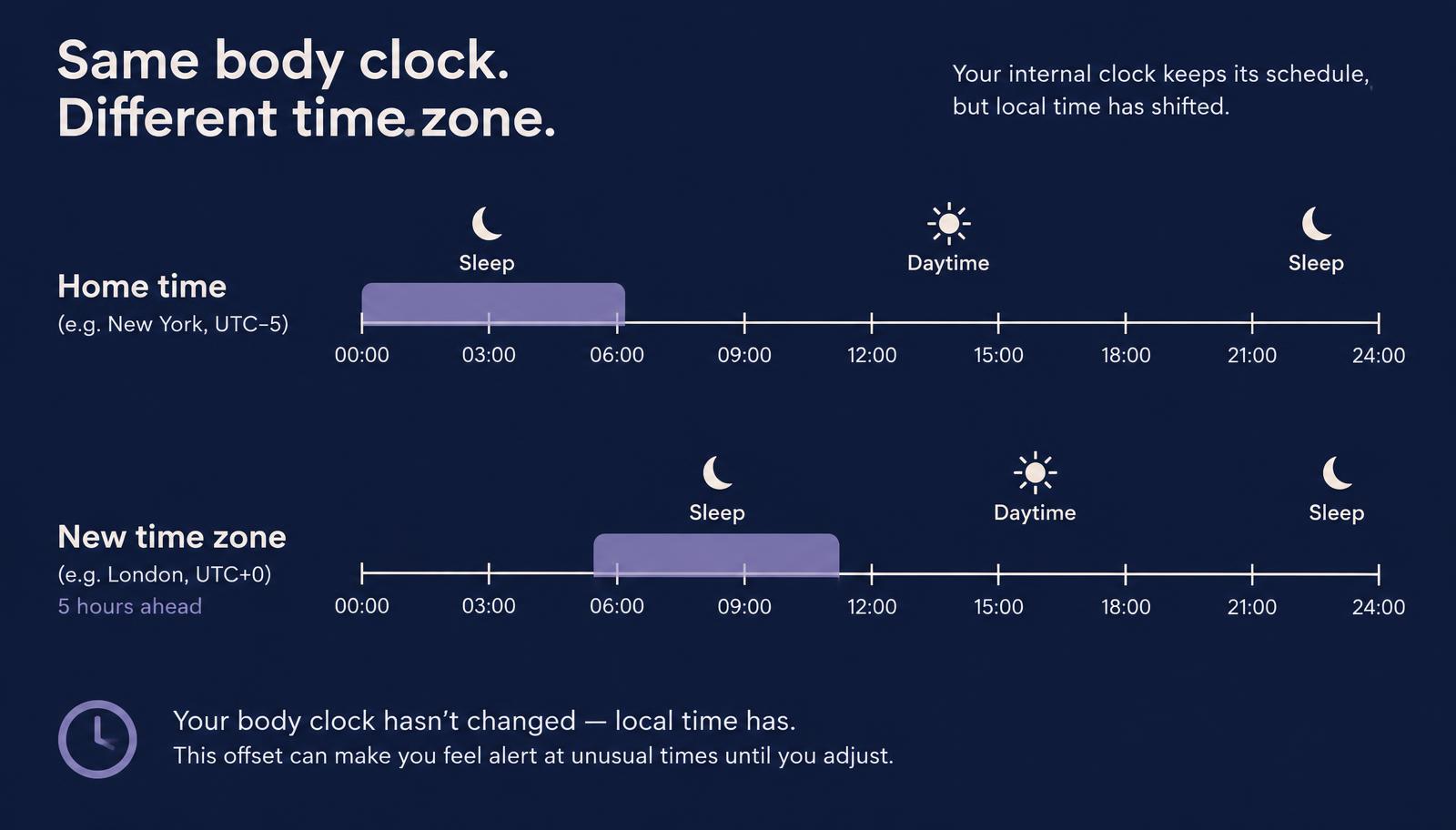
Insomnia and a shifted body clock can both cause difficulty sleeping, but they are different problems with different explanations. Insomnia involves trouble sleeping even when the opportunity and timing are right, while a shifted body clock means the timing itself is out of step with the schedule you are trying to keep. Telling them apart matters because the approaches that help each one are not the same.
6 min readRead the guide →
Sleep Questions
What affects sleep quality?
Sleep quality is not just about how many hours you get; it depends on how continuous that sleep is, whether it is timed well against your body clock, the conditions you sleep in, your general health, stress levels, and substances like caffeine and alcohol. Because several factors usually contribute, improving sleep quality often means looking across all of them rather than fixing one thing alone.
6 min readRead the guide →

Sleep Questions
What to do when sleep problems continue
When sleep problems persist for weeks despite reasonable habits, the next steps usually involve keeping a sleep diary and speaking to a GP or pharmacist. UK guidance recommends cognitive behavioural therapy for insomnia, known as CBTi, as a first-line approach for ongoing insomnia, ahead of medicines. Knowing what a GP appointment involves can make that step feel less daunting.
6 min readRead the guide →