
Sleep Questions
Insomnia or a shifted body clock?
Insomnia and a shifted body clock can both cause difficulty sleeping, but they are different problems with different explanations. Insomnia involves trouble sleeping even when the opportunity and timing are right, while a shifted body clock means the timing itself is out of step with the schedule you are trying to keep. Telling them apart matters because the approaches that help each one are not the same.
6 min read · Published 24 September 2026
In short
- Insomnia is difficulty sleeping despite adequate opportunity and a reasonably well-timed schedule.
- A shifted body clock means sleep would come more easily, just at a different time than desired.
- The two can overlap and even feed into each other over time.
- Body clock shifts often respond to light exposure and schedule changes rather than sleep-focused approaches alone.
- A GP or sleep specialist can help work out which pattern best fits your experience.
Two people can both describe "I can't sleep" and mean quite different things. One might be exhausted, in bed at a sensible hour, and simply unable to drift off or stay asleep. The other might sleep perfectly well once they finally nod off at 3am, but never at the time they need to for work or family life. These are, broadly, the difference between insomnia and a shifted body clock.
What insomnia looks like
Insomnia describes ongoing difficulty falling asleep, staying asleep, or waking too early, despite having a reasonable opportunity to sleep, and it is usually accompanied by daytime effects such as tiredness, low mood, or difficulty concentrating. Crucially, the problem persists even when timing is not obviously the issue: someone with insomnia may go to bed at a sensible hour and still lie awake, or wake in the small hours and be unable to settle regardless of how tired they are. NHS guidance on insomnia describes this pattern in more detail.
What a shifted body clock looks like
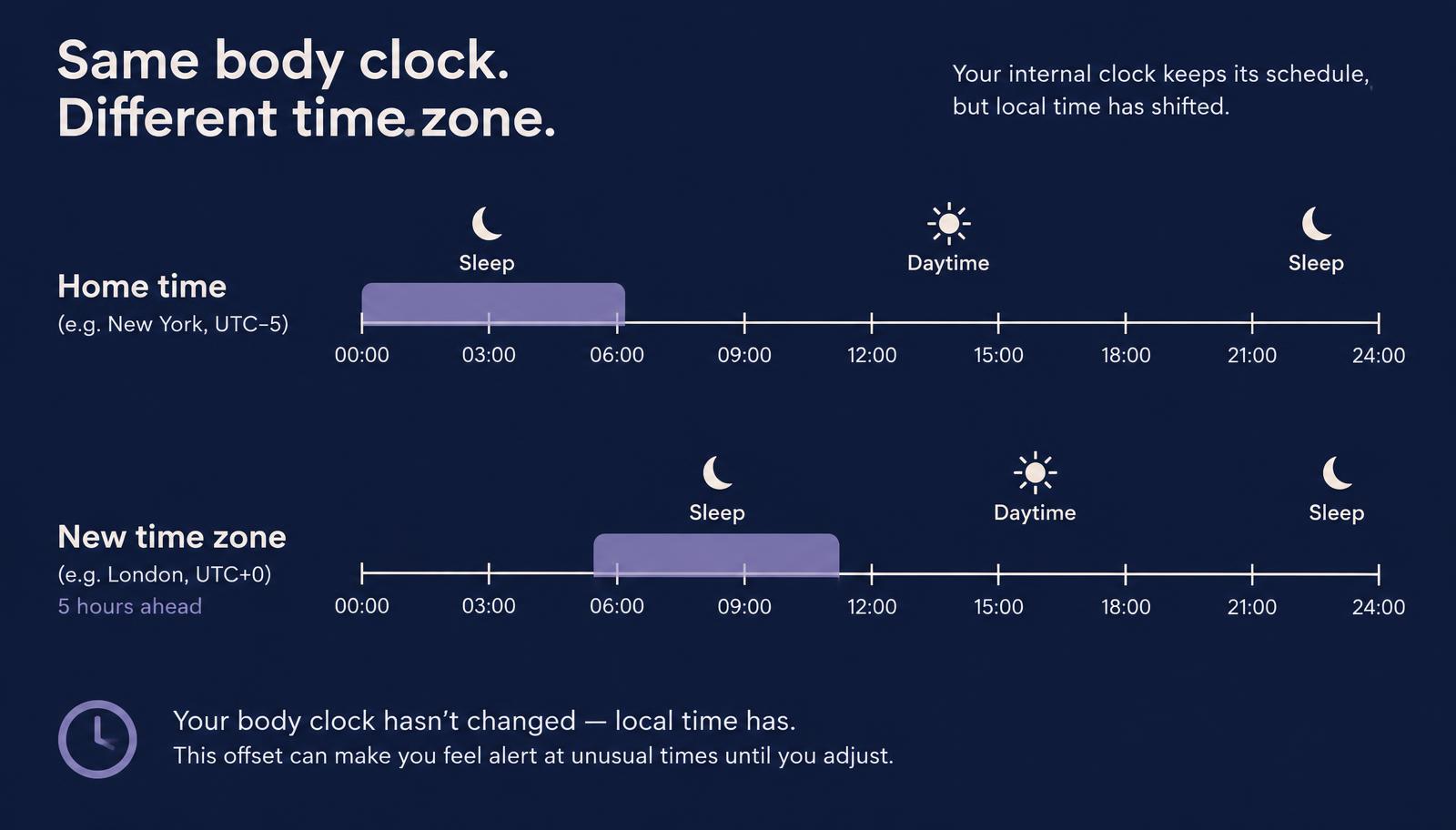
A shifted body clock, sometimes described in its more marked form as a circadian rhythm sleep disorder, is different. Here, sleep itself is not the problem; timing is. Someone with a body clock shifted later might find it genuinely impossible to fall asleep before 2am no matter how tired they feel, yet sleep soundly and wake refreshed if allowed to sleep from 2am to 10am. The sleep, once it starts, works normally. What happens when your sleep schedule shifts explores how these delays develop, often through late nights, irregular schedules, or reduced morning light.
Why the two can overlap
In practice, these patterns are not always neatly separate. Someone who repeatedly tries to force sleep at the wrong time for their body clock can develop the anxiety and habits associated with insomnia on top of the original timing problem. Equally, someone with insomnia may end up shifting their schedule later simply because sleep only reliably comes in the small hours, which then makes the body clock issue worse too.
- Insomnia: trouble sleeping even with good timing and opportunity.
- Shifted body clock: sleep would work fine, just at a different time.
- Daytime tiredness can appear in both, making them easy to confuse.
- The two can develop together, especially after long periods of irregular sleep.
Two people, two different problems
Consider two colleagues who both describe struggling to sleep before an early shift. The first goes to bed at 10pm, feels physically exhausted, but lies awake with a racing mind until well past midnight regardless of how the previous night went; on a rare day off with nothing to get up for, the pattern barely changes. The second also lies awake at 10pm, but if left entirely to their own devices would naturally drop off around 1am and wake, refreshed, around 9am. The first pattern points towards insomnia, since the difficulty persists whatever the circumstances. The second points towards a shifted body clock, since sleep itself is intact once it is allowed to happen at its natural time.
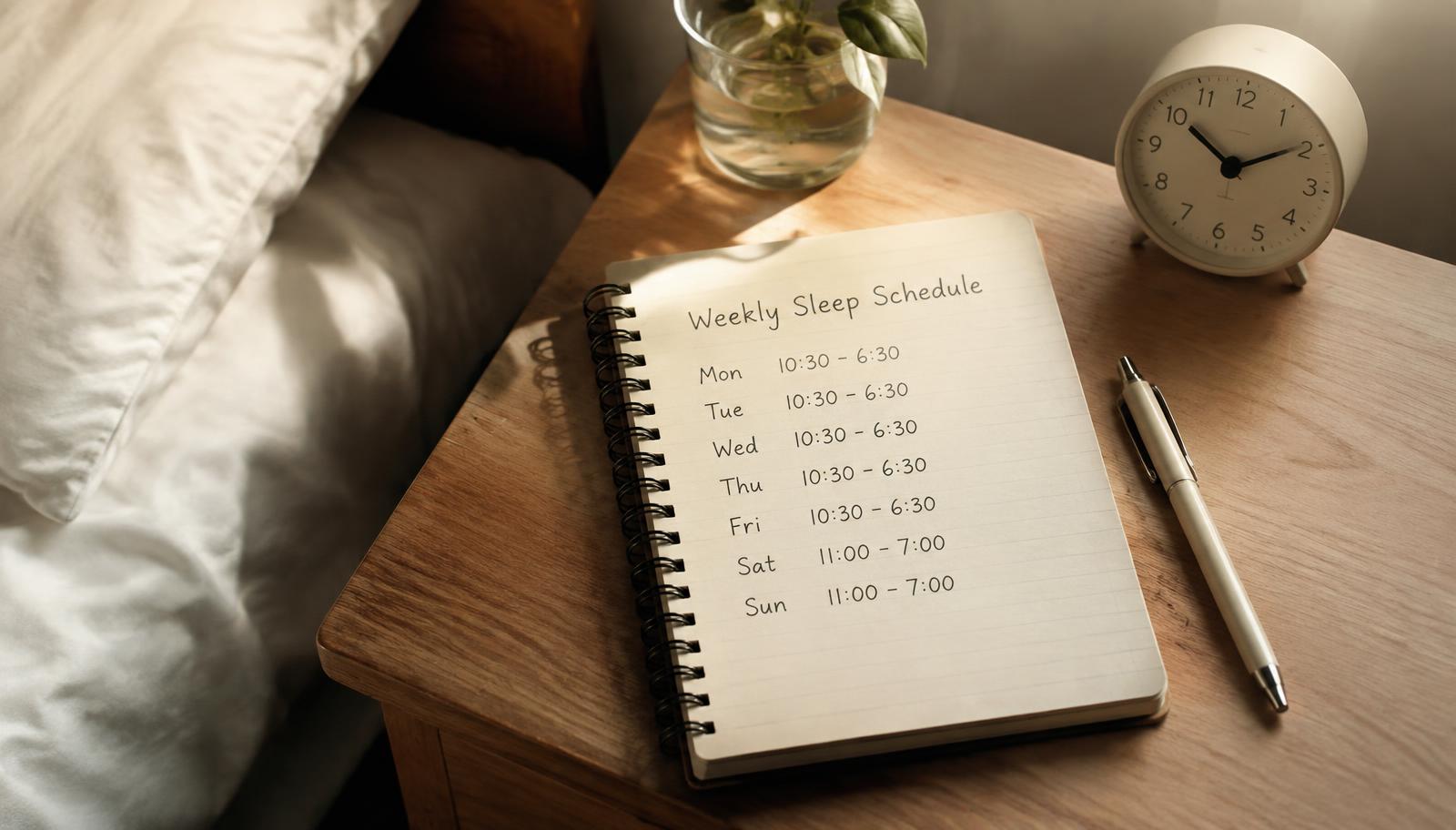
This kind of comparison, ideally noted down over a week or two rather than relied on from memory, is often the clearest way to see which explanation actually fits, and it is exactly the sort of detail a GP will find useful if you do seek advice.
Why the distinction matters
The two problems generally respond to different approaches. A shifted body clock often improves with consistent light exposure, a steadier daily schedule, and sometimes professional advice on timing strategies. Insomnia, by contrast, is more often addressed through approaches that target sleep-related thoughts, habits, and arousal, with cognitive behavioural therapy for insomnia recommended as a first-line approach in UK guidance, as covered in What to do when sleep problems continue. Treating a timing problem as if it were insomnia, or vice versa, can mean effort goes into the wrong place.
When professional help is worth seeking
Occasional difficulty telling the two apart is normal, particularly since both can cause similar daytime tiredness and frustration. It is worth arranging a GP appointment if the pattern has lasted several weeks, is affecting your work, relationships, or mood, or if you have tried adjusting your own schedule without success. A GP can also rule out other explanations, such as an underlying health condition or a medicine side effect, that might be contributing to either pattern.
How each pattern tends to develop over time
Insomnia often begins after a period of genuine sleep disruption, such as illness, bereavement, or a stressful life event, but then persists after the original trigger has passed because unhelpful habits and worry about sleep itself take over as the maintaining factor. A shifted body clock, by contrast, more often develops gradually through a build-up of late nights, reduced exposure to morning light, or irregular schedules such as those common in shift work, gradually nudging the body's internal timing later or, less commonly, earlier. Recognising which story matches your own experience can be a useful clue, alongside the distinguishing question described above, when trying to work out which pattern you are dealing with.
It is also worth noting that neither pattern is a reflection of doing something wrong. Both are common, well-recognised experiences with identifiable explanations, and both tend to respond better to a considered approach than to simply trying harder to sleep at a fixed time regardless of what your body seems to be telling you.
A simple self-check you can try
If you are unsure which pattern fits, a short, honest self-check over a week or two off work, such as during a holiday, can be revealing, though it will not work for everyone since many people cannot simply set their own schedule. Go to bed only when you feel genuinely sleepy rather than at a fixed clock time, and let yourself wake naturally rather than to an alarm. If sleep comes reasonably easily and you wake feeling rested, even if that happens at an unusual hour, this points towards a timing issue. If sleep remains difficult and unrefreshing even under these relaxed conditions, insomnia is the more likely explanation.
This kind of check is not a formal diagnostic tool, and it works best alongside a sleep diary rather than as a one-off experiment. It can, however, give you a much clearer story to bring to a GP than "I just can't sleep", which on its own does not distinguish between the two patterns.
Where melatonin fits into each picture
Because melatonin is involved in timing rather than in producing sleep directly, its role tends to be discussed more often in relation to a shifted body clock than to insomnia itself. Research has looked at whether carefully timed melatonin can help nudge the body clock towards a more convenient schedule, particularly alongside light exposure strategies, as covered in Melatonin research and sleep. For insomnia, UK guidance tends to favour approaches such as cognitive behavioural therapy for insomnia ahead of any medicine, which is one more reason getting the distinction right matters before considering melatonin at all.
None of this means melatonin is the automatic answer for a shifted body clock either. Whether it is appropriate depends on individual circumstances, and it should only be considered after discussion with a GP or pharmacist, not as a first response to noticing a pattern that looks like delayed sleep timing.
Common questions
Can I have both insomnia and a shifted body clock?
Yes, it is possible for both to be present at once, and this is one reason a proper assessment, for example with a GP or sleep specialist, can be more useful than guessing.
Does melatonin help with a shifted body clock?
Melatonin's role has been studied in the context of shifted sleep timing, though its use should always be discussed with a GP or pharmacist rather than started independently; Melatonin research and sleep looks at the evidence in this area.
How would a GP tell the difference?
A GP will typically ask about your sleep pattern in detail, sometimes using a sleep diary, to see whether sleep would work well at a different time or whether difficulty persists regardless of timing.
A 2017 review in Sleep Medicine Reviews by Auld and colleagues concluded that the strongest evidence for melatonin is in shortening the time taken to fall asleep and in delayed sleep–wake phase disorder, with weaker evidence for other sleep problems.
Sources
Written by The Melatonin UK editorial team.
Published 24 September 2026. This article is general information about sleep and the body clock. It is not medical advice, and it does not replace a conversation with your GP or pharmacist.
Read next

Sleep Questions
Why do I struggle to fall asleep?
Difficulty falling asleep usually comes from a mismatch between several systems: how much sleep pressure has built up, how alert or wound-up your mind and body are, and whether your body clock is timed for sleep at that hour. Caffeine, alcohol, and worry about sleep itself can all make things worse. Working out which factor fits you best is more useful than assuming a single cause.
7 min readRead the guide →
The Body Clock
What happens when your sleep schedule shifts?
When sleep and wake times change from day to day, such as with weekend lie-ins or late shifts, the body clock and its light cues fall out of step with the actual clock time. This mismatch, sometimes called social jet lag, can leave you feeling tired and out of sorts even without crossing time zones. Because the body clock adjusts gradually, resetting it typically takes several days of consistent cues rather than happening overnight.
6 min readRead the guide →

Sleep Questions
What to do when sleep problems continue
When sleep problems persist for weeks despite reasonable habits, the next steps usually involve keeping a sleep diary and speaking to a GP or pharmacist. UK guidance recommends cognitive behavioural therapy for insomnia, known as CBTi, as a first-line approach for ongoing insomnia, ahead of medicines. Knowing what a GP appointment involves can make that step feel less daunting.
6 min readRead the guide →