
Sleep Questions
What to do when sleep problems continue
When sleep problems persist for weeks despite reasonable habits, the next steps usually involve keeping a sleep diary and speaking to a GP or pharmacist. UK guidance recommends cognitive behavioural therapy for insomnia, known as CBTi, as a first-line approach for ongoing insomnia, ahead of medicines. Knowing what a GP appointment involves can make that step feel less daunting.
6 min read · Published 24 September 2026

In short
- A sleep diary kept for one to two weeks gives useful, concrete information to share with a GP.
- GPs will typically ask about your sleep pattern, daytime impact, and general health before suggesting next steps.
- UK guidance recommends CBTi as a first-line approach for ongoing insomnia.
- Medicines, including melatonin, are generally considered only after other approaches have been discussed.
- Persistent sleep problems affecting daily life are a reasonable and common reason to see a GP.
Most people can trace a rough patch of poor sleep to something obvious, a stressful week, a late night out, or travel, and things settle again within a few days. When sleep problems drag on for weeks rather than days, and start affecting how you function during the day, it is worth taking a more structured approach rather than waiting for things to resolve by themselves.
Keeping a sleep diary
A sleep diary is simply a daily record of when you went to bed, roughly when you fell asleep, any awakenings during the night, what time you got up, and how you felt during the day. Kept for one to two weeks, this can reveal patterns that are hard to spot from memory alone, such as a consistently late natural sleep time or a link between certain evenings and worse sleep. It is also exactly the kind of information a GP will find useful, so bringing one along, or filling one out over the two weeks before an appointment, can make that consultation considerably more productive.
What to record, and why it helps
A useful sleep diary does not need to be complicated. Alongside bed and wake times, it is worth noting caffeine and alcohol intake, any daytime naps, exercise, and roughly how you felt the following day, since these details often explain patterns that would otherwise look random.
- Time you got into bed and roughly when you think you fell asleep.
- Any awakenings during the night and, if known, roughly how long they lasted.
- Time you got up, and how rested you felt on waking.
- Caffeine, alcohol, and any naps taken during the day.
- A brief note on stress, mood, or anything unusual that day.
What a GP appointment involves
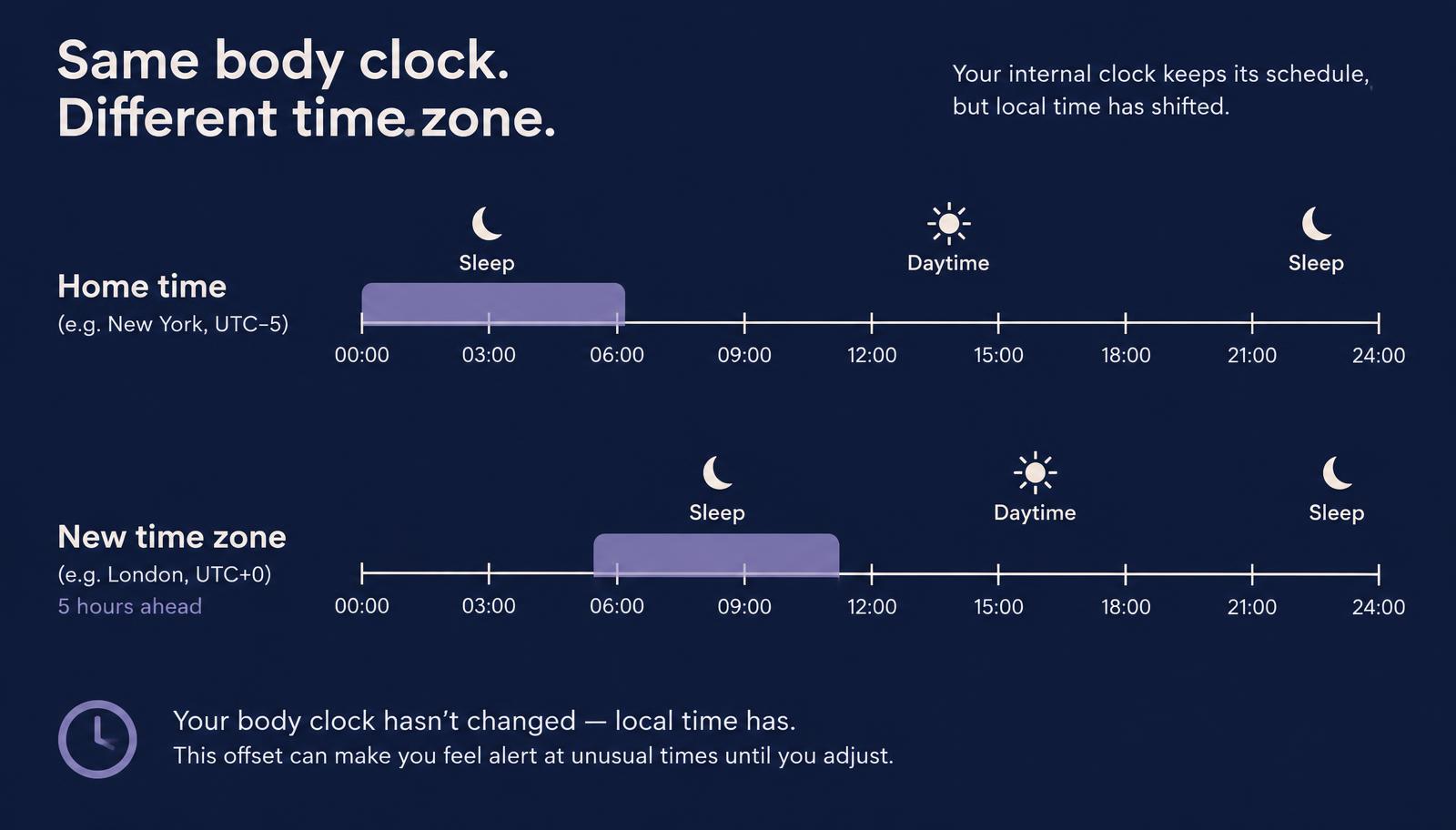
A GP dealing with ongoing sleep problems will typically ask about the pattern of difficulty, including whether it is trouble falling asleep, staying asleep, or waking too early, how long it has been going on, and how it is affecting your daytime life, mood, and concentration. They will usually also ask about general health, medicines you are taking, and habits such as caffeine, alcohol, and shift patterns, since these can all play a part. This conversation helps distinguish, for example, ordinary insomnia from a shifted body clock or an underlying health condition, a distinction covered in Insomnia or a shifted body clock?
Why CBTi is usually offered first
For ongoing insomnia, UK clinical guidance recommends cognitive behavioural therapy for insomnia, commonly abbreviated to CBTi, as the first-line approach, ahead of sleeping tablets or other medicines. CBTi is a structured, talking-based approach that addresses the thoughts, habits, and routines that can keep insomnia going, and it can be delivered by a therapist, through structured programmes, or in some cases digitally. NICE guidance for clinicians reflects this preference for CBTi over medicines as a starting point.
What CBTi sessions typically cover
CBTi is usually delivered over several sessions, whether in person, in a group, or through a structured digital programme, and tends to combine a handful of specific techniques rather than general conversation about sleep. Common elements include reviewing and adjusting the time spent in bed to better match actual sleep, building a consistent wake time, addressing unhelpful beliefs about sleep, and practical relaxation or wind-down strategies. Because it works on habits and thought patterns built up over time, it is usually a gradual process rather than a quick fix, and people are often asked to keep a sleep diary throughout to track progress.
Where medicines, including melatonin, fit in
Medicines are generally considered only after other approaches have been discussed, and any decision about them, including melatonin, should be made with a GP or pharmacist rather than independently. Melatonin research and sleep and Melatonin side effects give an honest picture of what has and has not been studied, which can help inform that conversation.
- Keep a sleep diary for one to two weeks before or alongside a GP visit.
- Be ready to discuss caffeine, alcohol, shift patterns, and current medicines.
- Expect CBTi to be raised as a likely first-line option for ongoing insomnia.
- Ask your GP or pharmacist directly if you are wondering about melatonin or other medicines.

What if the first approach does not help
It is common for improvement to take a few weeks even with the right approach, and CBTi in particular tends to work gradually rather than overnight. If sleep is still significantly disrupted after completing a course of CBTi or after a reasonable trial of other recommended steps, it is worth going back to your GP rather than assuming nothing more can be done. They may reassess for other contributing factors, consider a referral to a sleep specialist, or discuss whether a medicine is appropriate for your particular circumstances.
What a pharmacist conversation can offer
A community pharmacist is often a quicker first port of call than a GP appointment, particularly for initial advice on sleep habits, over-the-counter products, or whether a medicine you are already taking might be affecting your sleep. Pharmacists can also advise on when it is worth booking a GP appointment instead, for example if your sleep problem has lasted several weeks, is affecting your daytime functioning, or seems linked to a wider health concern. Questions to ask a pharmacist sets out the kind of things worth raising in that conversation.
Whatever the outcome of a first appointment, it is worth treating the process as ongoing rather than a single fix. Sleep problems can change in character over time, and what helps initially may need revisiting a few months later, particularly if your circumstances, health, or medicines change.
When a specialist referral is considered
Most sleep problems are managed within general practice, often with a course of CBTi, but a GP may consider a referral to a sleep clinic or specialist in certain circumstances, for example if symptoms suggest a distinct sleep disorder such as sleep apnoea, if a suspected shifted body clock is severe or unresponsive to initial approaches, or if there are other complicating health conditions. A referral is not a sign that your GP has run out of options; it reflects a decision that specialist assessment or treatment is likely to be more useful for your particular pattern.
It can be helpful to ask directly what a referral would involve, roughly how long it might take, and what you should do about sleep in the meantime. Continuing to keep a sleep diary while waiting is often useful, since it gives the specialist team more information from the outset rather than starting from scratch.
Managing expectations realistically
It is worth being realistic that there is rarely a single, instant fix for sleep problems that have built up over weeks or months. Even effective approaches like CBTi tend to work through gradual change to habits and thought patterns, and setbacks along the way, such as a bad night after a period of improvement, do not necessarily mean the approach has stopped working. Viewing progress over several weeks, rather than night by night, tends to give a more accurate picture.
It also helps to remember that the goal of most of these approaches is not perfect sleep every night, which is not realistic for anyone, but a reduction in how often and how severely sleep problems interfere with daily life. Keeping this in mind can make the process feel less discouraging when improvement is real but gradual.
Common questions
How long should I try to manage sleep problems myself before seeing a GP?
There is no fixed rule, but persistent difficulty lasting several weeks, especially if it is affecting your daytime functioning or mood, is a reasonable point to seek advice rather than waiting further.
Will a GP prescribe melatonin straight away?
Not typically; GPs generally consider the wider picture first, including CBTi-based approaches, and any decision about medicines is made individually based on your circumstances.
What is CBTi actually like?
CBTi typically involves working through your sleep-related habits, thoughts, and routines over several sessions, with practical strategies rather than simply discussing the problem.
Sources
Written by The Melatonin UK editorial team.
Published 24 September 2026. This article is general information about sleep and the body clock. It is not medical advice, and it does not replace a conversation with your GP or pharmacist.
Read next
Sleep Questions
Insomnia or a shifted body clock?
Insomnia and a shifted body clock can both cause difficulty sleeping, but they are different problems with different explanations. Insomnia involves trouble sleeping even when the opportunity and timing are right, while a shifted body clock means the timing itself is out of step with the schedule you are trying to keep. Telling them apart matters because the approaches that help each one are not the same.
6 min readRead the guide →

Research & Safety
What has research studied about melatonin and sleep?
Melatonin has been researched most extensively for jet lag, shift work adjustment, delayed sleep timing, and helping some people fall asleep faster. The evidence is stronger and more consistent in some of these areas than others, and important questions remain about long-term use, ideal timing, and how much individual response varies. Understanding the strength and limits of this research helps set realistic expectations.
6 min readRead the guide →
Research & Safety
Questions to ask a pharmacist about melatonin
A pharmacist is a good first port of call for questions about melatonin, particularly around interactions and general suitability, but they will sometimes need to refer you to a GP. Preparing your medical history and a clear list of questions makes the conversation far more useful.
5 min readRead the guide →