
Research & Safety
Questions to ask a pharmacist about melatonin
A pharmacist is a good first port of call for questions about melatonin, particularly around interactions and general suitability, but they will sometimes need to refer you to a GP. Preparing your medical history and a clear list of questions makes the conversation far more useful.
5 min read · Published 24 September 2026

In short
- Preparing beforehand makes a short pharmacy consultation much more useful.
- Pharmacists can advise on general suitability and interactions with other medicines.
- Some questions, especially about underlying health conditions, need a GP instead.
- Being honest about your full medicine list and health history helps you get better advice.
- Certain symptoms are red flags that should prompt a GP visit rather than a pharmacy conversation alone.
A pharmacy consultation is often the quickest and most accessible way to get personalised guidance about melatonin, but a short conversation goes much further if you arrive prepared. Knowing what to ask, what a pharmacist can help with, and when you actually need a GP instead all make a real difference to the quality of advice you receive.
How to prepare
Before visiting a pharmacy, it helps to gather some basic information rather than trying to recall it on the spot. A little preparation turns a rushed exchange into a genuinely useful conversation.
- Write down every medicine, supplement, and herbal remedy you take regularly, as described in Melatonin and other medicines.
- Note any relevant health conditions, including ones that feel unrelated to sleep.
- Think about how long your sleep difficulty has lasted and what, if anything, you have already tried.
- Write your questions down in advance so nothing gets forgotten in a brief appointment.
What a pharmacist can and cannot answer
Pharmacists are well placed to discuss general suitability, possible interactions with other medicines, and what melatonin is and is not likely to do. They can also help you think through whether your sleep pattern sounds more like a timing issue or a different kind of difficulty, drawing on distinctions covered in Insomnia versus shifted body clock.
- General questions about how melatonin works and what it can realistically help with.
- Checking your medicine list for potential interactions.
- Advice on whether your situation sounds suitable for a pharmacy consultation or needs a GP referral.
- General guidance on sleep habits and routine alongside any other advice.
There are limits, though. A pharmacist will not be able to fully investigate an underlying health condition, and some questions, particularly around ongoing symptoms, a diagnosis, or complex medical history, need the fuller assessment a GP can provide.
Questions worth asking
Having a short list ready can help structure the conversation and make sure nothing important gets missed.
- Based on what I take, is this something you can advise me on, or should I see my GP?
- Are there any of my current medicines that could interact?
- Is there anything about my health history that changes your advice?
- What would you expect melatonin to help with, given what I've described?
- Are there other approaches worth trying alongside or instead of this?

Red flags that need a GP
Some situations go beyond what a pharmacy consultation can properly address, and a pharmacist will usually recognise these and point you towards a GP. It is worth booking a GP appointment yourself if you notice any of the following alongside sleep difficulty: symptoms that have lasted a long time and are not improving, sleep problems affecting your daily functioning or mood significantly, or any new or unexplained symptoms alongside poor sleep. Our guide What to do when sleep problems continue covers this in more depth.
What to bring with you
Bringing physical items rather than relying on memory makes a pharmacy consultation considerably more accurate. A current repeat prescription list, the packaging of any over-the-counter products or supplements you take regularly, and a note of any recent changes to your health all give a pharmacist a fuller and more reliable picture than a verbal summary alone.
- A current repeat prescription list or a recent pharmacy printout of your medicines.
- Packaging or names of any supplements or over-the-counter products you take regularly.
- A brief written note of when your sleep difficulty started and any pattern to it.
- Details of any other health conditions, even ones that feel unrelated to sleep.
If you see more than one pharmacy, for example a supermarket pharmacy for some items and a local independent one for others, it is worth making sure at least one pharmacist has the fullest possible picture of everything you take, since fragmented records can miss an interaction that would otherwise be caught.
How a pharmacy consultation actually works
Most community pharmacies can offer a private consultation, usually in a small side room, if you would prefer not to discuss personal details at the counter. You do not generally need a referral or a booked appointment, though calling ahead can help if you know you will need more time. The pharmacist will typically ask about your current medicines, relevant health conditions, and the nature of your sleep difficulty before offering general advice or, where appropriate, suggesting a GP appointment.
It can help to be specific rather than general when describing your sleep difficulty. Saying that you struggle to fall asleep most nights but sleep fine once you drop off is more useful to a pharmacist than saying simply that you "don't sleep well", since different patterns point towards different explanations, some of which are covered in Why do I struggle to fall asleep? and Why do I wake up during the night?
What happens after the consultation
Depending on what you discuss, a pharmacist may offer general lifestyle advice, flag a possible interaction to raise with your GP, or suggest booking a GP appointment for a fuller assessment. It is worth treating any of these outcomes as useful progress rather than a disappointing result, since ruling things out, or being pointed towards the right next step, is exactly what the consultation is for.
If you are advised to see a GP, it is helpful to bring the same information you brought to the pharmacy, along with anything the pharmacist specifically flagged, so the conversation can pick up from where the pharmacy consultation left off rather than starting again from scratch.
Following up after you have been given advice
If a pharmacist's advice does not seem to be helping after a reasonable trial, it is worth going back rather than assuming nothing more can be done. Pharmacies are generally used to follow-up conversations, and mentioning that a previous suggestion has not worked can prompt a different angle or a referral that was not obvious the first time round.
Asking on behalf of someone else
If you are asking on behalf of a partner, older relative or child, it helps to be upfront about this at the start of the conversation, since a pharmacist may need to speak to that person directly, particularly for more detailed or sensitive questions. Bringing accurate information about the other person's medicines and health history, rather than a secondhand summary, still makes the conversation more useful even where a direct conversation with that person is also needed.
If English is not your first language, or you need extra support
Many pharmacies can arrange interpreter support or provide written information in other formats if this would help you communicate clearly, and it is entirely reasonable to ask for this rather than struggling through a consultation that has not been properly understood. Bringing a trusted family member or friend to help translate is also a reasonable option where formal interpreter support is not immediately available.
Common questions
Can a pharmacist tell me if melatonin is right for me?
A pharmacist can give general guidance based on what you tell them, including checking for interactions, but more complex or ongoing health questions may need a GP's fuller assessment.
Do I need an appointment to speak to a pharmacist?
Many pharmacies offer informal consultations without a booked appointment, though a private consultation room may be available if you would prefer more privacy for a detailed conversation.
What if the pharmacist says I need to see a GP?
This usually means your situation needs a broader assessment than a pharmacy visit allows, not that something is necessarily seriously wrong. It is worth following that advice and booking a GP appointment.
Sources
Written by The Melatonin UK editorial team.
Published 24 September 2026. This article is general information about sleep and the body clock. It is not medical advice, and it does not replace a conversation with your GP or pharmacist.
Read next
Research & Safety
Melatonin and other medicines: what to check
Melatonin can interact with a range of other medicines, so any decision about taking it should involve a pharmacist or GP who can see your full medical picture. Certain categories of medicine are particularly worth mentioning, and the safest approach is to prepare a complete, honest list before you ask.
6 min readRead the guide →
Sleep Questions
What to do when sleep problems continue
When sleep problems persist for weeks despite reasonable habits, the next steps usually involve keeping a sleep diary and speaking to a GP or pharmacist. UK guidance recommends cognitive behavioural therapy for insomnia, known as CBTi, as a first-line approach for ongoing insomnia, ahead of medicines. Knowing what a GP appointment involves can make that step feel less daunting.
6 min readRead the guide →
Sleep Questions
Insomnia or a shifted body clock?
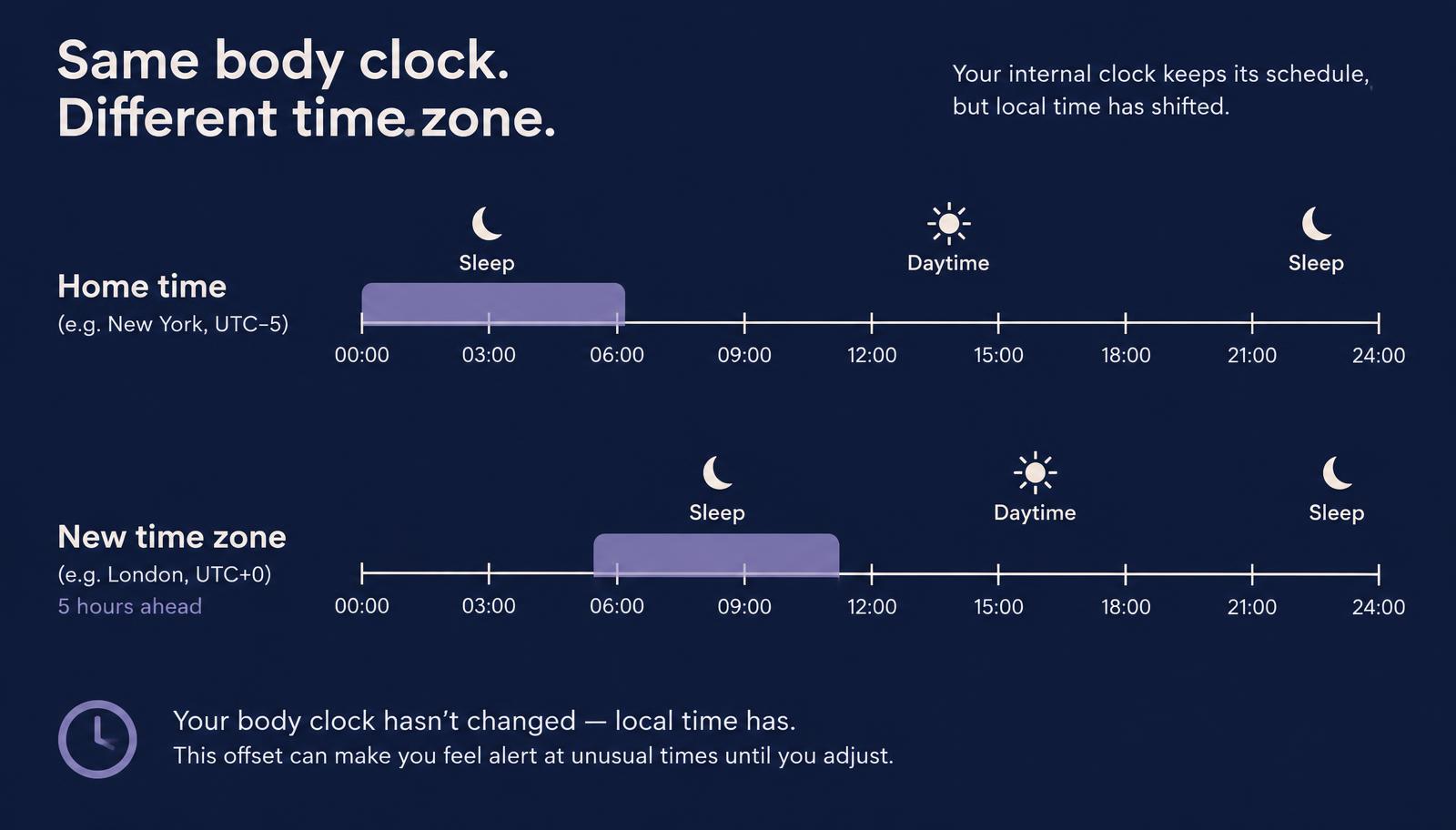
Insomnia and a shifted body clock can both cause difficulty sleeping, but they are different problems with different explanations. Insomnia involves trouble sleeping even when the opportunity and timing are right, while a shifted body clock means the timing itself is out of step with the schedule you are trying to keep. Telling them apart matters because the approaches that help each one are not the same.
6 min readRead the guide →