
Sleep Questions
Why do I snore, and when should I get it checked?
Snoring happens when air passing through your nose or throat makes relaxed tissues vibrate during sleep. It is often harmless, but regular loud snoring alongside breathing pauses, gasping or daytime sleepiness deserves attention because it can be a sign of sleep apnoea.
5 min read · Published 9 November 2026
In short
- Snoring is a sound caused by vibrating tissues, not a measure of how deeply you are sleeping.
- Sleeping position, a blocked nose and alcohol can all influence snoring.
- Snoring alone does not mean you have sleep apnoea.
- Breathing pauses, choking sounds and persistent daytime sleepiness are reasons to seek assessment.
- Melatonin is not an established treatment for snoring or sleep apnoea.
Perhaps a partner has mentioned your snoring, or you have noticed it on a night away with friends. It can feel awkward to discuss, but snoring is not a personal failing. Understanding what causes the noise can help you separate an occasional nuisance from something worth checking.
The encouraging part is that snoring does not always mean poor sleep or a serious health problem. Everyday factors can make a difference, and where there is an underlying breathing problem, assessment can open the door to better sleep and more comfortable days.
What makes someone snore?
During sleep, the muscles around your upper airway relax. As you breathe, tissues in your nose, mouth or throat can vibrate, producing the sound we call snoring. The sound may be soft and occasional or loud enough to disturb someone nearby.
Anything that leaves less room for air to move through can make these vibrations more likely. The shape of your airway plays a part, which helps explain why two people with similar sleeping habits can sound very different at night.
- Sleeping on your back can allow your tongue and relaxed tissues to fall towards the back of your throat.
- A blocked nose can make breathing through the nose harder and encourage mouth breathing.
- Alcohol can increase relaxation of the muscles around the throat.
- Smoking can irritate the airways and contribute to swelling.
- Extra tissue around the neck can narrow the space available for airflow.
These are possible contributors, not a checklist that explains every case. People of different body sizes snore, and snoring can happen even when someone has otherwise healthy sleep habits. A temporary change, such as a cold, may also make a normally quiet sleeper noisier.
Does snoring mean your sleep is poor?
Not necessarily. The sound alone cannot tell you whether your sleep is refreshing or whether your breathing is being disrupted. Nor does loud snoring prove that someone is enjoying especially deep sleep: it is a sign of vibrating tissues, not a sleep-stage measurement.
Sometimes the main effect is on the person sharing the room. Repeated noise can interrupt their sleep even if the snorer feels well rested. That still matters. Both people’s sleep is worth protecting, without blame or embarrassment.
In other cases, snoring occurs alongside obstructive sleep apnoea. This is when the upper airway repeatedly narrows or closes during sleep, interrupting normal breathing. The resulting disruptions can leave someone sleepy during the day, even after what seemed like a full night in bed.
Which everyday changes may support quieter nights?
Where snoring is linked to everyday habits, addressing those factors may help. The useful starting point is noticing patterns rather than buying several products at once. For example, does the snoring mainly happen while lying on the back, during a cold or after drinking alcohol?
- Sleeping on the side rather than the back may reduce snoring for some people.
- Reducing alcohol, particularly close to bedtime, can remove one factor that makes throat muscles relax more.
- Stopping smoking can reduce airway irritation and brings wider health benefits.
- Where excess weight contributes to airway narrowing, weight management may reduce snoring.
- Persistent nasal blockage is worth discussing with a healthcare professional rather than simply accepting difficult breathing at night.
These approaches are not guaranteed fixes, and they do not replace assessment when breathing pauses or significant sleepiness are present. A quieter night also does not necessarily prove that an underlying breathing problem has gone away.
For couples, a practical conversation usually works better than midnight frustration. Describing what was heard — such as steady snoring or repeated gasping — is more useful than saying someone slept badly. Temporary arrangements to protect a partner’s sleep can help, but should not become a reason to ignore concerning symptoms.
Can melatonin help with snoring?
Melatonin is involved in signalling night-time to the body and helping regulate sleep timing. Research into melatonin has looked at problems such as jet lag and certain difficulties with sleep. That is different from treating the physical narrowing of an airway.
Melatonin is not an established treatment for snoring or obstructive sleep apnoea. Helping someone fall asleep and keeping their airway open are separate goals. A sleep-related product should not be assumed to address every reason that sleep feels unrefreshing.
This distinction is useful when choosing what to investigate. If the main concern is noisy breathing, choking sounds or exhaustion despite enough time in bed, focusing only on falling asleep may miss the issue that needs attention.
When is snoring worth getting checked?
A medical assessment is particularly important when someone notices breathing stopping and starting during sleep. Other signs include gasping, snorting or choking sounds, frequent waking, morning headaches and persistent daytime sleepiness. Problems concentrating can also accompany disrupted sleep.
There is no need to wait until every sign is present. Snoring that has a major effect on your own or a partner’s life is also a reasonable reason to seek help. Sleep apnoea can be assessed using overnight breathing monitoring, sometimes carried out at home.
A short record of what happens at night and how you feel during the day can make the conversation clearer. A partner’s observations may be helpful too. Recordings can illustrate a concern, but neither a phone recording nor a consumer sleep tracker can reliably diagnose or rule out sleep apnoea.
Common questions
Can I snore without realising it? Yes. People often learn about snoring from someone else. Not remembering any disturbance does not prove that breathing was uninterrupted throughout the night.
Does snoring only on my back rule out sleep apnoea? No. Position can influence snoring and breathing problems, but it cannot establish a diagnosis. Associated symptoms still matter.
Will an anti-snoring product definitely help? No single product suits every cause. Measures aimed at nasal airflow will not necessarily address narrowing elsewhere in the airway. Claims about stopping the noise should not be confused with evidence that a product treats sleep apnoea.
What is the main takeaway? Occasional snoring is often a manageable nuisance. Understanding its pattern, supporting comfortable breathing and recognising warning signs offers a more useful path towards restful nights than treating every snore as either harmless or alarming.
Sources
Written by Melatonin UK editorial team.
Published 9 November 2026. This article is general information about sleep and the body clock. It is not medical advice, and it does not replace a conversation with your GP or pharmacist.
Read next
Sleep Questions
Why do I struggle to fall asleep?
Difficulty falling asleep usually comes from a mismatch between several systems: how much sleep pressure has built up, how alert or wound-up your mind and body are, and whether your body clock is timed for sleep at that hour. Caffeine, alcohol, and worry about sleep itself can all make things worse. Working out which factor fits you best is more useful than assuming a single cause.
7 min readRead the guide →
Sleep Questions
Why do I wake up during the night?
Waking briefly during the night is a normal part of how sleep is structured and most people do not remember it happening. Problems tend to arise when those wakings become long, frequent, or hard to settle back from, which can be influenced by alcohol, needing the toilet, or a body clock nudging you towards early waking. Understanding which pattern fits your situation helps point towards what might help.
6 min readRead the guide →
Sleep Questions
Insomnia or a shifted body clock?
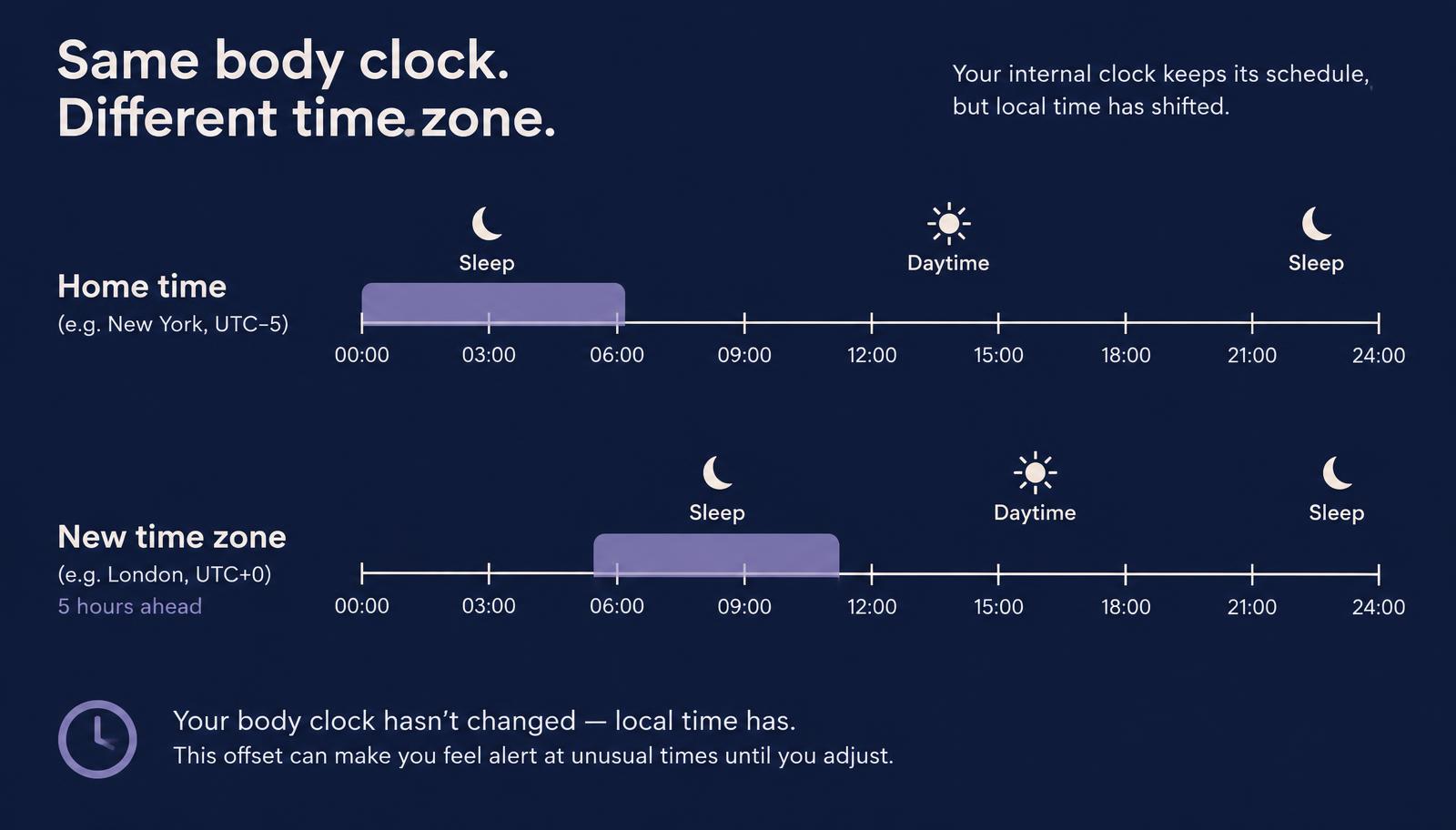
Insomnia and a shifted body clock can both cause difficulty sleeping, but they are different problems with different explanations. Insomnia involves trouble sleeping even when the opportunity and timing are right, while a shifted body clock means the timing itself is out of step with the schedule you are trying to keep. Telling them apart matters because the approaches that help each one are not the same.
6 min readRead the guide →