
Sleep Questions
Why do I wake up during the night?
Waking briefly during the night is a normal part of how sleep is structured and most people do not remember it happening. Problems tend to arise when those wakings become long, frequent, or hard to settle back from, which can be influenced by alcohol, needing the toilet, or a body clock nudging you towards early waking. Understanding which pattern fits your situation helps point towards what might help.
6 min read · Published 24 September 2026
In short
- Sleep naturally moves through cycles, and brief awakenings between them are normal.
- Most brief night-time wakings are forgotten by morning and are not a sign of a problem.
- Alcohol tends to fragment sleep in the second half of the night even if it helps you drop off initially.
- Needing the toilet overnight can be linked to fluid timing, ageing, or underlying health conditions.
- Waking very early and being unable to get back to sleep can reflect a shifted body clock or mood-related sleep changes.
Waking during the night feels like it should mean something has gone wrong, but a certain amount of night-time waking is a completely normal feature of how human sleep is built. The question is not really whether you wake at all, but how often, for how long, and how easily you settle back afterwards.
Normal sleep architecture
Sleep is not one continuous state; it moves through repeating cycles of lighter and deeper sleep, including dreaming sleep, across the night. At the boundary between cycles, brief awakenings are common, and most adults wake briefly several times a night without ever remembering it. These are usually only a problem if something, such as noise, discomfort, or worry, catches hold and stops you drifting straight back off.
Alcohol and fragmented sleep
Alcohol can make falling asleep feel easier, but as it is processed by the body across the night it tends to disrupt the second half of sleep, leading to more frequent waking and a lighter, less restorative pattern overall. Alcohol and sleep quality covers this trade-off in more detail, including why a nightcap is not the sleep aid it can seem to be.
Needing the loo overnight
Waking to use the toilet, sometimes called nocturia, becomes more common with age and can also be linked to fluid intake close to bedtime, certain medicines, or underlying health conditions. An occasional wake for this reason is not usually a cause for concern, but frequent nightly waking for this reason is worth mentioning to a GP, particularly if it is new or worsening.
Early-morning waking
Some people fall asleep without difficulty but then wake far earlier than intended and cannot get back to sleep. This can reflect a body clock that is timed earlier than desired, sometimes seen in older adults, and is explored further in Melatonin and sleep in older adults. Persistent early waking alongside low mood is also a recognised feature worth raising with a GP, since it can be linked to wider wellbeing rather than sleep timing alone.
What turns a brief waking into a long one
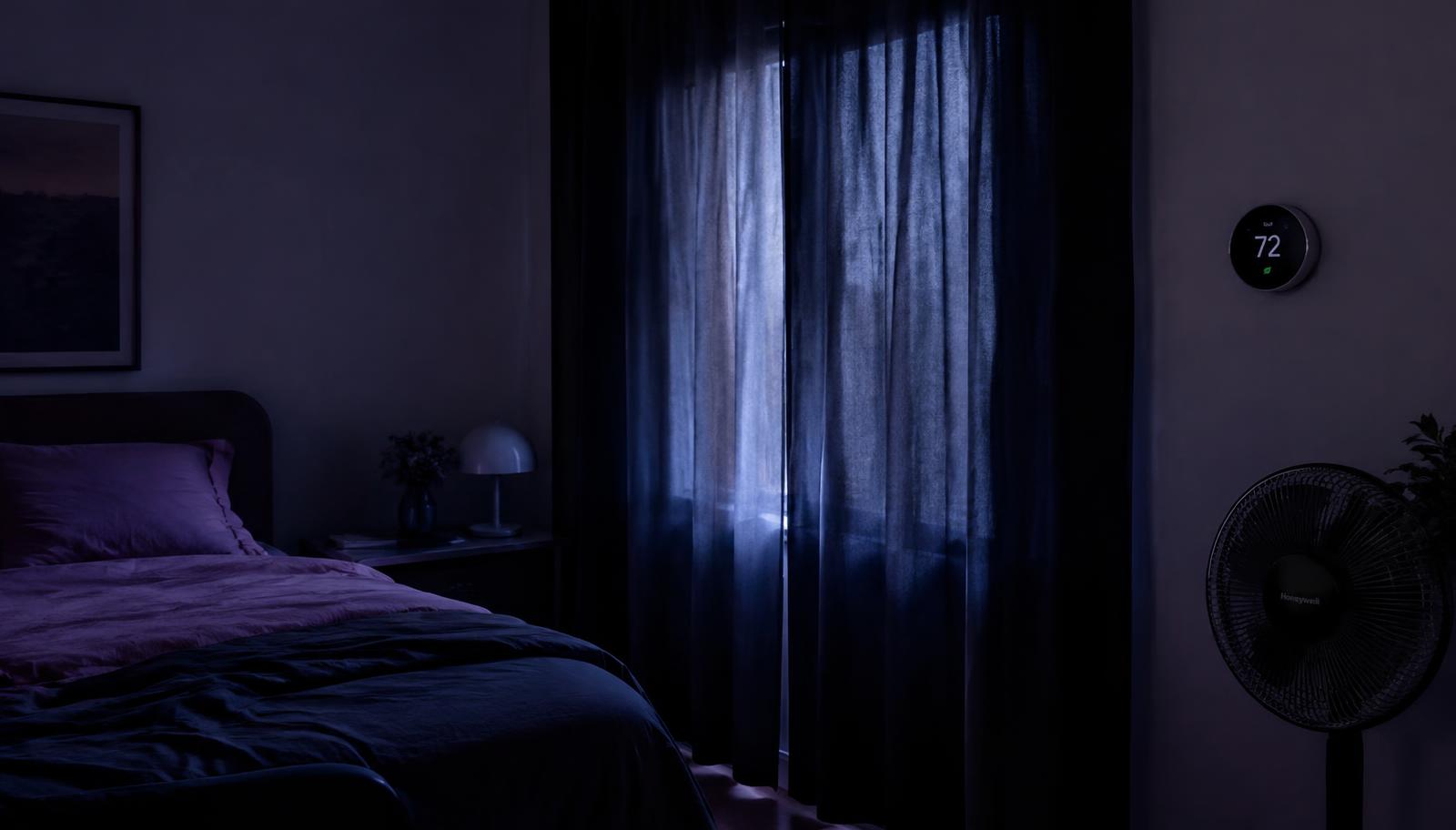
Whether a natural awakening stays brief or turns into twenty minutes of frustration often comes down to what happens next. Checking the clock, worrying about tomorrow, or turning on a bright light can all increase alertness and make it harder to drift back off. Keeping the room dark, avoiding checking the time, and staying calm rather than reaching for a phone all give sleep a better chance of resuming naturally.
- Try to keep the bedroom dark and reasonably cool if you wake overnight.
- Avoid checking the time or your phone, which can increase alertness.
- Limit fluids in the couple of hours before bed if nocturia is an issue.
- Notice whether waking clusters at a particular time, which can hint at the cause.
Noise, temperature, and sharing a bed
External disturbances are one of the most common, and most fixable, causes of repeated waking. Traffic noise, a partner's movement or snoring, a pet jumping onto the bed, or a room that swings too warm or too cold overnight can all interrupt sleep at the boundary between cycles and turn what would have been a forgotten stir into a proper waking. If you consistently wake around the same disturbance, addressing that specific trigger, whether with earplugs, blackout curtains, or a conversation with a partner about sleep habits, is often more effective than trying to change your sleep in the abstract.
A worked example: waking at 3am most nights
Someone who wakes reliably around 3am, lies there for forty minutes running through the next day's tasks, then drifts off again, is describing a pattern with several possible layers. It could simply be a normal cycle boundary that then gets extended by mental arousal. It could reflect alcohol taken with dinner, since this is roughly the point in the night when its disruptive effect tends to peak. Or, if it happens alongside low mood or a flatter outlook generally, it may be worth mentioning to a GP rather than assuming it is purely habitual. Keeping a brief note of what preceded a few of these wakings, food, drink, stress, or none of the above, can help narrow down which explanation fits best.
Stress and repeated waking
A period of higher stress, whether from work, family circumstances, or health worries, often shows up first as more frequent or more prolonged night-time waking rather than as difficulty falling asleep in the first place. This happens because stress raises background physiological arousal, making it easier for a normal, brief awakening at a cycle boundary to tip over into a longer, more alert waking rather than settling back down on its own. If waking has become noticeably more frequent during a stressful period, it is often the stress itself, rather than anything about the bedroom or bedtime routine, that is the more useful thing to address.
It is worth keeping a rough note of how often you wake, roughly how long it takes to settle again, and anything that seems to precede it, such as a late meal, a warm room, or a stressful day. Over a couple of weeks this kind of simple record tends to reveal far more than trying to recall isolated nights, and it is useful information to bring along if you do decide the pattern is worth discussing with a GP.
Temperature swings and hot flushes
Body temperature naturally falls as part of the process of falling and staying asleep, and anything that disrupts this dip can trigger waking. A bedroom that is too warm, heavy bedding, or nightwear that traps heat can all interfere with this natural cooling. Hot flushes associated with the menopause are a specific and common cause of night-time waking for some women, often waking them fully rather than allowing a brief, forgotten stir, and this is worth discussing with a GP if it is frequent or disruptive, since there are options that can help.
Snoring and breathing-related waking
Occasional waking linked to snoring, gasping, or a sensation of breathlessness during the night is different from the ordinary brief awakenings described above and can point towards a breathing-related sleep problem such as sleep apnoea. This is more likely to be reported by a bed partner than noticed by the person experiencing it, since it often does not lead to a clear memory of waking. Loud, frequent snoring alongside daytime sleepiness, or waking gasping for breath, are both reasons to speak to a GP rather than assuming this falls under ordinary night-time waking.
How sleep patterns change with age
Sleep naturally becomes lighter and more fragmented with age for most people, with more time spent in lighter stages of sleep and a reduced amount of the deepest, most restorative stages. This means older adults often wake more often during the night than they did decades earlier, even in good health, which can be reassuring to know rather than assuming something has gone wrong. Melatonin and sleep in older adults looks at this natural shift in more detail, including how the body clock itself tends to move earlier with age.
This does not mean frequent waking should simply be dismissed at any age, but it is useful context: a pattern of waking that would be unusual for someone in their twenties may be an entirely ordinary feature of sleep for someone considerably older, without indicating an underlying problem that needs fixing.
Medicines and other substances
Some prescribed and over-the-counter medicines can affect sleep continuity as a side effect, including certain ones for blood pressure, mood, or pain. If disturbed night-time waking began around the same time as starting a new medicine, it is worth mentioning this to a GP or pharmacist rather than assuming it must be unrelated, since alternatives or adjustments are sometimes possible.
Common questions
Is it normal to wake up a few times a night?
Yes, brief awakenings between sleep cycles are a standard part of sleep and most people simply do not remember them. It only tends to matter when those wakings are long, frequent, or distressing.
Does a nightcap help me sleep through the night?
Not usually. Alcohol can help you fall asleep faster but tends to cause more fragmented, lighter sleep later in the night as it is metabolised.
Why do I always wake at the same early hour?
This can reflect your body clock's natural timing, which shifts earlier for some people with age, though it can also be linked to mood or stress, so it is worth mentioning if it persists.
Sources
Written by The Melatonin UK editorial team.
Published 24 September 2026. This article is general information about sleep and the body clock. It is not medical advice, and it does not replace a conversation with your GP or pharmacist.
Read next
Sleep Questions
Why do I struggle to fall asleep?
Difficulty falling asleep usually comes from a mismatch between several systems: how much sleep pressure has built up, how alert or wound-up your mind and body are, and whether your body clock is timed for sleep at that hour. Caffeine, alcohol, and worry about sleep itself can all make things worse. Working out which factor fits you best is more useful than assuming a single cause.
7 min readRead the guide →

Better Sleep
Alcohol and sleep quality
Alcohol can make falling asleep feel easier because it is sedating, but sedation is not the same as normal, restorative sleep. As the body processes alcohol overnight, sleep tends to become lighter and more fragmented in the second half of the night, which is why a nightcap often leads to earlier or more frequent waking.
6 min readRead the guide →
Sleep Questions
What affects sleep quality?
Sleep quality is not just about how many hours you get; it depends on how continuous that sleep is, whether it is timed well against your body clock, the conditions you sleep in, your general health, stress levels, and substances like caffeine and alcohol. Because several factors usually contribute, improving sleep quality often means looking across all of them rather than fixing one thing alone.
6 min readRead the guide →