
Better Sleep
What is sleep hygiene, and what does it actually do?
Sleep hygiene is the umbrella term for the habits, routines and bedroom conditions that make good sleep more likely, such as a consistent schedule, a dark quiet room, and sensible caffeine and alcohol use. It helps most people some of the time, but it is not a treatment for persistent insomnia on its own, where the evidence points more strongly towards addressing racing thoughts, conditioned wakefulness and irregular schedules directly.
6 min read · Published 24 September 2026
In short
- Sleep hygiene covers habits, timing and bedroom conditions that make sleep more likely, not guaranteed.
- A consistent wake time and reduced evening light and caffeine carry more weight than most other tips.
- Some popular advice, such as never using the bedroom for anything but sleep, matters more for people with existing sleep problems than for good sleepers.
- Sleep hygiene alone rarely resolves long-standing insomnia, where structured approaches like CBT-I tend to work better.
- Treat sleep hygiene as a foundation worth getting right, not a cure if sleep problems are already established.
Sleep hygiene is a catch-all term for the everyday habits and surroundings that make good sleep more likely: when you go to bed and wake up, how much light and caffeine you take in and when, what your bedroom looks and feels like, and how you wind down in the evening. None of these things force sleep to happen. Instead, they remove obstacles and support the body's own systems for getting tired at the right time and staying asleep.
The term is sometimes used loosely, as though it were a single simple fix. In practice it is a collection of separate habits with quite different levels of supporting evidence, and it works better as a foundation than as a treatment. This guide sets out what tends to matter most, what is more marginal, and where sleep hygiene reaches its limits.
What sleep hygiene actually covers
Most lists of sleep hygiene advice fall into a few broad categories: the timing of sleep and wake, light exposure across the day and evening, substances such as caffeine and alcohol, the physical bedroom environment, and the pattern of activity in the hour or two before bed. Related guides on this site look at several of these in detail, including Caffeine and sleep: why timing matters, Alcohol and sleep quality, and Bedroom light, noise and temperature.
- Timing: a broadly consistent wake time, even at weekends.
- Light: bright light during the day, dimmer light in the evening.
- Substances: mindful use of caffeine, alcohol and heavy late meals.
- Environment: a dark, quiet, cool bedroom.
- Wind-down: a predictable pre-bed routine that lowers mental and physical arousal.
Which habits carry more weight
Not all sleep hygiene advice is equally well supported. A consistent wake time is one of the more robust recommendations, because it anchors the body clock and makes the timing of sleepiness more predictable from one day to the next; this is discussed further in How to build a consistent sleep schedule. Reducing bright light and screen exposure in the hour or so before bed also has a reasonably clear rationale, since light is the main cue that delays the body's internal signal for night-time, covered in Evening light, screens and sleep.
Caffeine timing matters more than many people assume, because caffeine can still be affecting the body many hours after it is drunk. Alcohol is a case where the evidence often contradicts what feels true in the moment: it can bring on sleep quickly but tends to disrupt it later in the night. A cool, dark, quiet bedroom is a solid, low-effort habit with a good rationale, even though its individual impact is harder to measure than schedule and light.
Habits that are more marginal
Some commonly repeated advice is more marginal or context-dependent. Strict rules like never reading in bed, or the exact wording around only using the bed for sleep, matter far more for someone already struggling with insomnia, where the bed can become associated with frustration and wakefulness, than for someone sleeping well already. Ritualistic details, such as the precise type of bedding or a specific number of relaxation exercises, have little independent evidence behind them and are better thought of as personal preference than as rules.
The limits of sleep hygiene for persistent insomnia
Sleep hygiene is most useful as prevention and as a foundation. For people with occasional poor sleep, tidying up habits around light, caffeine and timing can make a real difference. For people with persistent insomnia, meaning difficulty falling or staying asleep on most nights for a month or more, sleep hygiene advice alone is generally not enough. NICE and NHS guidance both point towards more structured approaches, particularly cognitive behavioural therapy for insomnia (CBT-I), which addresses the thoughts, behaviours and conditioned associations that keep insomnia going, in a way that habit tweaks cannot.
This does not mean sleep hygiene is pointless once insomnia has set in. It remains a sensible backdrop, and many CBT-I programmes include sleep hygiene as one small component. But relying on it in isolation, especially for months, tends to produce disappointment when it does not resolve a well-established sleep problem.
Getting the basics right without overcomplicating things
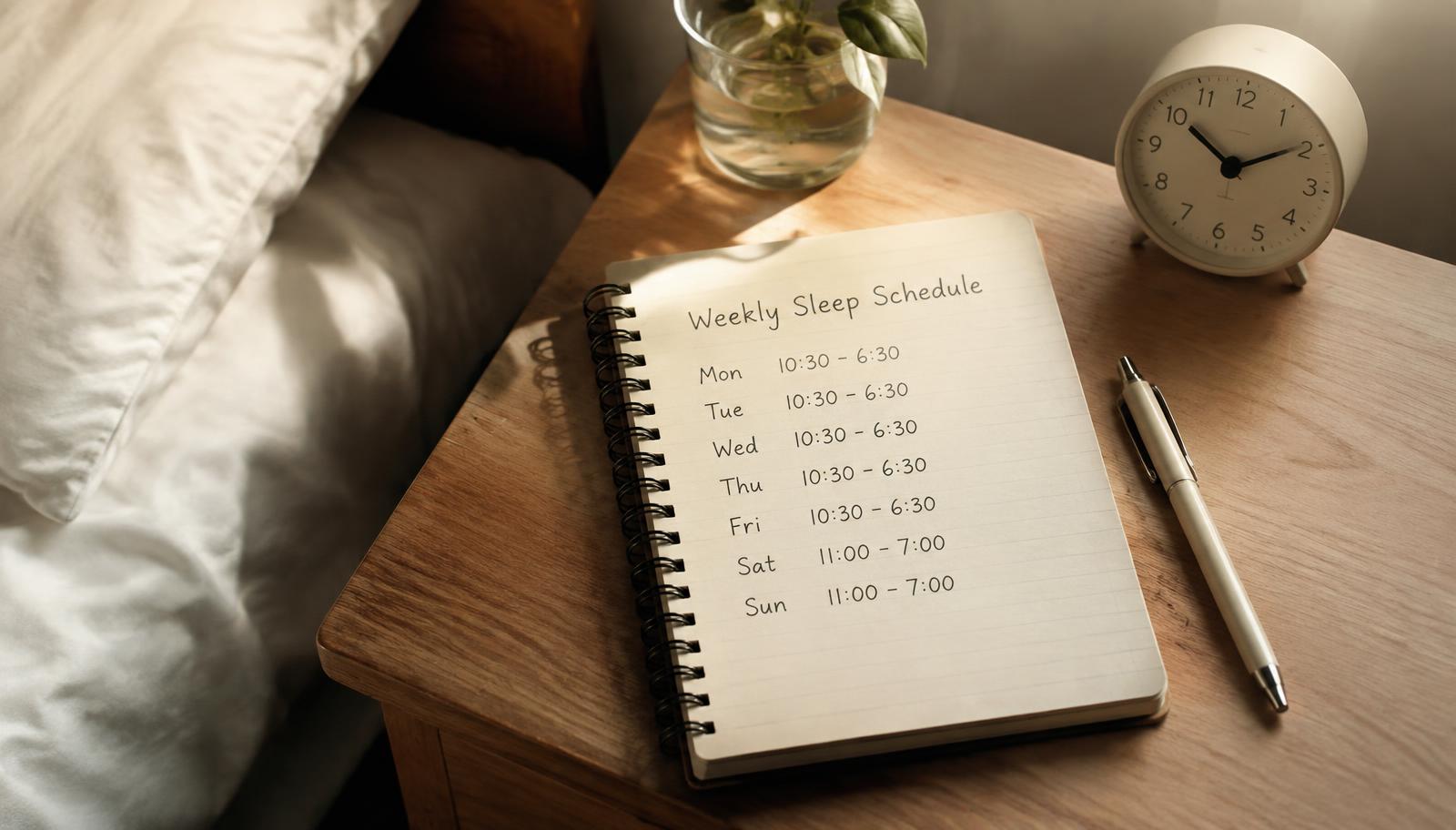
A practical approach is to focus on the handful of habits with the clearest rationale, rather than trying to perfect every item on a long list. A stable wake time, sensible caffeine and alcohol habits, a dim and calm run-in to bed, and a bedroom that is dark, quiet and cool cover most of the useful ground. From there, an evening routine that suits your own life, discussed in An evening routine you can actually maintain, matters more than following someone else's routine exactly.
If sleep problems continue despite reasonable habits being in place for several weeks, that is a signal worth acting on rather than persisting with, as covered in What to do when sleep problems continue.
A worked example of tightening sleep hygiene
Consider someone who wakes at a different time every day depending on the weekend, drinks coffee mid-afternoon, keeps bright overhead lights on until bedtime, and scrolls a phone in bed. None of these habits individually is dramatic, but together they can meaningfully delay the body's readiness for sleep and blur the signal for when night has actually arrived.
A sensible approach is not to change everything at once, but to pick one or two of the more evidence-backed habits first, such as fixing a consistent wake time and moving the last coffee earlier, before adding others. Reviewing progress after a couple of weeks, rather than judging a single night, gives a much clearer sense of whether the changes are actually helping.
Sleep hygiene across different life stages
The relative importance of specific sleep hygiene habits can shift across life. Shift workers, covered in Sleep and shift work, often need to prioritise light management and blackout conditions far more heavily than someone with a standard daytime schedule, since their body clock is working against an unusual routine. Older adults, discussed in Melatonin and sleep in older adults, often experience lighter, more easily fragmented sleep as a normal part of ageing, which can make bedroom conditions and consistent timing even more relevant than in younger adulthood.
This does not mean the basic principles change, but it does mean a generic list of sleep hygiene tips may need weighting differently depending on someone's circumstances, rather than being applied identically to everyone.
Common mistakes people make with sleep hygiene
One frequent mistake is trying to adopt an entire list of recommendations overnight, which rarely sticks and can make sleep itself feel like a stressful project. Another is judging a habit change after only one or two nights, when body clock adjustments and habit formation both tend to take longer than that to show a clear effect.
- Changing too many habits at once, making it hard to tell what actually helped.
- Abandoning a change after a single disappointing night rather than giving it a fair trial.
- Treating minor rituals as equally important as core habits like timing and light.
- Continuing sleep hygiene alone for months despite no improvement, rather than seeking further advice.
Sleep hygiene and technology
Smartphones and other devices interact with sleep hygiene in more than one way: the light they emit, the alertness triggered by engaging content, and the sheer temptation to keep checking them all play a part. A simple, practical habit is deciding on a rough time to put devices in another room, or at least out of arm's reach, rather than relying on willpower alone in the moment. This works alongside, rather than replacing, the lighting habits described in Evening light, screens and sleep.
Common questions
Is sleep hygiene the same as sleep hygiene therapy?
Not quite. Sleep hygiene usually refers to general habit advice, while sleep hygiene as delivered in a clinical setting is often just one small element within a broader treatment such as CBT-I, alongside things like stimulus control and scheduled sleep restriction.
Can good sleep hygiene fix insomnia on its own?
For occasional or mild sleep difficulty, improved habits can help considerably. For persistent insomnia, evidence and clinical guidance suggest sleep hygiene alone is rarely sufficient, and a GP or a structured programme such as CBT-I is more likely to help.
Do I need to follow every sleep hygiene rule?
No. The habits with the strongest rationale, such as consistent wake times, sensible caffeine timing and a dark, cool bedroom, are worth prioritising. Less evidence-backed rituals can be adopted or dropped based on what actually helps you.
Sources
Written by The Melatonin UK editorial team.
Published 24 September 2026. This article is general information about sleep and the body clock. It is not medical advice, and it does not replace a conversation with your GP or pharmacist.
Read next
Better Sleep
An evening routine you can actually maintain
A useful evening routine mainly does one job: lowering physical and mental arousal in a predictable way before bed, so the transition to sleep is not abrupt. The most sustainable routines are short, flexible and built around a couple of anchor habits, rather than a long list of steps that quietly gets abandoned within a fortnight.
6 min readRead the guide →
Better Sleep
Bedroom light, noise and temperature
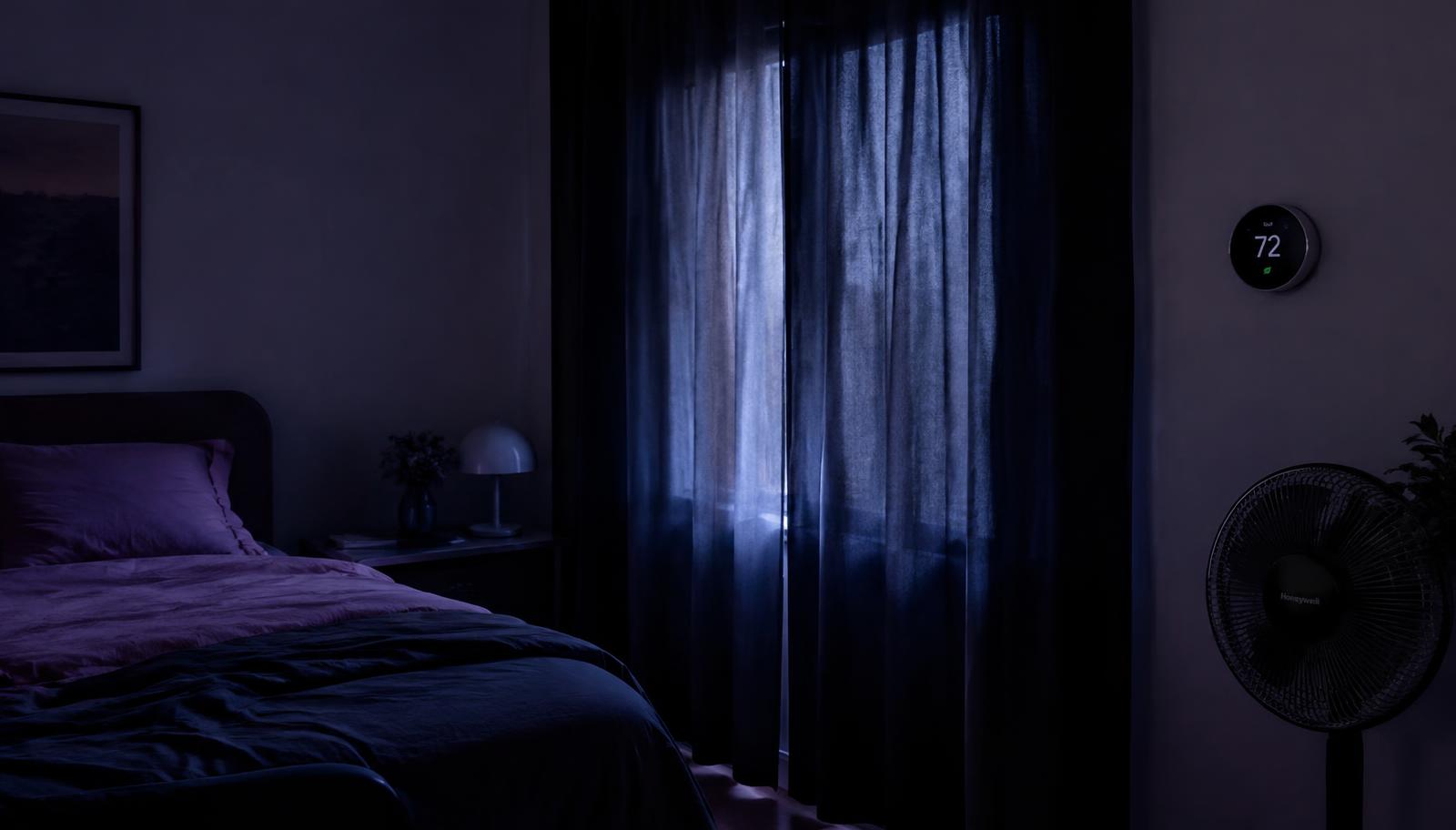
A bedroom that is dark, quiet and on the cooler side tends to support better sleep, with temperature and light generally having the clearer effects and noise being more individually variable. None of these factors need to be perfect, but persistent problems with any of them, such as light UK summer mornings, are worth addressing rather than tolerating indefinitely.
6 min readRead the guide →

Sleep Questions
What to do when sleep problems continue
When sleep problems persist for weeks despite reasonable habits, the next steps usually involve keeping a sleep diary and speaking to a GP or pharmacist. UK guidance recommends cognitive behavioural therapy for insomnia, known as CBTi, as a first-line approach for ongoing insomnia, ahead of medicines. Knowing what a GP appointment involves can make that step feel less daunting.
6 min readRead the guide →