
Better Sleep
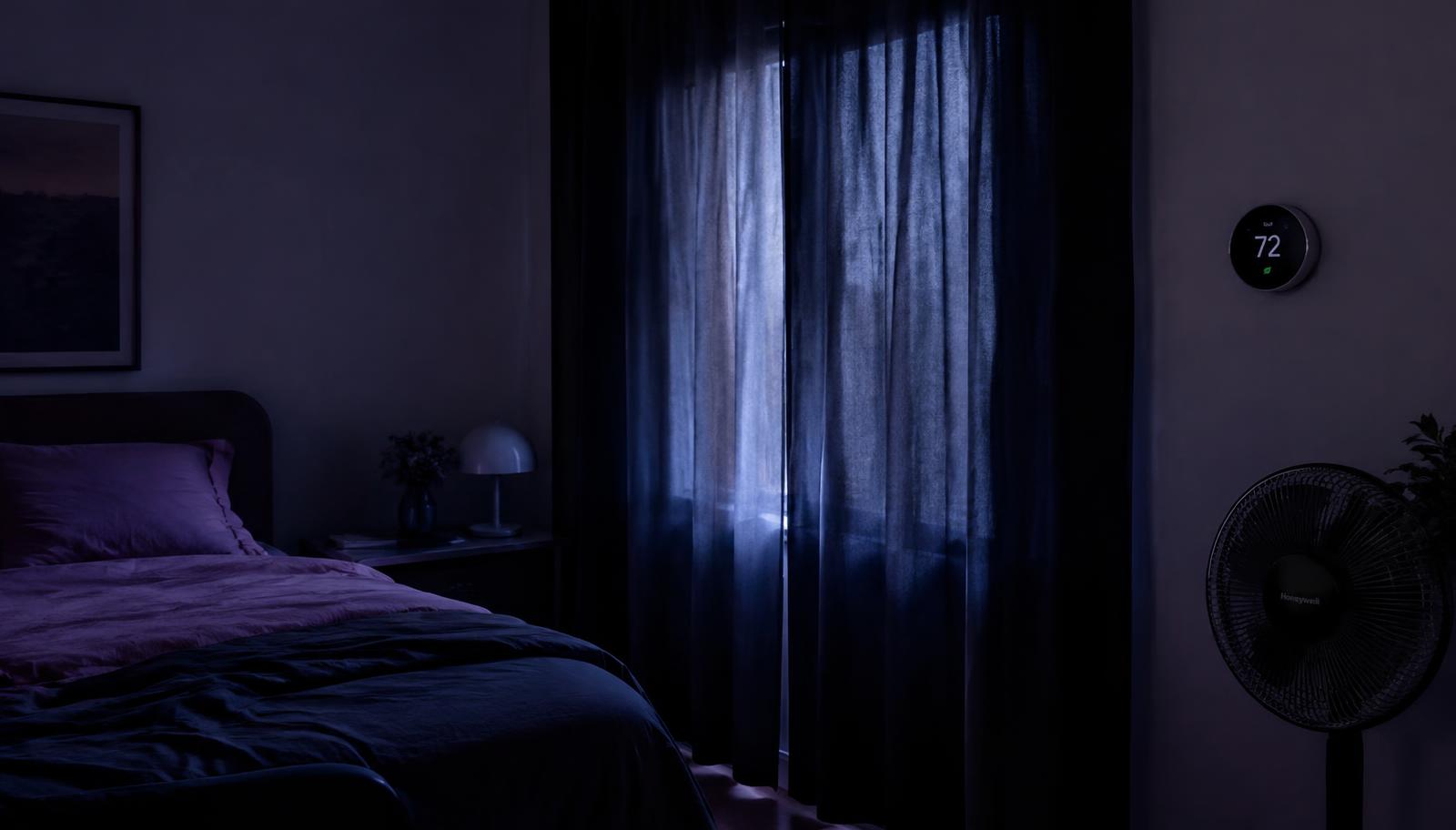
Bedroom light, noise and temperature
A bedroom that is dark, quiet and on the cooler side tends to support better sleep, with temperature and light generally having the clearer effects and noise being more individually variable. None of these factors need to be perfect, but persistent problems with any of them, such as light UK summer mornings, are worth addressing rather than tolerating indefinitely.
6 min read · Published 24 September 2026
In short
- A dark room supports the body's evening and overnight signals better than a light one, particularly around dawn.
- Blackout curtains or blinds are one of the higher-value, low-effort changes for UK summer mornings.
- A cooler bedroom, roughly on the cool side of comfortable, is consistently linked with easier sleep than an overly warm one.
- Noise disrupts sleep in proportion to how sudden, unpredictable and meaningful it is, not just its volume.
- None of these factors needs to be perfect; consistent improvement matters more than an ideal, unattainable setup.
Light, noise and temperature are the three environmental factors people most often ask about when trying to improve sleep, and all three have a genuine basis in how the body regulates sleep. They differ, though, in how strong and consistent their effects are, and in how much effort is realistically worth putting into each one.
Light, and why darkness helps
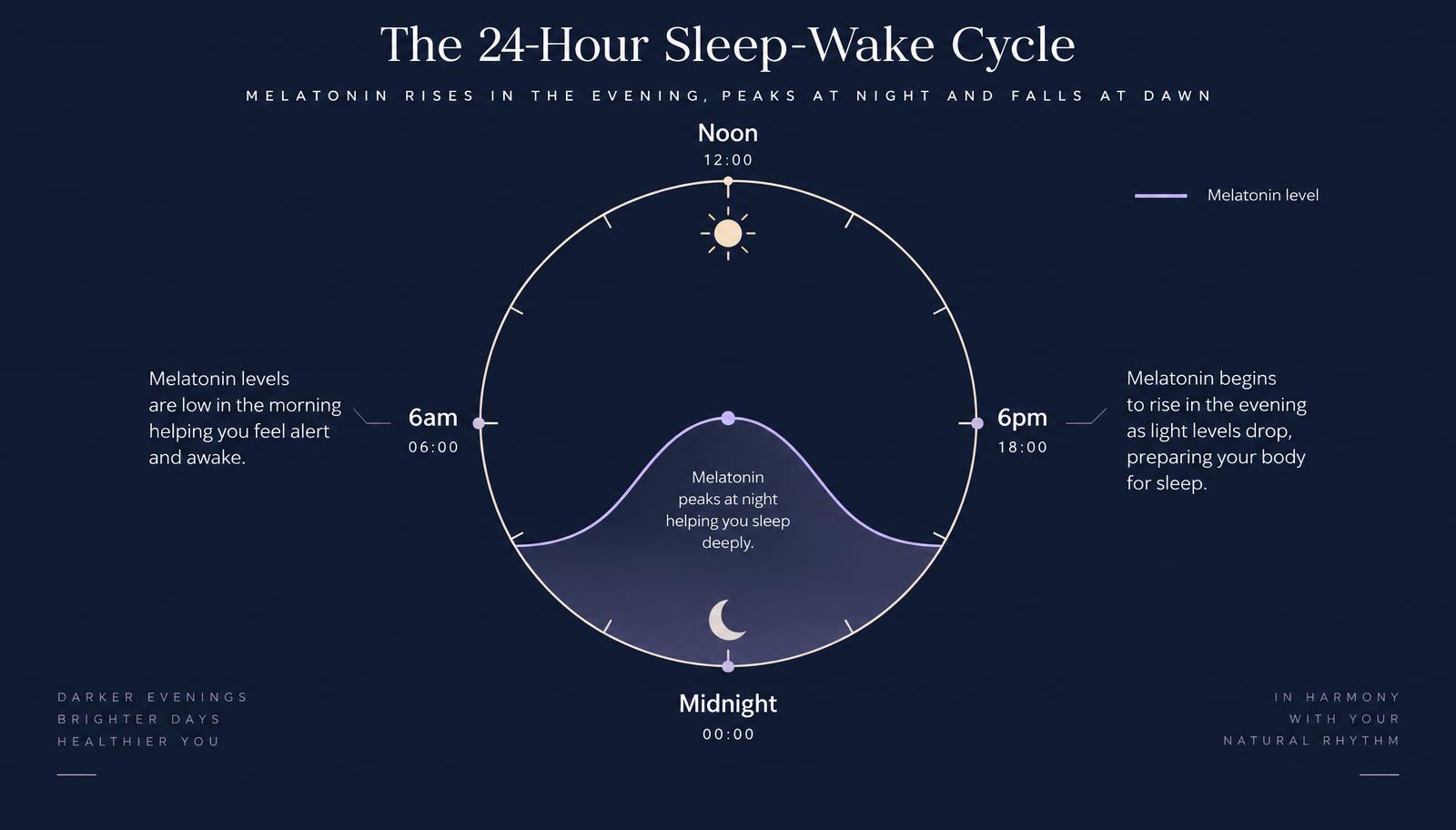
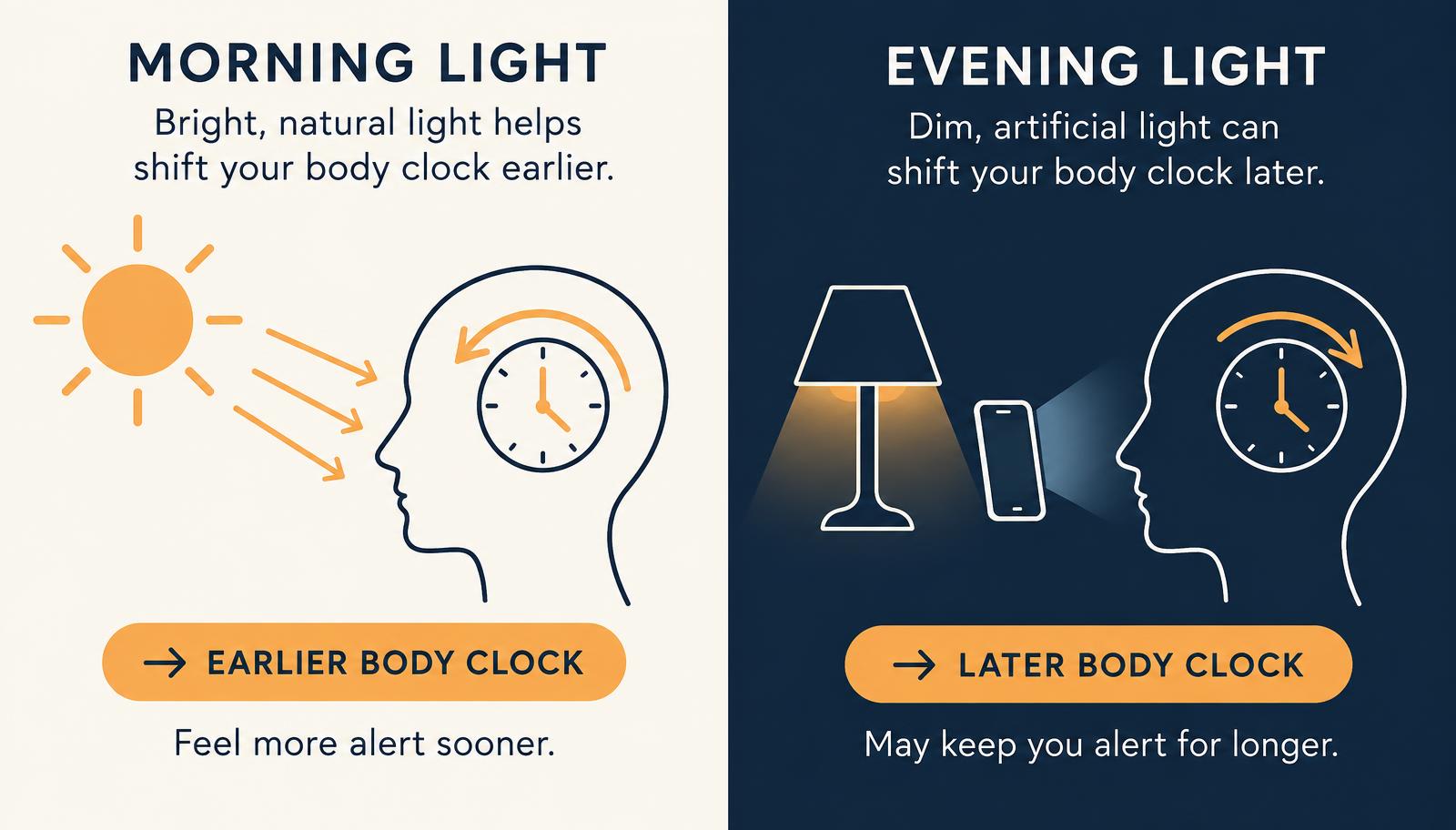
Light is the strongest external cue the body uses to time sleep and wakefulness, through its effect on the body clock and on the evening rise in melatonin, covered in more depth in Why does light affect melatonin? A dark bedroom supports this system by not working against the natural fall in light-sensitive signals overnight, and, just as importantly, a bright bedroom at the wrong time, particularly around dawn, can prematurely signal that it is time to be awake.
This is a particularly practical issue in the UK during summer, when sunrise can be well before five in the morning and curtains that are perfectly adequate in winter let in a surprising amount of light. Blackout curtains or blinds are one of the more reliably useful changes people can make, especially for anyone who is a light sleeper or who needs to sleep later than sunrise, such as shift workers, covered in Sleep and shift work.
- Blackout curtains, blinds or an eye mask reduce dawn light disturbance.
- Covering or dimming small light sources, such as standby lights on electronics, can help sensitive sleepers.
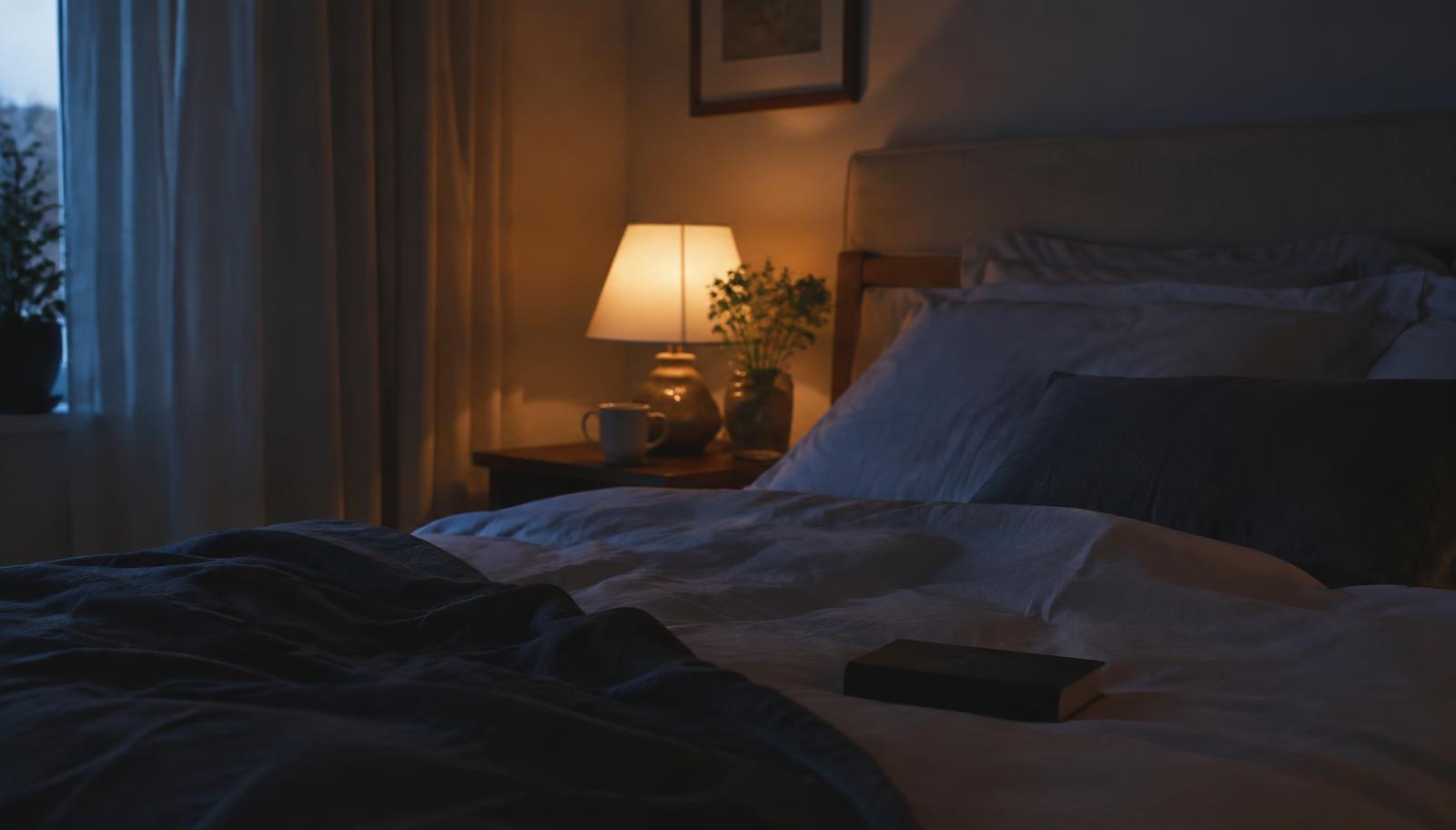
- A dim, warm-toned light in the run-up to bed is preferable to bright overhead lighting.
Noise, and why it varies so much between people
Noise is more individually variable than light or temperature in how much it disrupts sleep. Continuous, predictable background noise, such as a fan or steady traffic hum, tends to be far less disruptive than sudden or unpredictable sounds, even at a similar volume, because the brain habituates to steady sound more easily than to irregular sound. A noise that carries meaning, such as a phone notification or a partner's voice, can also wake or rouse a person more readily than a louder but meaningless sound.
Earplugs, white noise or fan noise, and simple changes such as moving a phone out of the bedroom or turning off notifications, are reasonable, low-cost options. Soundproofing a room fully is rarely practical or necessary; reducing the most disruptive and unpredictable sources of noise tends to deliver most of the benefit.
Temperature, and why cooler rooms tend to help
Body temperature naturally drops in the evening as part of preparing for sleep, and a bedroom that is too warm can work against this drop, making it harder to fall asleep and more likely that sleep will be lighter or interrupted. A commonly cited comfortable range for a bedroom is around 16 to 19 degrees Celsius, though comfort varies with bedding, clothing, age and individual preference, so this is a starting point rather than a strict target.
Practical ways to manage bedroom temperature include lighter bedding in warmer months, a fan for air movement, and, particularly relevant in the UK during heatwaves, keeping curtains or blinds closed during the day to stop a room absorbing heat, then ventilating in the cooler evening once outside temperatures drop.
A practical, honest weighting
If choosing where to put effort, darkness and temperature generally have the clearer and more consistent evidence behind them, particularly for people bothered by early summer light or a bedroom that runs warm. Noise matters, but its impact depends heavily on the type of sound and the individual, so the most useful step is usually addressing the specific noises that actually wake you, rather than pursuing silence in general.
None of these factors needs to be perfect to see a benefit, and chasing an ideal setup can itself become a source of stress that works against sleep. Reasonable, consistent improvements, alongside the habits covered in What is sleep hygiene, and what does it actually do?, tend to matter more than any single change made perfectly.
A worked example: a light UK summer bedroom
Take a typical UK bedroom in June, where sunrise happens well before five and standard curtains let in a grey-blue light from early morning. Someone sleeping in this room may find they wake naturally an hour or more earlier than in winter, feel their sleep become lighter from around dawn onwards, and struggle to get back to a deep stage of sleep even if they technically stay in bed longer. Fitting blackout linings or a close-fitting blind directly addresses the specific cue causing this, rather than treating the earlier waking as an unrelated seasonal mystery.
This example illustrates a wider point: identifying the specific environmental cue behind a sleep complaint, rather than applying general advice, usually leads to a more effective fix.
Shared bedrooms and reaching a workable compromise
Couples or housemates sharing a bedroom often have different preferences for temperature, light and noise, and this is a common source of low-level sleep disruption that is rarely discussed directly. Practical compromises include separate bedding to allow different temperature preferences under one duvet setup, an eye mask for the person more sensitive to light, and earplugs or white noise for the person more sensitive to a partner's movement or snoring.
- Separate duvets or bedding weights to accommodate different temperature preferences.
- An eye mask for one partner rather than blackout conditions neither party agrees on.
- Earplugs or a white noise machine to manage a partner's snoring or restlessness.
- A trial period for any change, since preferences can take a few nights to assess fairly.
When bedroom environment is not the real problem
It is worth being honest about the limits of environmental changes. If sleep difficulty persists despite a dark, quiet, cool bedroom being firmly in place, the cause is more likely to lie elsewhere, such as racing thoughts, an irregular schedule, or an underlying health condition, rather than in the bedroom itself. Continuing to fine-tune bedroom conditions indefinitely in this situation can become a distraction from more useful steps, including those covered in What to do when sleep problems continue.
Adjusting bedroom conditions through the seasons
UK bedrooms face quite different challenges across the year: early light and potential overheating in summer, and a colder, darker but sometimes over-heated room from central heating in winter. Reviewing bedding weight, curtain effectiveness, and heating settings at the start of each season, rather than leaving a winter setup in place through summer or vice versa, keeps these factors working in your favour rather than becoming a source of disrupted sleep you have stopped noticing.
When you cannot change your bedroom much
Not everyone has full control over their bedroom, particularly renters who cannot fit blackout blinds or change fixed heating systems. In these situations, portable and reversible options, such as a well-fitted temporary blackout blind, a free-standing fan, earplugs, or an eye mask, can achieve much of the same benefit without requiring permanent changes to the property.
Common questions
Do blackout curtains really make a measurable difference?
For people affected by early light, particularly in UK summer months or for anyone needing to sleep during the day, blackout curtains or blinds are one of the more consistently useful, low-effort changes available, since they directly address a strong biological cue.
Is it bad to sleep with a fan or white noise on all night?
For most people, steady background noise such as a fan is not harmful and can help mask more disruptive, unpredictable sounds. It is a matter of personal preference rather than a requirement.
What is the single most useful bedroom change to make?
There is no universal answer, since it depends on which factor is currently causing problems, but addressing excess light around dawn and an overly warm room tend to offer the clearest, most reliable improvements for the effort involved.
Sources
Written by The Melatonin UK editorial team.
Published 24 September 2026. This article is general information about sleep and the body clock. It is not medical advice, and it does not replace a conversation with your GP or pharmacist.
Read next
Better Sleep
What is sleep hygiene, and what does it actually do?
Sleep hygiene is the umbrella term for the habits, routines and bedroom conditions that make good sleep more likely, such as a consistent schedule, a dark quiet room, and sensible caffeine and alcohol use. It helps most people some of the time, but it is not a treatment for persistent insomnia on its own, where the evidence points more strongly towards addressing racing thoughts, conditioned wakefulness and irregular schedules directly.
6 min readRead the guide →
Better Sleep
An evening routine you can actually maintain
A useful evening routine mainly does one job: lowering physical and mental arousal in a predictable way before bed, so the transition to sleep is not abrupt. The most sustainable routines are short, flexible and built around a couple of anchor habits, rather than a long list of steps that quietly gets abandoned within a fortnight.
6 min readRead the guide →
The Body Clock
Why does light affect melatonin?
Light is the single strongest signal your body uses to time melatonin release. Specialised cells in the eye detect brightness, quite separately from normal vision, and pass that information to the brain's master clock, which controls the pineal gland. Brightness, timing and duration of light exposure all matter, not just its colour.
6 min readRead the guide →