
Better Sleep
An evening routine you can actually maintain
A useful evening routine mainly does one job: lowering physical and mental arousal in a predictable way before bed, so the transition to sleep is not abrupt. The most sustainable routines are short, flexible and built around a couple of anchor habits, rather than a long list of steps that quietly gets abandoned within a fortnight.
6 min read · Published 24 September 2026
In short
- The core purpose of an evening routine is to lower arousal gradually, not to follow a set of rituals for their own sake.
- A short, repeatable run-in of 20 to 45 minutes is more sustainable than an elaborate multi-step routine.
- Consistency in timing and sequence matters more than the specific activities chosen.
- Dimmer lighting and reduced stimulation are the most useful common threads across good routines.
- It is fine, and often necessary, to drop parts of a routine on busy or disrupted days rather than abandoning it altogether.
Evening routines are often presented as long lists: a bath, a book, herbal tea, stretching, journalling, a specific breathing exercise, and so on. For some people that level of ritual is enjoyable and sustainable, but for many it becomes another obligation, and a routine that feels like a chore tends to get skipped exactly on the nights it might help most, such as after a stressful day.
A more realistic way to think about an evening routine is in terms of what it is actually meant to do, rather than which specific activities are involved.
Lowering arousal, not following rituals
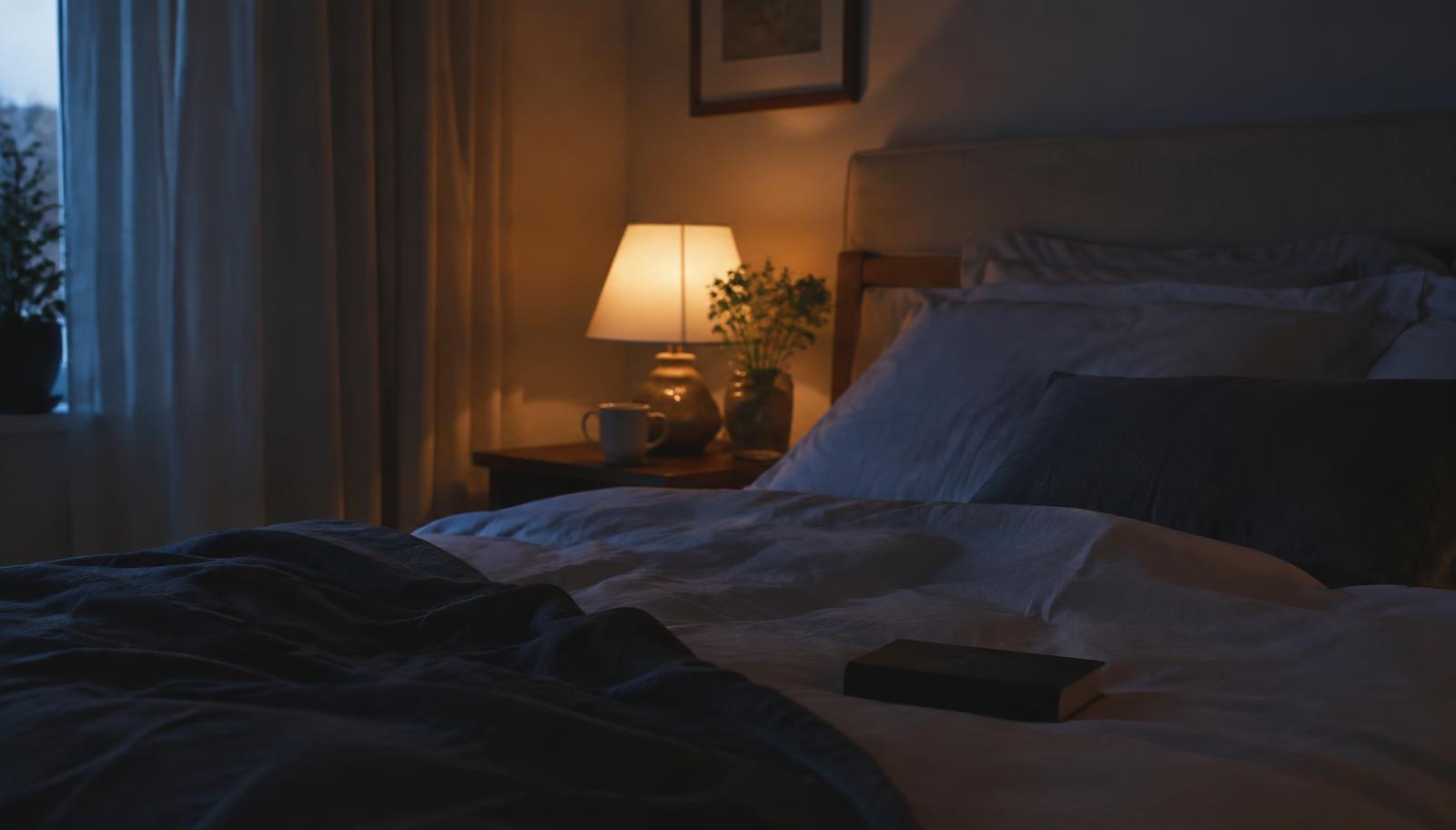
The underlying purpose of an evening routine is to lower arousal, meaning the general level of physical tension and mental activity, gradually across the hour or so before bed. Going from answering emails, scrolling a phone, or an intense conversation straight into lying down and trying to sleep asks the body and mind to switch state very abruptly, which many people find difficult. A routine works by creating a gentle downward slope instead of a cliff edge.
Because the goal is arousal reduction, almost any calm, low-stimulation activity can be part of a routine, so long as it is genuinely calming for you personally. There is no universally correct set of steps, and the routines that last are usually the ones built around what someone actually finds relaxing rather than what a list recommends.
A predictable run-in to bed
Predictability itself does some of the work. A routine followed in roughly the same order at roughly the same time each night becomes a learned cue, so the body starts to associate the sequence with the approach of sleep, similar in principle to how a consistent wake time anchors the body clock, discussed in How to build a consistent sleep schedule. This means the specific order matters less than doing something recognisable and repeatable.
- Pick a rough start time for wind-down, for example 30 to 45 minutes before your target bedtime.
- Dim overhead lights and switch to lamps, which supports the evening drop in light exposure covered in Evening light, screens and sleep.
- Choose two or three calm activities you genuinely enjoy, rather than a long checklist.
- Keep the sequence roughly consistent, but not rigid to the minute.
- Leave phones and work-related screens out of the last part of the routine if possible.

Keeping it short and flexible
A routine that takes five minutes and happens every night beats an elaborate one that happens twice a week. Twenty to forty-five minutes is a realistic window for most people, long enough to lower arousal without becoming a demanding project. If a routine requires a specific room, product or amount of uninterrupted time that is not always available, it will fail on exactly the nights when a calm transition to sleep matters most.
What to drop when life gets in the way
It helps to decide in advance which parts of a routine are essential and which are optional extras, so that busy evenings do not turn into skipping the whole thing. Activities that depend on specific conditions, such as a full bath, are reasonable to drop first. The elements worth protecting are usually the simplest: dimming lights, putting screens away, and keeping roughly the same bedtime, since these connect most directly to the body's own signals for sleep, as explored in What is sleep hygiene, and what does it actually do?
It is also worth dropping any part of a routine that has started to feel like pressure rather than relaxation. If a breathing exercise or a specific ritual becomes something to worry about getting right, it is working against its own purpose, and a simpler substitute is usually better.
Building a routine around your own life, not a template
A routine designed for someone with a quiet house and a fixed nine-to-five schedule may not translate well to a parent of young children, a shift worker, or someone sharing a small flat with housemates. Rather than adopting a routine wholesale from an article or app, it helps to start from the activities already naturally available at the end of your day and adjust them slightly towards calmer versions, rather than inventing an entirely new set of habits from scratch.
For example, someone who already unwinds by watching television can keep that habit but dim the lights, lower the volume, and choose calmer content in the final stretch before bed, rather than replacing television altogether with an unfamiliar ritual that feels forced.
Routines for different households
Parents of young children often cannot guarantee an uninterrupted wind-down and benefit more from very short, robust routines, such as dimming lights and a two-minute phone-free stretch, that can happen even on a chaotic evening. Shift workers, covered in Sleep and shift work, may need a wind-down routine that happens at an unusual time of day relative to daylight, which makes controlling light and noise even more important than the specific activities chosen. People living with others should also factor in shared spaces, since a routine that depends on total quiet or a dedicated room may not always be realistic.
- Parents of young children: prioritise a short, robust routine over an elaborate one.
- Shift workers: focus on controlling light and noise around an unusual sleep time.
- Shared households: build in flexibility for shared spaces rather than relying on solitude.
Troubleshooting a routine that is not working
If a routine has been followed consistently for a couple of weeks and sleep has not improved, it is worth checking whether the routine is genuinely lowering arousal or has simply become another item on a checklist performed without real engagement. It is also worth checking that other basics, such as a consistent wake time and reasonable caffeine timing, covered in What is sleep hygiene, and what does it actually do?, are in place alongside the evening routine, since a good wind-down cannot compensate fully for problems elsewhere in the day.
If sleep difficulty persists despite a reasonable routine and generally sound daytime habits, that is a sign worth taking to a GP rather than assuming the routine itself needs more tweaking indefinitely.
Involving a partner or family in a wind-down routine
Where a routine involves other people, such as a partner watching television or children needing settling, differing preferences for timing and stimulation can undermine an otherwise sensible routine. A brief, honest conversation about what each person needs to wind down, and agreeing on a rough shared cut-off for bright lights or loud television, tends to work better than one person trying to enforce a routine the household has not agreed to.
Keeping a version of your routine while travelling
Travel, whether for work or leisure, often makes a usual evening routine impossible to follow exactly, but a minimal version, such as dimming a hotel room's lighting and putting a phone aside for the last few minutes, can still be carried out almost anywhere. Maintaining even a scaled-down routine while away tends to make it easier to return to the full version once home, rather than needing to rebuild the habit from nothing.
Common questions
Does an evening routine need to be the same every single night?
Not exactly the same, but broadly similar in timing and sequence most nights helps the routine act as a reliable cue for sleep. Occasional variation, or a shortened version on busy nights, is fine and more sustainable than an all-or-nothing approach.
Is it bad to read on a screen as part of a wind-down routine?
Screens are not automatically ruled out, but bright, stimulating content, especially anything work-related or emotionally engaging, tends to work against arousal reduction. Dimmed screens with calm, low-key content are less of a concern than bright overhead lighting or stressful browsing.
How long should an evening routine be?
There is no fixed correct length, but somewhere between 20 and 45 minutes tends to be enough to lower arousal without becoming an unsustainable commitment. Shorter, consistently followed routines generally beat longer ones that are frequently skipped.
Sources
Written by The Melatonin UK editorial team.
Published 24 September 2026. This article is general information about sleep and the body clock. It is not medical advice, and it does not replace a conversation with your GP or pharmacist.
Read next
Better Sleep
What is sleep hygiene, and what does it actually do?
Sleep hygiene is the umbrella term for the habits, routines and bedroom conditions that make good sleep more likely, such as a consistent schedule, a dark quiet room, and sensible caffeine and alcohol use. It helps most people some of the time, but it is not a treatment for persistent insomnia on its own, where the evidence points more strongly towards addressing racing thoughts, conditioned wakefulness and irregular schedules directly.
6 min readRead the guide →
The Body Clock
Evening light, screens, and sleep
Evening light can delay the rise of melatonin and shift the body clock later, particularly when it is bright and prolonged. The evidence for screens specifically is more mixed than commonly assumed, and factors like stimulating content and general arousal often play as large a role as the light itself. Both light and what you are doing on the screen are worth considering.
6 min readRead the guide →
Better Sleep
How to build a more consistent sleep schedule
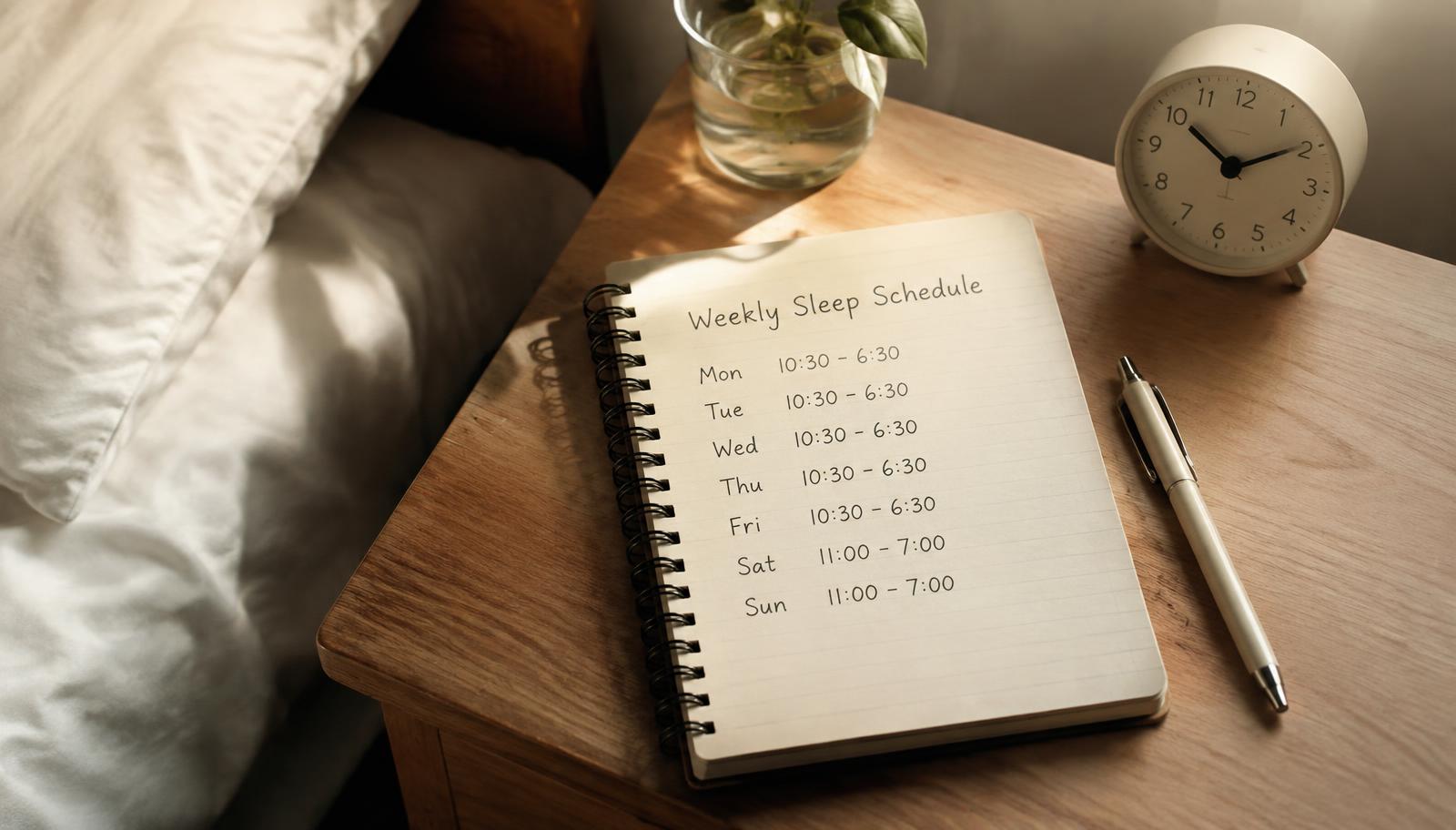
A more consistent sleep schedule is usually best built gradually, anchored around a fixed wake time rather than a fixed bedtime, supported by consistent light exposure. Small, sustainable adjustments over days or weeks tend to work better than sudden changes. The goal is a rhythm the body clock can rely on, not a single perfect night.
6 min readRead the guide →