
The Body Clock
Sleep and shift work: understanding the body-clock challenge
Shift work, especially night and rotating shifts, asks the body to be alert and asleep at times that conflict with its natural light-driven rhythm. This creates ongoing challenges for both sleep quality and daytime functioning, and while some habits around light and routine can help, persistent problems are worth discussing individually with a health professional.
7 min read · Published 24 September 2026

In short
- Night and rotating shifts require working against the body clock's natural preference for daytime activity.
- Light exposure at unusual hours is one of the biggest disruptors of shift workers' circadian rhythm.
- Daytime sleep is often lighter and shorter than night-time sleep, even when the total hours are similar.
- Consistent routines, where possible, tend to ease the strain more than constantly changing schedules.
- Ongoing sleep problems linked to shift work are worth raising individually with a GP or occupational health service.
Shift work, particularly night shifts and rotating shift patterns, places sustained pressure on the body clock in a way that occasional travel does not. Rather than a temporary mismatch that resolves within a week or two, as with jet lag, shift work often means repeatedly asking the body to be alert and asleep at times that go against its natural rhythm.
Why the body clock resists night-time alertness
The human body clock evolved around a world with light in the day and darkness at night, and it uses that pattern to time far more than just sleep. Body temperature, hormone release, digestion and alertness all follow a broadly similar daily rhythm. Night shift work asks someone to be productive and focused during the hours the body clock expects rest, and then to sleep during the hours it expects wakefulness.
Unlike jet lag, where the body clock eventually catches up with a new stable time zone, shift work often involves rotating patterns or a mix of day and night shifts, which gives the body clock little chance to fully settle into any single rhythm. This is a key reason shift work is widely recognised as one of the more demanding circumstances for sleep and alertness.
The effect of light at odd hours
Light is the body clock's most powerful timing cue, and shift work often means encountering it at exactly the wrong moments. Bright light during a night shift can help with alertness at work, but it can also delay the body clock further, making it harder to feel sleepy when the shift finally ends. Conversely, daylight on the journey home after a night shift can signal to the brain that it's time to be awake, working directly against the need to sleep.
- Bright light during a night shift can support alertness but may also shift the body clock later.
- Morning daylight encountered on the way home after a night shift can make falling asleep harder.
- Wearing dark glasses on the journey home is a strategy some shift workers use to limit this effect.
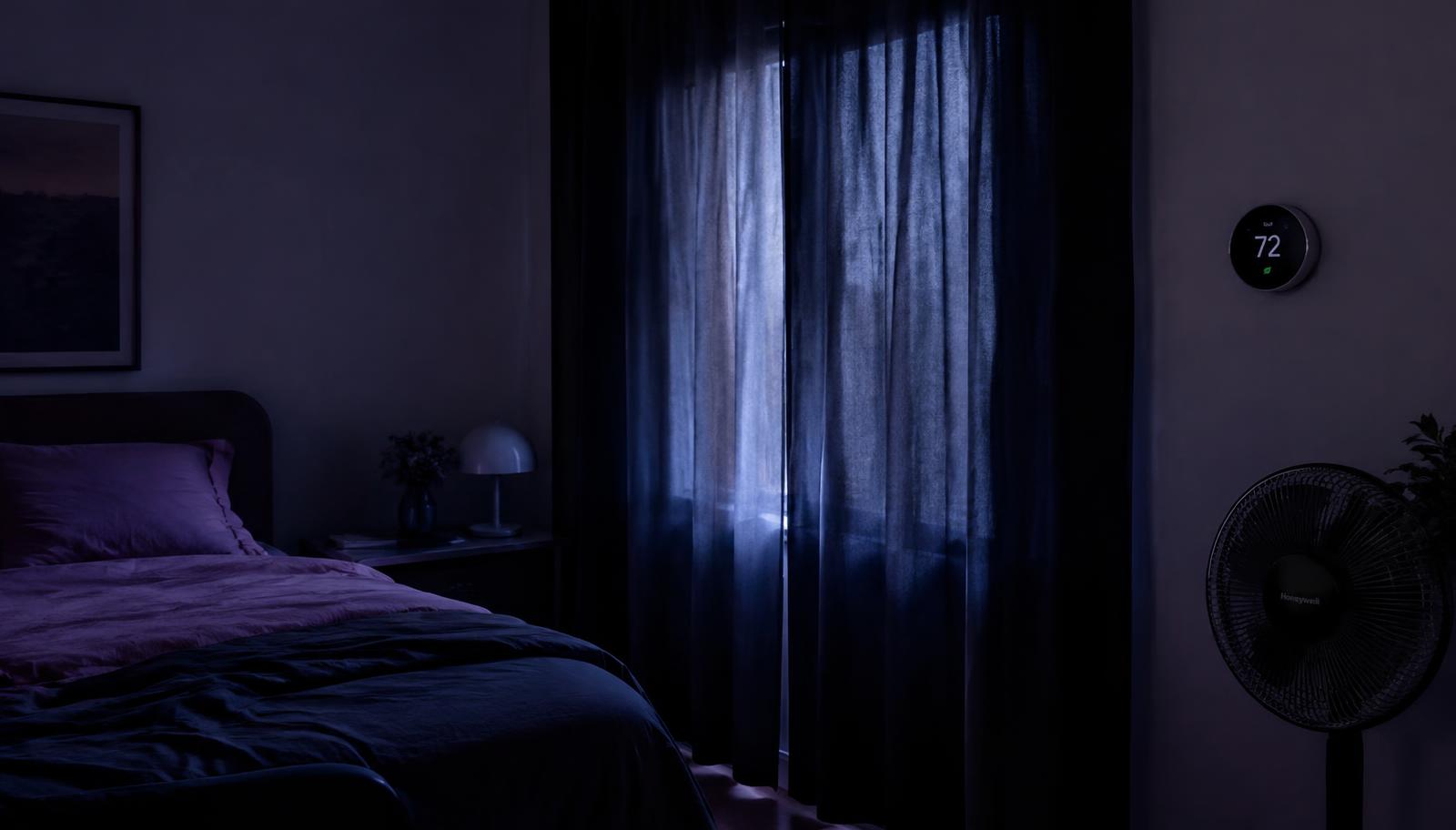
- Keeping the sleeping environment dark during daytime sleep helps reduce competing light signals.
Why daytime sleep often feels less refreshing
Many shift workers notice that sleeping during the day, even for a similar number of hours as a typical night's sleep, doesn't feel as restorative. This is partly because daytime sleep tends to be lighter and more easily disrupted by noise, light and the general activity of a world that's awake, and partly because it goes against the body clock's own preference for wakefulness at that time.
This is a genuine physiological challenge rather than simply a matter of willpower or discipline. Recognising this can help shift workers be more understanding of their own sleep patterns and more deliberate about creating conditions that support daytime rest, such as a dark, quiet, cool bedroom, which is discussed further in our guide on bedroom light, noise and temperature.
A worked example: structuring a run of night shifts
Consider someone working four consecutive night shifts, starting at ten in the evening and finishing at six in the morning. A helpful pattern many shift workers find manageable is to wear sunglasses on the commute home, go straight to a darkened bedroom, and sleep in a single block from around seven to early afternoon, using blackout curtains and reducing household noise. On the final morning after the last shift, rather than staying up all day to try to reset immediately to a normal schedule, some people find it easier to sleep for a shorter block and then gradually shift their wake time earlier over the following one or two days, rather than attempting an abrupt switch back to daytime living overnight.
There is no single approach that suits everyone, and what works well for one person's household, commute and family commitments may not suit another's. The underlying principle, however, is consistent: protecting a predictable sleep block and controlling light exposure around it tends to help more than an irregular, ad hoc approach to rest between shifts.
Habits that can ease the strain
While shift work will always involve some degree of conflict with the body clock, certain habits can make the experience more manageable. Keeping as consistent a sleep schedule as possible, even on days off, can reduce how much the body clock has to keep readjusting. Constantly swinging between a night-shift sleep pattern and a normal daytime pattern on rest days tends to make the overall adjustment harder.
- Try to keep sleep and wake times similar across consecutive shifts of the same type, rather than varying them day to day.
- Use blackout curtains, an eye mask or dark glasses to manage light exposure around sleep.
- Plan meals at consistent times relative to your shift pattern to support your overall daily rhythm.
- Protect wind-down time before daytime sleep, treating it with the same importance as a night-time bedtime routine.
- Where shift patterns rotate, ask whether shifts can rotate forward, since this tends to be somewhat easier on the body clock than rotating backward.
The wider effect on family life and social rhythm
The challenges of shift work sleep are not purely biological; they also play out against a household and social world that largely runs on a daytime schedule. Household noise during the day, family members keeping conventional hours, and social events that assume evening availability can all make it harder to protect the consistent sleep block that the body clock needs. Discussing sleep needs openly with people you live with, and treating daytime sleep as genuinely off-limits for interruption wherever possible, is a practical step that sits alongside the light and routine habits described above.
When to seek individual advice
Occasional tiredness is a near-universal part of shift work, but persistent, severe sleep disruption is different from an unavoidable inconvenience. If you're regularly struggling to sleep, feeling excessively sleepy during waking hours, or noticing effects on your mood, concentration or safety at work, it's worth speaking to your GP or your workplace's occupational health service.
A health professional can help distinguish ordinary shift work adjustment from other issues, such as insomnia or another underlying sleep condition, and can discuss options tailored to your specific pattern of shifts and health circumstances, which general guidance like this cannot cover.
Diet, caffeine and energy through a shift
Eating patterns often become irregular during night shifts, with heavy meals eaten at unusual hours or frequent snacking used to stay alert. Large meals in the early hours can sit uneasily with a digestive system that is itself following a daily rhythm, and some shift workers find lighter meals during the shift, with a more substantial meal before or after, easier to manage. Caffeine can be a useful tool for alertness during a night shift, but taken too close to the end of a shift it can make daytime sleep harder to achieve, so timing it towards the earlier part of a shift rather than the last hour or two tends to work better.
Staying reasonably hydrated and avoiding excessive reliance on sugary snacks for energy can also help avoid the energy dips that make late shifts feel harder, though these are general habits rather than a fix for the underlying body-clock conflict shift work creates.
Commuting home safely after a night shift
The drive or journey home after a night shift is a period of particular risk, since it often falls at the point of lowest alertness, especially towards the end of a run of consecutive nights. Where possible, sharing a lift, using public transport, or building in a short rest before driving can reduce this risk. Wearing dark glasses on a bright morning commute, mentioned earlier as a way to protect daytime sleep, serves this dual purpose of also reducing glare during a period of lower alertness.
Employers have a role here too, and workplaces with structured shift patterns often have guidance or support around fatigue management; it is worth being aware of what your own workplace offers, particularly if you commute a long distance after night shifts.
Common questions
Does everyone find night shifts equally hard?
No, there's considerable individual variation. Some people find they can adapt reasonably well to consistent night work, while others struggle significantly, and personal factors such as age and general health can play a role.
Is it better to have a fixed night shift or a rotating pattern?
Many people find a fixed schedule easier to adjust to than one that frequently rotates between day and night shifts, because a stable pattern gives the body clock a consistent target to settle towards, rather than constantly changing.
Can naps help during a night shift?
A short, well-timed nap during a break can help reduce sleepiness during a night shift for some people, though it isn't a substitute for adequate sleep overall, and workplace policies on napping during shifts vary.
Sources
Written by The Melatonin UK editorial team.
Published 24 September 2026. This article is general information about sleep and the body clock. It is not medical advice, and it does not replace a conversation with your GP or pharmacist.
Read next
The Body Clock
What happens when your sleep schedule shifts?
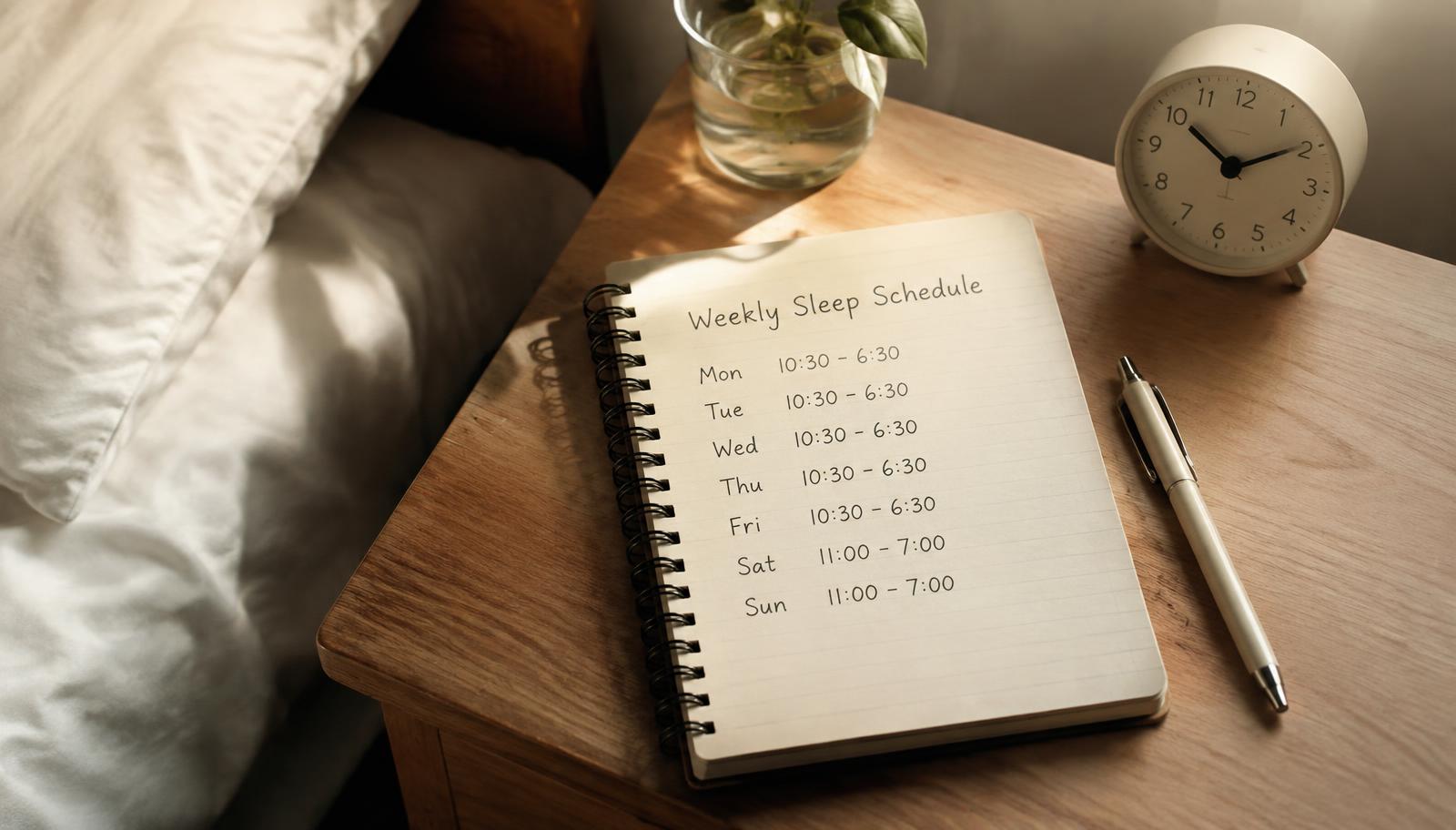
When sleep and wake times change from day to day, such as with weekend lie-ins or late shifts, the body clock and its light cues fall out of step with the actual clock time. This mismatch, sometimes called social jet lag, can leave you feeling tired and out of sorts even without crossing time zones. Because the body clock adjusts gradually, resetting it typically takes several days of consistent cues rather than happening overnight.
6 min readRead the guide →
Better Sleep
Bedroom light, noise and temperature
A bedroom that is dark, quiet and on the cooler side tends to support better sleep, with temperature and light generally having the clearer effects and noise being more individually variable. None of these factors need to be perfect, but persistent problems with any of them, such as light UK summer mornings, are worth addressing rather than tolerating indefinitely.
6 min readRead the guide →
Sleep Questions
Insomnia or a shifted body clock?
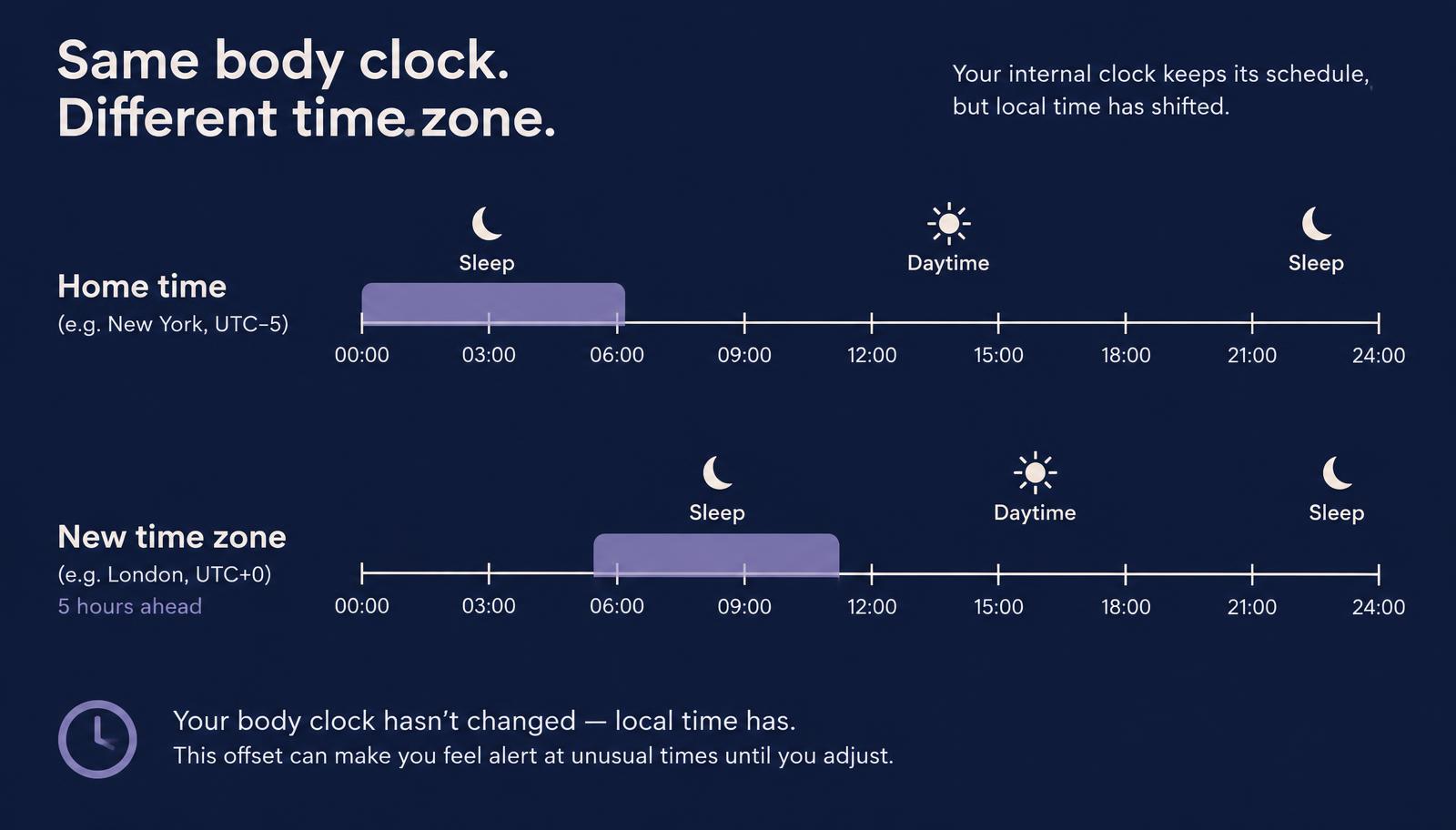
Insomnia and a shifted body clock can both cause difficulty sleeping, but they are different problems with different explanations. Insomnia involves trouble sleeping even when the opportunity and timing are right, while a shifted body clock means the timing itself is out of step with the schedule you are trying to keep. Telling them apart matters because the approaches that help each one are not the same.
6 min readRead the guide →