
Sleep Questions
Melatonin for falling asleep: how it helps you drift off at the right time
Melatonin can help some people fall asleep a little sooner, particularly when their body clock is out of step with their intended bedtime. Research suggests the average benefit is modest: it supports the body's night-time signal rather than forcing sleep, and its effects depend on the sleep problem and timing.
5 min read · Published 9 October 2026

In short
- Melatonin signals biological night; it does not simply switch sleep on.
- Research finds modest average improvements in time taken to fall asleep.
- A delayed body clock and difficulty sleeping for other reasons are not the same problem.
- The timing of melatonin matters, and taking more does not guarantee a better result.
- A steady wake-up time and a calmer evening can support the conditions for sleep.
How melatonin helps you move towards sleep
If you feel tired all evening but become wide awake when your head reaches the pillow, falling asleep can seem frustratingly unpredictable. Melatonin may help some people with that transition, but understanding its role makes the promise clearer: it is a signal that the biological night has arrived, not an off switch for the brain.
Your body naturally produces melatonin, with levels usually rising during the evening in dim conditions. This signal helps prepare you for sleep. Melatonin taken as a product can also promote sleepiness and influence the timing of your body clock. These effects are related, but they are not identical.
Falling asleep also depends on sleep pressure: the need for sleep that builds while you are awake. Meanwhile, your body clock helps determine when you feel alert or ready for rest. Melatonin can support the clock-related part of this process, but it cannot replace enough time awake, remove every source of worry or guarantee sleep on demand.
What research shows about falling asleep sooner
Researchers call the time between trying to sleep and actually falling asleep “sleep onset latency”. It is a useful measure because it addresses the question many people care about most: will I spend less time lying awake?
A 2013 meta-analysis of trials in people with primary sleep disorders found that melatonin shortened this interval compared with a placebo. The average difference was around seven minutes. That figure describes the pooled results across the included trials, not a prediction of what any individual adult will experience.
A later review focused on adult sleep disorders also found evidence of improvements in sleep onset in some groups, including people whose sleep timing was delayed. However, studies differed in their participants, melatonin formulations, schedules and methods of measuring sleep. The evidence does not support treating every difficulty falling asleep as the same problem.
The encouraging message is that there can be a real benefit, but it is usually more subtle than suddenly becoming unable to keep your eyes open. Some people may notice an easier transition into sleep; others may notice little change. Falling asleep sooner also does not automatically mean every aspect of sleep will improve.
Why “at the right time” matters
Two people can both lie awake at bedtime for very different reasons. One may sleep comfortably on a later schedule but struggle when trying to turn in earlier. Another may feel sleepy at their usual bedtime yet remain awake because of worry, discomfort or a noisy environment. The first pattern may involve delayed sleep timing; the second may not.
This distinction matters because melatonin can influence the body clock as well as promote sleepiness. Its clock-shifting effect depends on when it is taken relative to a person's internal rhythm. There is no single timing rule that suits every sleep problem, and poorly matched timing can shift the clock in an unhelpful direction.
Being a natural night owl does not, by itself, mean you have a sleep disorder or need melatonin. The more useful question is whether your sleep timing persistently clashes with everyday life and leaves you struggling. An assessment can help distinguish a timing issue from ongoing insomnia or another cause of difficult nights.
Everyday habits that give sleep a clearer runway
Melatonin does not work in isolation from the rest of your day. Light exposure, sleep schedules and what happens around bedtime all influence the conditions for falling asleep. Supporting those conditions is worthwhile whether or not melatonin is involved.
- Keep your wake-up time reasonably steady. A regular daily anchor helps support a more predictable sleep–wake pattern.
- Spend time outdoors during the day. Daylight is an important signal for the body clock, especially when much of the day is spent indoors.
- Make the evening less bright and less demanding. Softer lighting and a quiet activity can make the transition towards bedtime feel gentler.
- Leave room for sleepiness to arrive. Going to bed much earlier than usual does not necessarily make sleep happen earlier.
- Avoid turning bedtime into a performance test. Repeated clock-checking and trying hard to force sleep can add frustration rather than reassurance.
These steps are not a promise of instant sleep, and sleep habits alone may not resolve persistent insomnia. Their practical value is in making bedtime more predictable and less pressured, rather than creating a perfect routine that must never change.
Setting realistic expectations
Research has examined different amounts of melatonin, different formulations and different treatment periods. Those studies do not establish one universally effective amount for falling asleep. They also do not justify assuming that a larger amount will bring a faster or better result.
Short-term use appears relatively safe for most adults, but melatonin can cause unwanted effects, including daytime sleepiness, headache and dizziness. Evidence about longer-term safety is less complete. A product described as supporting sleep should still be judged by both its potential benefits and its drawbacks.
If difficulty falling asleep continues for months or affects daily life, it deserves attention beyond choosing a sleep product. Cognitive behavioural therapy for insomnia, or CBT-I, is an established treatment that addresses thoughts and behaviours which can keep insomnia going. Seeking support is a positive step towards more dependable sleep, not a sign that you have failed at bedtime.
Common questions
Will melatonin make me fall asleep immediately? No. It does not act like an instant switch, and taking it does not guarantee sleep. Its effects vary with the person, formulation and underlying reason for being awake.
Can it help if I only feel sleepy very late? Research suggests melatonin can help some people with delayed sleep timing. However, a late preference is not automatically a disorder, and understanding the pattern matters more than simply aiming for an earlier bedtime.
Does lying awake mean my melatonin is low? Not necessarily. Stress, sleep pressure, body-clock timing and the sleep environment can all influence how quickly you drift off. Difficulty falling asleep alone does not show that you have a melatonin deficiency.
What is the main takeaway? Melatonin can offer modest help with falling asleep, particularly when timing is part of the problem. Think of it as support for the body's night-time signal, with realistic expectations and everyday habits that leave space for sleep.
Sources
Written by Melatonin UK editorial team.
Published 9 October 2026. This article is general information about sleep and the body clock. It is not medical advice, and it does not replace a conversation with your GP or pharmacist.
Read next
Sleep Questions
Why do I struggle to fall asleep?
Difficulty falling asleep usually comes from a mismatch between several systems: how much sleep pressure has built up, how alert or wound-up your mind and body are, and whether your body clock is timed for sleep at that hour. Caffeine, alcohol, and worry about sleep itself can all make things worse. Working out which factor fits you best is more useful than assuming a single cause.
7 min readRead the guide →

Sleep Questions
Why do I wake up during the night?
Waking briefly during the night is a normal part of how sleep is structured and most people do not remember it happening. Problems tend to arise when those wakings become long, frequent, or hard to settle back from, which can be influenced by alcohol, needing the toilet, or a body clock nudging you towards early waking. Understanding which pattern fits your situation helps point towards what might help.
6 min readRead the guide →
Sleep Questions
Insomnia or a shifted body clock?
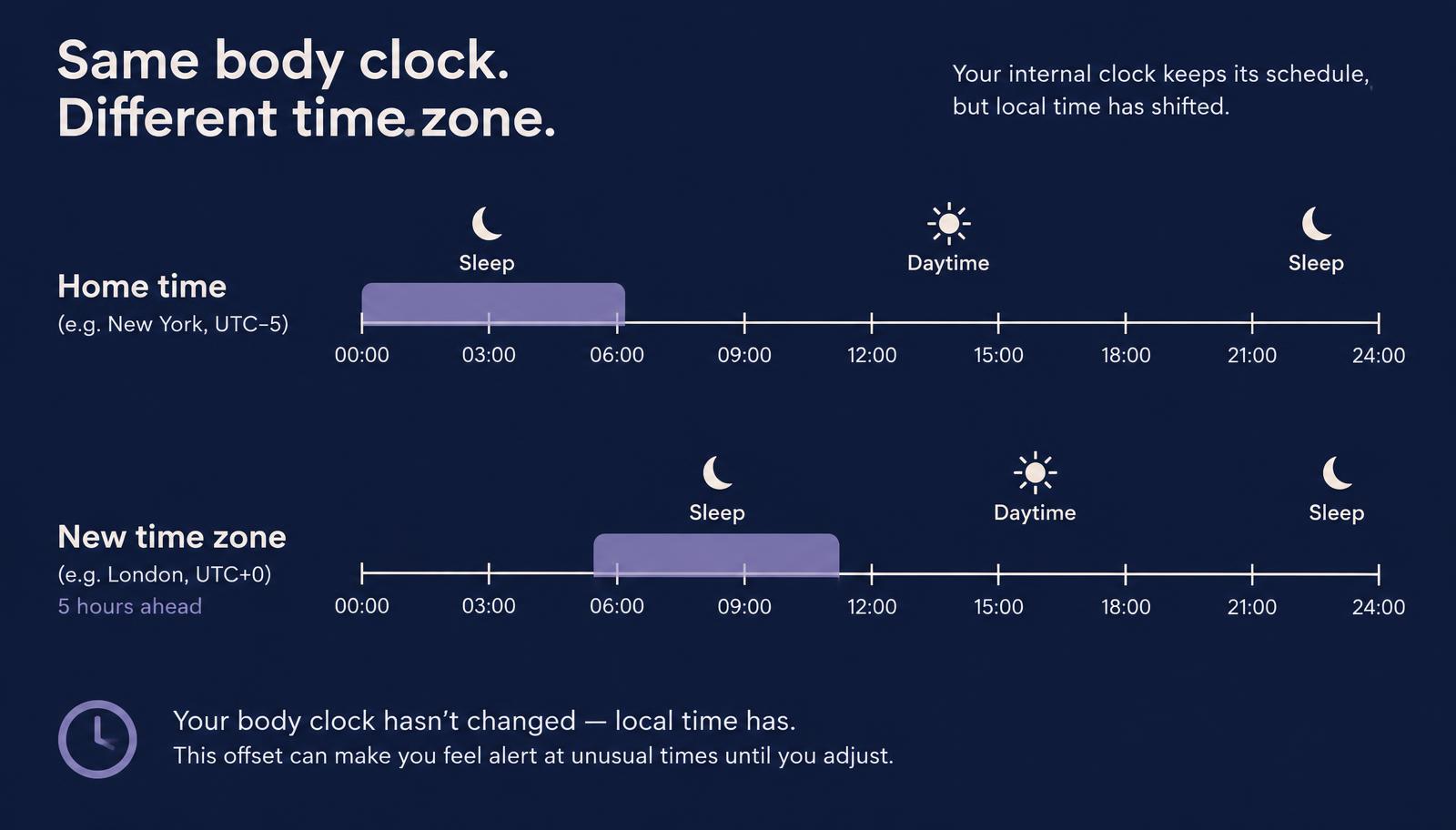
Insomnia and a shifted body clock can both cause difficulty sleeping, but they are different problems with different explanations. Insomnia involves trouble sleeping even when the opportunity and timing are right, while a shifted body clock means the timing itself is out of step with the schedule you are trying to keep. Telling them apart matters because the approaches that help each one are not the same.
6 min readRead the guide →