
Research & Safety
Melatonin and children's sleep
Whether melatonin is appropriate for a child is always a decision for a GP or paediatric specialist, never something to decide independently as a parent. There is a great deal parents can do around bedtime routine and light exposure in the meantime, and persistent difficulty is a good reason to seek professional advice.
6 min read · Published 24 September 2026

In short
- Melatonin for a child should only ever be considered under the guidance of a GP or specialist.
- Children's sleep difficulties have many possible causes, only some of which relate to melatonin.
- Routine and light exposure are safe, well-supported starting points for parents.
- Persistent or worsening sleep problems in a child are worth raising with a GP.
- General information cannot replace an individual assessment of a child's health and circumstances.
Few things are more tiring for a parent than a child who will not settle at night, and it is natural to look for answers. This page will not tell you whether melatonin is right for your child, because that is not a question a general article can responsibly answer. It is always a clinician-led decision, made with a GP or specialist who knows your child's health history.
What this page can do is explain why that is the case, what generally influences children's sleep, and what steps around routine and light are reasonable for a parent to try while seeking advice.
Why this is always a clinician-led question
Children's bodies, including their developing body clocks, are not simply smaller versions of adults'. Sleep needs, patterns, and the causes of sleep difficulty change considerably across childhood, and a health professional needs to consider a child's age, development, and any underlying conditions before any discussion of melatonin can take place. This is not a precaution for its own sake; it reflects genuine differences in how children's sleep and health should be assessed.
It is also worth being cautious of anything, including online articles, that seems to offer a general answer for "children" as a single group. A GP or paediatric specialist assessing an individual child is in an entirely different position from any general resource, however well researched.
What else can affect a child's sleep
Children's sleep difficulties often have causes that have nothing to do with melatonin, including an inconsistent bedtime, an overstimulating environment before bed, anxiety, or simply a routine that does not match their natural sleepiness at that age. Our general guide to What can affect sleep quality? outlines some of the broader factors that apply across ages, many of which are worth considering for children too.
Because there are so many possible contributors, a GP is well placed to help work out what is actually going on, rather than a parent guessing which single factor might be responsible.
What parents can do around routine and light
While seeking advice, there is a lot parents can reasonably do that carries little risk and is widely supported. A calm, predictable bedtime routine helps signal to a child that sleep is approaching, and reducing bright light and stimulating activity in the run-up to bed can support this further.
- Keep bedtimes and wake times reasonably consistent, including at weekends where possible.
- Build in a calm wind-down period before bed, such as reading rather than screens.
- Encourage daylight exposure earlier in the day, which supports a healthy body clock rhythm.
- Keep the bedroom dark, quiet, and comfortably cool at night.
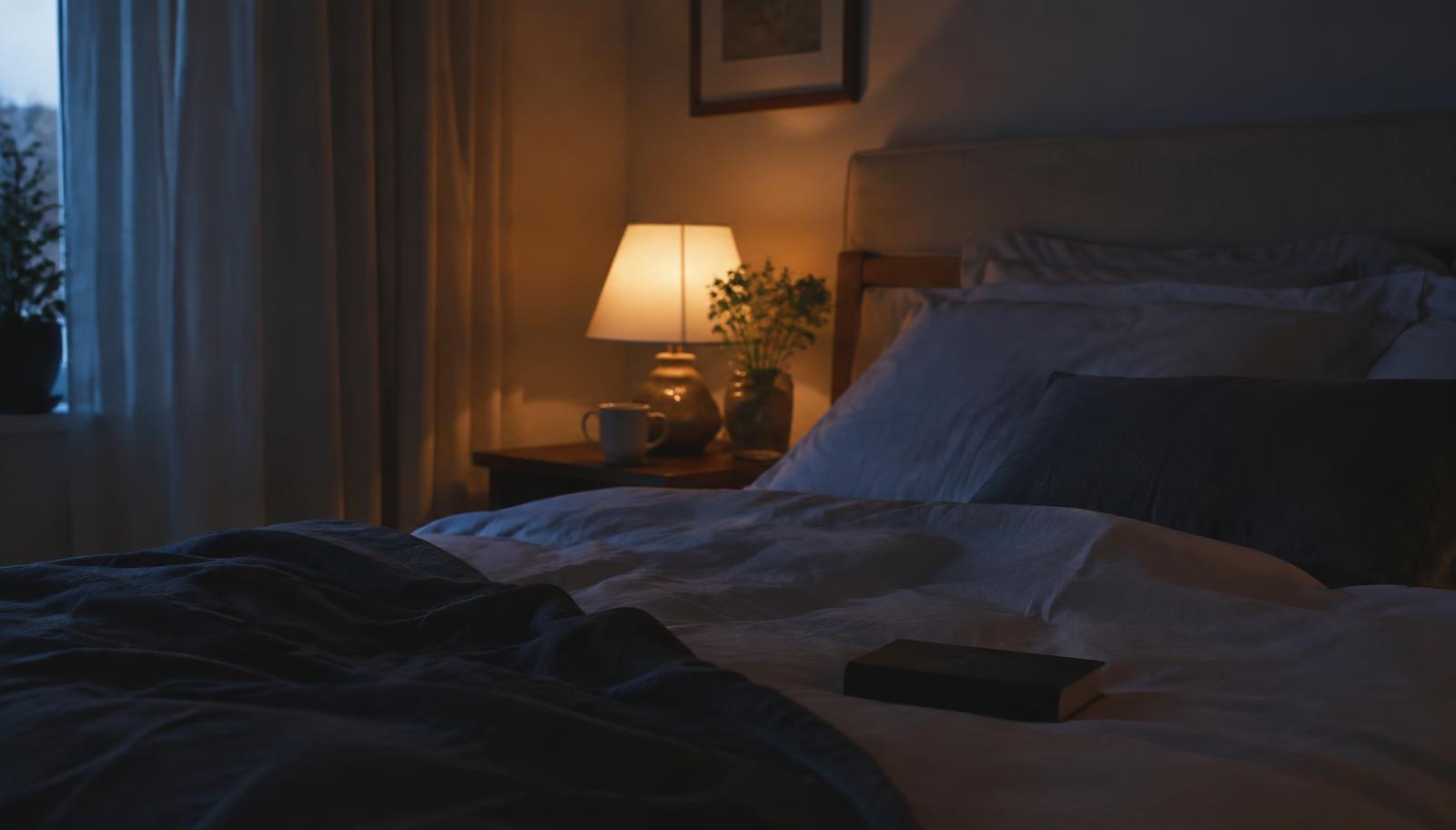
These habits will not resolve every sleep difficulty, but they form a sensible, low-risk foundation while any more specific concern is discussed with a professional. Our guide Evening routine you can maintain covers similar principles in more depth, though a family GP can help tailor this to a child's age and needs.
When to see a GP
It is worth booking a GP appointment if a child's sleep difficulty is persistent, worsening, or affecting their daytime mood, behaviour, or development, or if you are considering melatonin or any other supplement for them. A GP can assess whether anything further needs investigating and advise on appropriate next steps.
How sleep needs change with age
A toddler, a seven-year-old and a teenager do not need the same amount of sleep, and their body clocks are not at the same stage of development either. Younger children generally need more total sleep and often naturally wake earlier, while adolescents commonly experience a genuine shift towards later natural sleep and wake times as their body clock matures, not simply a matter of poor discipline. This is one reason a GP or specialist needs to know a child's exact age and stage before any conversation about melatonin can be meaningful, since what counts as a normal pattern varies enormously across childhood.
It also means that comparing one child's sleep to another, whether a sibling or a friend's child, is rarely useful. Two children of similar ages can have quite different natural sleep needs, and a difference from an average figure is not automatically a problem worth medicating.
Common causes of bedtime resistance
Bedtime resistance, meaning a child who protests, delays or repeatedly gets up after being put to bed, is extremely common and usually has nothing to do with melatonin production. Some of the most frequent contributors include a bedtime that does not match the child's natural sleepiness, anxiety about separation or the dark, excitement or stimulation too close to bedtime, and inconsistent limits from one night to the next, which can inadvertently reward getting up.
- A bedtime set earlier than the child is actually able to fall asleep, leading to prolonged settling time.
- Separation anxiety or fear of the dark, particularly in younger children.
- Overtiredness, which can paradoxically make settling harder rather than easier.
- Inconsistent responses from caregivers, where sometimes getting up is tolerated and sometimes not.
- Underlying discomfort, such as an itchy skin condition or snoring, that is not immediately obvious.
Working through possibilities like these with a health visitor or GP, rather than assuming melatonin is the missing piece, often uncovers something practical that can be addressed directly. Our guide What can affect sleep quality? sets out some of the broader contributors that apply across ages.
Supporting a child's body clock with light
Light exposure plays much the same role in a child's developing body clock as it does in an adult's, helping to time the natural rise and fall of alertness across the day. Encouraging time outdoors or near bright windows earlier in the day, and dimming lights and reducing screen stimulation in the run-up to bedtime, works with this system rather than against it. This is a genuinely useful, low-risk area for parents to focus on, distinct from any decision about supplements, which remains a matter for a GP or specialist.
Consistency across the week, including at weekends, tends to help children settle into a rhythm more easily than a routine that changes considerably from school days to weekends. Where a family's schedule makes this difficult, even small steps towards more consistent wake times can help.
Preparing to talk to your GP about your child's sleep
Bringing a short written record of your child's sleep pattern over one or two weeks, including bedtime, roughly how long it takes to settle, and any night waking, gives a GP far more useful information than a general description from memory. Noting anything that seems to make things better or worse, such as a particular day of the week or a change in routine, can also help a GP work out what is going on more quickly.
School nights and the pressure of a fixed morning start
A fixed school start time means there is less flexibility to let a child's natural sleep pattern shift, unlike a weekend or holiday. Where a child's natural sleepiness runs later than the bedtime the school routine demands, gradually shifting bedtime earlier over several nights, alongside consistent morning light and a calm wind-down, tends to work better than a sudden change imposed on a single night. A GP or health visitor can advise further if this mismatch is persistent and affecting the whole family.
Keeping routines steady during disruption
House moves, new siblings, starting school and other family changes can all temporarily unsettle a child's sleep, even where the underlying body clock and health are entirely normal. Keeping the core bedtime routine as steady as possible through these periods, rather than abandoning it because everything else feels unsettled, often helps a child regain their usual pattern more quickly once the disruption passes.
Common questions
Can I try melatonin for my child before seeing a GP?
No. This should always be discussed with a GP or specialist first, since a child's individual health and circumstances need proper assessment.
Is poor sleep in children always a medical problem?
Not necessarily; routine, environment, and daily habits play a large role. However, persistent or worsening difficulty is still worth raising with a GP to understand what is going on.
Does screen use before bed affect children more than adults?
Screens can affect sleep in both children and adults through light exposure and stimulation, though individual sensitivity varies. Our guide Evening light, screens and sleep explains the general mechanism.
Sources
Written by The Melatonin UK editorial team.
Published 24 September 2026. This article is general information about sleep and the body clock. It is not medical advice, and it does not replace a conversation with your GP or pharmacist.
Read next

Research & Safety
Questions to ask a pharmacist about melatonin
A pharmacist is a good first port of call for questions about melatonin, particularly around interactions and general suitability, but they will sometimes need to refer you to a GP. Preparing your medical history and a clear list of questions makes the conversation far more useful.
5 min readRead the guide →
Better Sleep
An evening routine you can actually maintain
A useful evening routine mainly does one job: lowering physical and mental arousal in a predictable way before bed, so the transition to sleep is not abrupt. The most sustainable routines are short, flexible and built around a couple of anchor habits, rather than a long list of steps that quietly gets abandoned within a fortnight.
6 min readRead the guide →
Sleep Questions
What affects sleep quality?
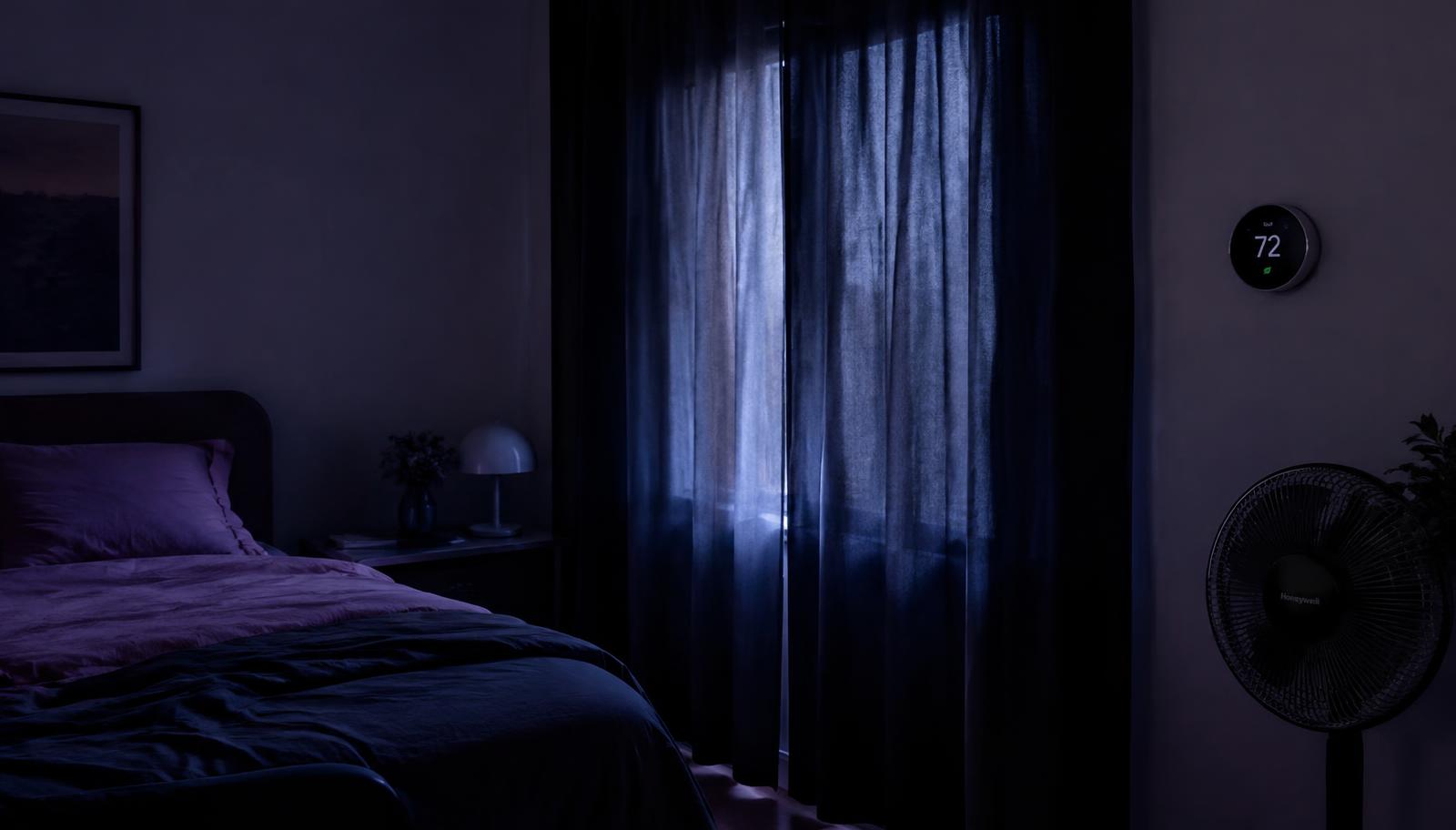
Sleep quality is not just about how many hours you get; it depends on how continuous that sleep is, whether it is timed well against your body clock, the conditions you sleep in, your general health, stress levels, and substances like caffeine and alcohol. Because several factors usually contribute, improving sleep quality often means looking across all of them rather than fixing one thing alone.
6 min readRead the guide →