
Sleep Questions
How much sleep do adults need?
Most adults need around seven to nine hours of sleep a night, but eight hours is not a rule for everyone. Feeling reasonably refreshed and staying alert during the day are useful clues alongside the number of hours you sleep.
5 min read · Published 1 October 2026

In short
- Seven to nine hours is a useful guide for most adults.
- Time in bed is not the same as time asleep.
- Daytime alertness matters alongside your nightly total.
- Extra sleep can help after a short night, but regular sleep remains important.
- Melatonin does not replace sleep or reduce your need for it.
Eight hours is often presented as the perfect amount of sleep. That can make a seven-hour night feel like a failure, or leave someone who needs nine hours wondering whether they are sleeping too much. In reality, sleep needs vary, and a single number cannot describe every adult.
The aim is not to achieve an impressive total on a sleep tracker. It is to get enough sleep to support everyday life: concentrating at work, enjoying time with other people and staying alert when it matters. Understanding the usual range gives you a helpful starting point without turning bedtime into a test.
Is eight hours of sleep essential?
NHS guidance says adults need seven to nine hours of sleep on average. Eight hours sits conveniently in the middle, but it is not a biological deadline. Some adults feel well with nearer seven hours, while others function better with nearer nine. [6]
Think of this range as a guide rather than a pass-or-fail target. A night lasting seven hours and 45 minutes is not automatically worse than one lasting eight hours. Equally, reaching eight hours does not guarantee refreshing sleep if that sleep is repeatedly interrupted.
Your recent sleep also matters. After several short nights, you may feel sleepier and want more rest than usual. Illness and recovery can affect how much rest you feel you need, too. These temporary changes are different from your usual pattern.
How can you tell whether you are getting enough?
The clock provides one part of the picture. How you feel and function provides another. Enough sleep generally supports alertness, concentration and mood, although nobody feels energetic every minute of the day. A brief sluggish spell after waking is not, by itself, proof that you need a much longer night.
Look at patterns across ordinary days rather than judging one difficult morning. Useful questions include:
- Do you usually feel reasonably refreshed once you have properly woken up?
- Can you stay awake during quiet activities without repeatedly nodding off?
- Is your concentration broadly steady during everyday tasks?
- Do you regularly struggle to stay awake well before your intended bedtime?
- Do you sleep much longer whenever work or other commitments allow?
These are clues, not a diagnostic checklist. Tiredness can have causes other than insufficient sleep, and feeling drained is not always the same as being likely to fall asleep. Persistent unexplained tiredness, or sleepiness that affects daily life, deserves a conversation with a healthcare professional. Never drive when sleepy. [3]
Does time in bed count as sleep?
Not quite. If you get into bed at 11 pm and get up at 7 am, you have allowed eight hours in bed. Your actual sleep will be shorter if some of that time is spent reading, settling down or awake during the night.
This distinction is useful when a seemingly generous bedtime window still leaves you short of sleep. It does not mean you need to calculate every waking minute. Brief awakenings can happen during normal sleep, and repeatedly checking the time may make the night feel more pressured.
For everyday planning, allow a realistic opportunity to sleep rather than assuming you will fall asleep the moment your head touches the pillow. Keep winding-down time separate in your mind from sleep itself: both can be enjoyable parts of an evening, but they serve different purposes.
A wearable's estimate is not a definitive verdict either. If a device reports a disappointing total but you feel well, avoid letting that single reading define your day. Your broader pattern matters more than a nightly score.
Can extra sleep make up for short nights?
After losing sleep, getting more rest can help you feel better. But sleep is not a bank account with a precise repayment formula: missing two hours does not mean that exactly two extra hours later will restore every aspect of alertness and performance.
The phrase 'sleep debt' describes the shortfall that can build up when you repeatedly get less sleep than you need. A longer night may ease sleepiness, but it is not a reliable substitute for having enough sleep regularly.
This is an encouraging reason to protect ordinary nights, rather than saving all your rest for time off. A workable sleep opportunity through the week gives you more chances to feel your best on the days when you actually need your energy.
One short night is not a reason to panic or chase a perfect recovery total. The more useful question is whether short nights are occasional exceptions or the pattern your timetable creates.
Does melatonin change how much sleep you need?
Melatonin is involved in the body's night-time timing signal. It does not replace sleep, and there is no good evidence that taking it allows adults to need fewer hours while keeping the same benefits of adequate rest.
Research on melatonin has examined outcomes such as how quickly people fall asleep, total sleep time and sleep quality. A meta-analysis of trials involving people with primary sleep disorders found improvements in these measures, although the average benefits were modest. That does not mean everyone can expect the same result. [9]
The practical distinction is between helping with a sleep-related difficulty and changing the body's underlying need for sleep. Even when melatonin helps, it cannot turn a very short sleep window into a full night's rest.
It is also not a tool for forcing everyone towards eight hours exactly. A useful goal is sleep that supports daytime wellbeing, rather than adding minutes simply to match a headline number.
Common questions
Is six hours enough if I feel fine? Six hours is below the usual adult range. Feeling accustomed to a short night does not necessarily establish that it meets your needs. Consider your alertness and functioning across the week, not just whether you can get through the morning.
Is nine hours too much? Not automatically. Nine hours is within the usual adult range. A new need for substantially more sleep, or long nights that still leave you persistently sleepy, is more informative than the number alone.
Should I worry about an occasional bad night? Usually, a single short night is less important than the ongoing pattern. Give yourself room for normal variation. The aim is enough sleep most nights, not a flawless record.
Sources
Written by Melatonin UK editorial team.
Published 1 October 2026. This article is general information about sleep and the body clock. It is not medical advice, and it does not replace a conversation with your GP or pharmacist.
Read next

Sleep Questions
Why do I struggle to fall asleep?
Difficulty falling asleep usually comes from a mismatch between several systems: how much sleep pressure has built up, how alert or wound-up your mind and body are, and whether your body clock is timed for sleep at that hour. Caffeine, alcohol, and worry about sleep itself can all make things worse. Working out which factor fits you best is more useful than assuming a single cause.
7 min readRead the guide →

Sleep Questions
Why do I wake up during the night?
Waking briefly during the night is a normal part of how sleep is structured and most people do not remember it happening. Problems tend to arise when those wakings become long, frequent, or hard to settle back from, which can be influenced by alcohol, needing the toilet, or a body clock nudging you towards early waking. Understanding which pattern fits your situation helps point towards what might help.
6 min readRead the guide →
Sleep Questions
Insomnia or a shifted body clock?
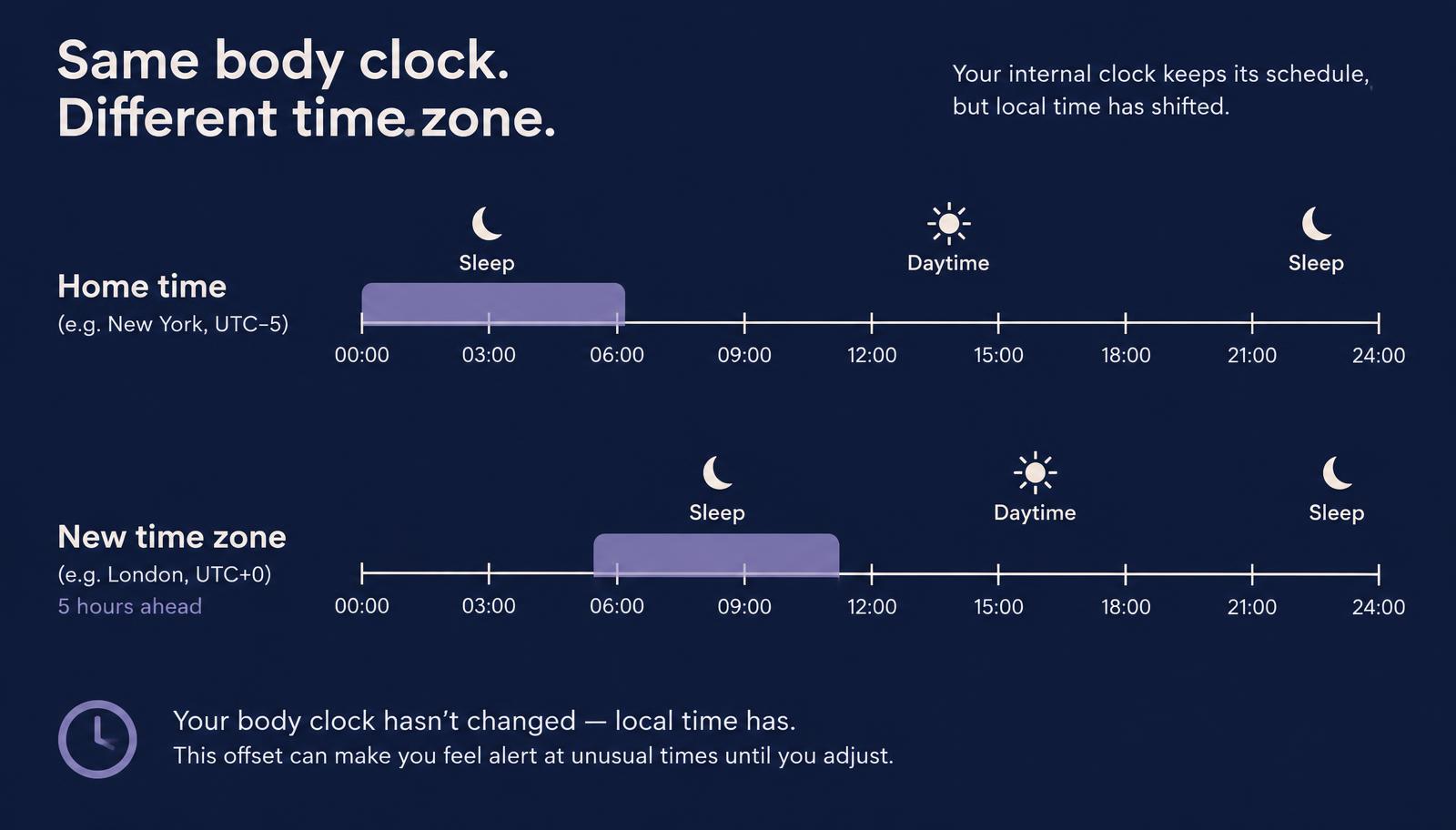
Insomnia and a shifted body clock can both cause difficulty sleeping, but they are different problems with different explanations. Insomnia involves trouble sleeping even when the opportunity and timing are right, while a shifted body clock means the timing itself is out of step with the schedule you are trying to keep. Telling them apart matters because the approaches that help each one are not the same.
6 min readRead the guide →