
The Body Clock
How can I sleep better when the clocks change?
When the clocks change, your body clock may take a little time to catch up with the new timetable. Small changes to your routine, regular daylight and protecting your sleep time can help ease the transition; melatonin is not an automatic fix for the clock change.
5 min read · Published 28 September 2026

In short
- The clock changes instantly, but your internal sleep timing may adjust more gradually.
- The spring change can shorten sleep if your morning alarm stays fixed.
- The autumn change may bring earlier waking rather than an extra hour asleep.
- Daylight and a steady routine can help you settle into the new timetable.
- Research on melatonin for jet lag does not establish a benefit for seasonal clock changes.
An hour sounds like a small difference until your alarm rings and your body disagrees. The spring and autumn clock changes can briefly put your usual bedtime, waking time and daily commitments out of step. The good news is that the transition does not usually require a complete sleep overhaul. A little preparation and a realistic first few days can make it easier to keep the benefits of a settled routine.
Why can a one-hour clock change affect sleep?
Your body follows an internal daily rhythm that helps organise alertness and sleep. This body clock responds particularly to light and darkness, rather than to the numbers on your phone. When those numbers suddenly change, your internal timing does not necessarily move with them. You can find yourself trying to sleep or wake at a time that still feels an hour different.
Two processes matter here: your body clock and the pressure to sleep that builds while you are awake. In spring, an earlier bedtime by your body's reckoning may arrive before you feel ready for sleep. In autumn, you may feel sleepy earlier in the evening and wake before your newly reset alarm.
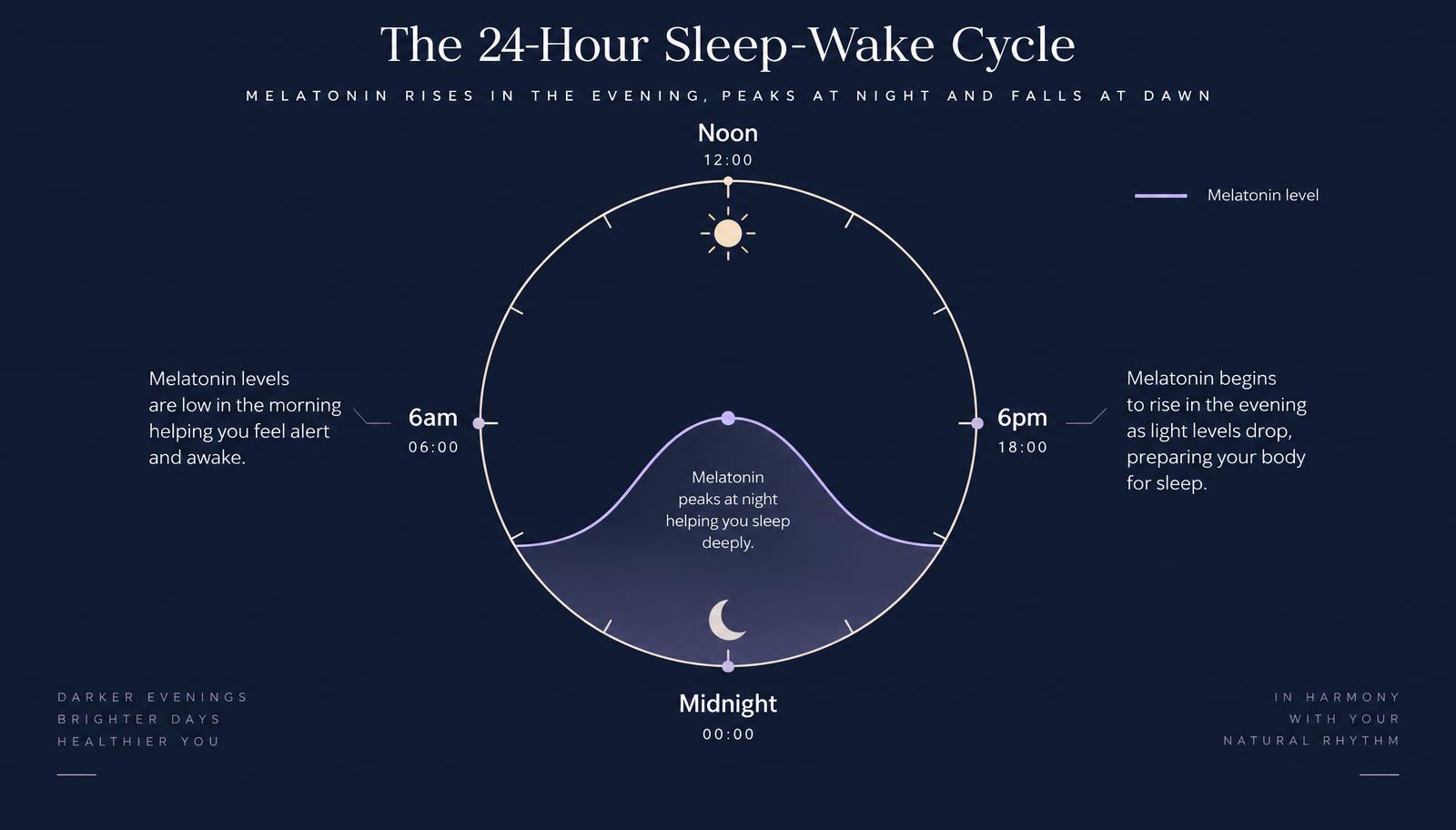
Melatonin is part of this timing system. Your body normally produces more of it during the biological night, providing a signal that it is night-time. It is not a switch that guarantees sleep whenever the clock says bedtime. Understanding that distinction can make a disrupted night feel less puzzling: your sleep signals may simply be catching up.
When the clocks go forward: protect your sleep opportunity
The spring change removes an hour from the night. If you fall asleep at your usual time and get up at the usual clock time, there is an hour less available for sleep. That can be especially noticeable when Monday brings an early commute, a demanding workday or another commitment that cannot move.
One practical approach is to move your routine a little earlier over the days beforehand, rather than expecting a full hour's adjustment in one evening. This means making room for winding down earlier as well as bringing bedtime forward. It is a way to create a gentler transition, not a promise that you will fall asleep on command.
- Finish evening tasks earlier so they do not eat into your intended sleep time.
- Keep the final part of the evening calm, with less bright light.
- Get outside in the morning once daylight is available.
- Avoid making the clock-change weekend unusually late or busy if you have an early start afterwards.
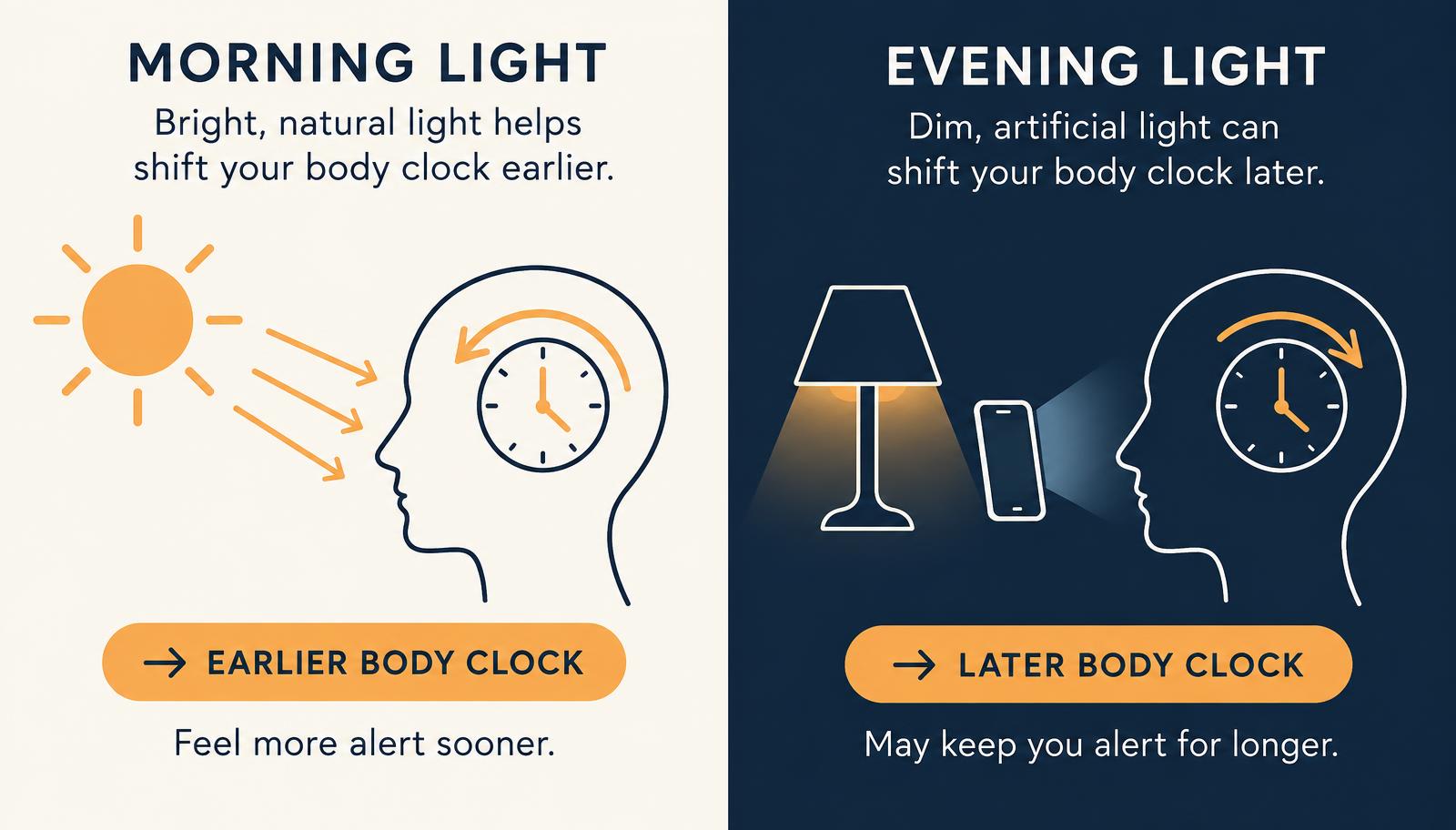
Morning light helps provide an earlier daytime signal to the body clock. An ordinary walk or breakfast near a bright window can fit naturally into the transition, although outdoor light is usually much stronger than indoor light. If the first earlier bedtime feels awkward, keep expectations gentle rather than turning sleep into a test.
When the clocks go back: manage the early start
The autumn change offers an extra hour on the clock, but that does not guarantee an extra hour asleep. Your body may still wake at its familiar internal time. Someone who normally wakes at seven may initially find themselves awake at six by the new clock, even without an alarm.
A gradual move towards slightly later evening and morning routines before the change may make the new timetable feel less abrupt. There is no need to force yourself through marked sleepiness, though. The aim is a manageable adjustment, not staying awake at all costs or using the extra hour as a reason to cut sleep.
Earlier darkness can also make the evening feel further advanced than it is. Keeping your usual activities on the new timetable, and spending time outdoors during daylight hours, helps preserve a clear distinction between day and night. If you wake early, try not to treat one morning as proof that your sleep pattern has permanently changed.
Make the first few days easier
Once the clocks have changed, using the new local time for your regular routine provides a straightforward framework. A reasonably consistent getting-up time helps avoid a series of late mornings followed by difficult bedtimes. You do not need a minute-by-minute schedule: the useful aim is predictability, with enough time set aside for sleep.
Try not to compensate for a tired day with repeated late coffees. Caffeine can make it harder to settle later, just when you want the next night to go smoothly. Long or late naps can also reduce your readiness for bedtime. A quieter evening and fewer optional demands may be more helpful than pushing through an unusually packed day.
Be realistic about alertness, too. If you feel sleepy, take that seriously rather than assuming an hour cannot matter. Do not drive when sleepy. For everyday plans, leaving a little breathing room around the transition can make it easier to maintain the routine that supports your sleep.
Does melatonin help with the clock change?
Because melatonin is involved in body-clock timing, it is understandable to wonder whether taking it makes seasonal clock changes easier. Research supports certain uses of melatonin, including reducing jet lag in some adult travellers. But crossing several time zones and moving the clocks by one hour are different situations.
Evidence from jet-lag studies should not be presented as proof that melatonin improves sleep after a spring or autumn clock change. Its effects also depend on when it is taken relative to a person's internal clock. For this particular transition, there is no basis for promising a quicker adjustment or treating melatonin as a necessary addition.
The practical starting point is simpler: protect time for sleep and keep light exposure and daily routines consistent. These habits work with your body's own timing signals and remain useful after the clock-change weekend has passed.
Common questions
How long does adjustment take? There is no fixed timetable for everyone. You may barely notice the change, or feel out of step for several days. Your existing sleep pattern, available sleep time and daylight exposure can all affect how the transition feels.
Should I go to bed a full hour earlier in spring? Making room for an earlier night can help protect sleep time, but suddenly getting into bed much earlier does not guarantee sleep. Small shifts beforehand may feel more manageable than one large change.
What if my sleep stays difficult? Do not assume a lasting problem is simply the clocks changing. If sleep difficulties persist or affect everyday life, seeking professional support can help identify what else may be contributing. A seasonal disruption should not leave you feeling that poor sleep is something you must just accept.
Sources
Written by Melatonin UK editorial team.
Published 28 September 2026. This article is general information about sleep and the body clock. It is not medical advice, and it does not replace a conversation with your GP or pharmacist.
Read next
The Body Clock
Melatonin and the circadian rhythm
A circadian rhythm is the roughly 24-hour internal cycle that governs when the body expects to be awake or asleep, alert or drowsy. Melatonin is one of the key signals used to keep this rhythm aligned with day and night, and the rhythm itself can gradually shift earlier or later depending on light exposure and routine.
6 min readRead the guide →
The Body Clock
Why does light affect melatonin?
Light is the single strongest signal your body uses to time melatonin release. Specialised cells in the eye detect brightness, quite separately from normal vision, and pass that information to the brain's master clock, which controls the pineal gland. Brightness, timing and duration of light exposure all matter, not just its colour.
6 min readRead the guide →
The Body Clock
Morning light and your body clock
Morning daylight is one of the strongest signals for anchoring your body clock, helping set the timing for alertness during the day and melatonin release later that night. It is especially useful because it comes early in the light-sensitive window the body clock relies on. UK winters make this harder, but there are realistic ways to get more usable light.
6 min readRead the guide →