The Body Clock
Am I a night owl or an early bird?
Your chronotype is your natural tendency to feel sleepy and alert earlier or later in the day. Understanding whether you lean towards being an early bird, a night owl or somewhere in between can help you plan a more comfortable routine, although habits and daily commitments also influence your sleep.
5 min read · Published 21 October 2026
In short
- Chronotype describes your natural preference for earlier or later sleep.
- Many people fall between the early-bird and night-owl extremes.
- Being a night owl does not automatically mean having a sleep problem.
- Your body clock, sleep pressure and daily habits work together.
- Working with your natural rhythm can make everyday routines feel easier.
Some people enjoy an early start and feel ready for bed while the evening is still young. Others take longer to get going but feel comfortably alert later on. These differences are not simply a question of willpower: they can reflect your chronotype, or natural preference for earlier or later sleep and activity.
Knowing your tendency can provide useful context for everyday frustrations, from sluggish mornings to social plans that feel far too late. The aim is not to give yourself a rigid label. It is to understand your pattern and find realistic ways to make room for it.
What is a sleep chronotype?
Chronotype describes differences in when people naturally prefer to sleep and be active. An earlier chronotype tends towards earlier bedtimes and waking times. A later chronotype tends towards later ones. Many people sit somewhere in the middle rather than fitting neatly into either group.
Your body clock helps shape this preference. It coordinates daily rhythms, including changes in alertness and the release of melatonin, the hormone that signals biological night. These rhythms do not run at exactly the same clock time in everyone.
Chronotype is not the only force affecting sleep. Sleep pressure also builds while you are awake and falls during sleep. That means a night owl can still feel exhausted after a short night, while an early bird may stay awake later than usual for an enjoyable occasion.
How can you recognise your natural tendency?
Your alarm time alone cannot tell you your chronotype. Someone who gets up early for work may still have a strong evening preference. Equally, staying up late to finish chores does not necessarily make someone a night owl.
More useful clues come from occasions when you have some freedom over your schedule and are reasonably well rested. Consider the pattern across several ordinary days, rather than judging yourself by one weekend or the first morning of a holiday.
- When do you begin to feel naturally sleepy, rather than simply bored or worn out?
- When do you tend to wake without an alarm after enough sleep?
- Do you usually feel more comfortable starting activities early or later in the day?
- If you could choose your working hours, which part of the day would you favour?
- Does an earlier or later sleep pattern leave you feeling more refreshed?
These questions offer clues, not a diagnosis. Recent sleep loss, travel, caffeine, stress and unusual work hours can all blur the picture. Sleeping very late after an exhausting week may reflect recovery from missed sleep rather than your usual preference.
Is chronotype fixed, or can it change?
Chronotype has a biological component, including genetic influences, but it is not completely fixed. Age and environmental signals also play a part. Many adults notice their preferred sleep timing becoming earlier as they get older, although individual patterns vary.
Light is an important signal for the body clock, so your surroundings and routine can influence when you feel ready for sleep. Work hours, time outdoors and evening activities may reinforce an earlier or later pattern. Your actual bedtime is therefore a mixture of natural preference and circumstances.
That does not mean everyone can become a cheerful early riser simply by trying harder. Nor does identifying as a night owl mean your schedule can never move. A more useful approach is to recognise both your underlying tendency and the parts of daily life that are flexible.
Avoid treating online chronotype quizzes as medical assessments. They may encourage helpful reflection, but a label cannot explain every episode of tiredness or difficulty sleeping.
How can understanding your chronotype help everyday life?
The practical benefit is better planning, not chasing a perfect schedule. If your diary allows, you might place demanding tasks in a part of the day when you usually feel alert. An early bird may prefer a morning planning session; a later type may find a later start more comfortable. Your own experience matters more than a stereotype.
The same idea can help with social life and shared routines. Different bedtime preferences do not necessarily mean that one partner has poor habits. Recognising the difference can make it easier to discuss quiet time, early alarms and activities you both enjoy.
- Use flexibility where it exists, rather than trying to redesign every commitment.
- Leave enough room for sleep when choosing start times and evening plans.
- Notice when tasks feel easier, without expecting your alertness to be identical every day.
- Agree practical compromises with people whose preferred hours differ from yours.
A late chronotype can be particularly awkward when work requires an early start. The resulting mismatch is sometimes called social jet lag: your preferred timing and your social timetable pull in different directions. Understanding that mismatch helps distinguish a scheduling problem from a supposed lack of motivation.
Where does melatonin fit in?
Your body's melatonin rhythm forms part of the biological timing behind chronotype. In broad terms, people with later sleep preferences often have later internal night-time rhythms than those with earlier preferences. However, a preferred bedtime cannot reveal exactly when your melatonin rises.
Melatonin is better understood as a timing signal than as a measure of how tired you are. Being a night owl does not, by itself, mean that your body makes too little melatonin. It also does not establish that taking melatonin would be useful.
Research supports benefits from melatonin in certain circumstances, including jet lag, but that is different from changing an ordinary evening preference into a morning one. There is no need to view a comfortable, well-rested late schedule as something that must be corrected.
Common questions
Can I be neither an early bird nor a night owl? Yes. Chronotype runs along a spectrum, and many people have an intermediate preference. You do not need to fit an extreme for the idea to be useful.
Do night owls need less sleep? No. Preferred sleep timing and sleep need are different things. Feeling alert late in the evening does not remove the need for enough sleep, especially if an early alarm cuts the night short.
Is being a night owl the same as insomnia? No. A late sleeper may sleep comfortably when able to follow their preferred hours. Insomnia involves difficulty sleeping despite having the opportunity. Persistent sleep difficulties or daytime sleepiness deserve attention rather than being dismissed as a personality trait.
What is the most useful takeaway? Think of chronotype as a guide, not a rulebook. Understanding your natural timing can help you make kinder, more realistic choices about work, rest and leisure while keeping sufficient sleep at the centre.
Sources
Written by Melatonin UK editorial team.
Published 21 October 2026. This article is general information about sleep and the body clock. It is not medical advice, and it does not replace a conversation with your GP or pharmacist.
Read next
The Body Clock
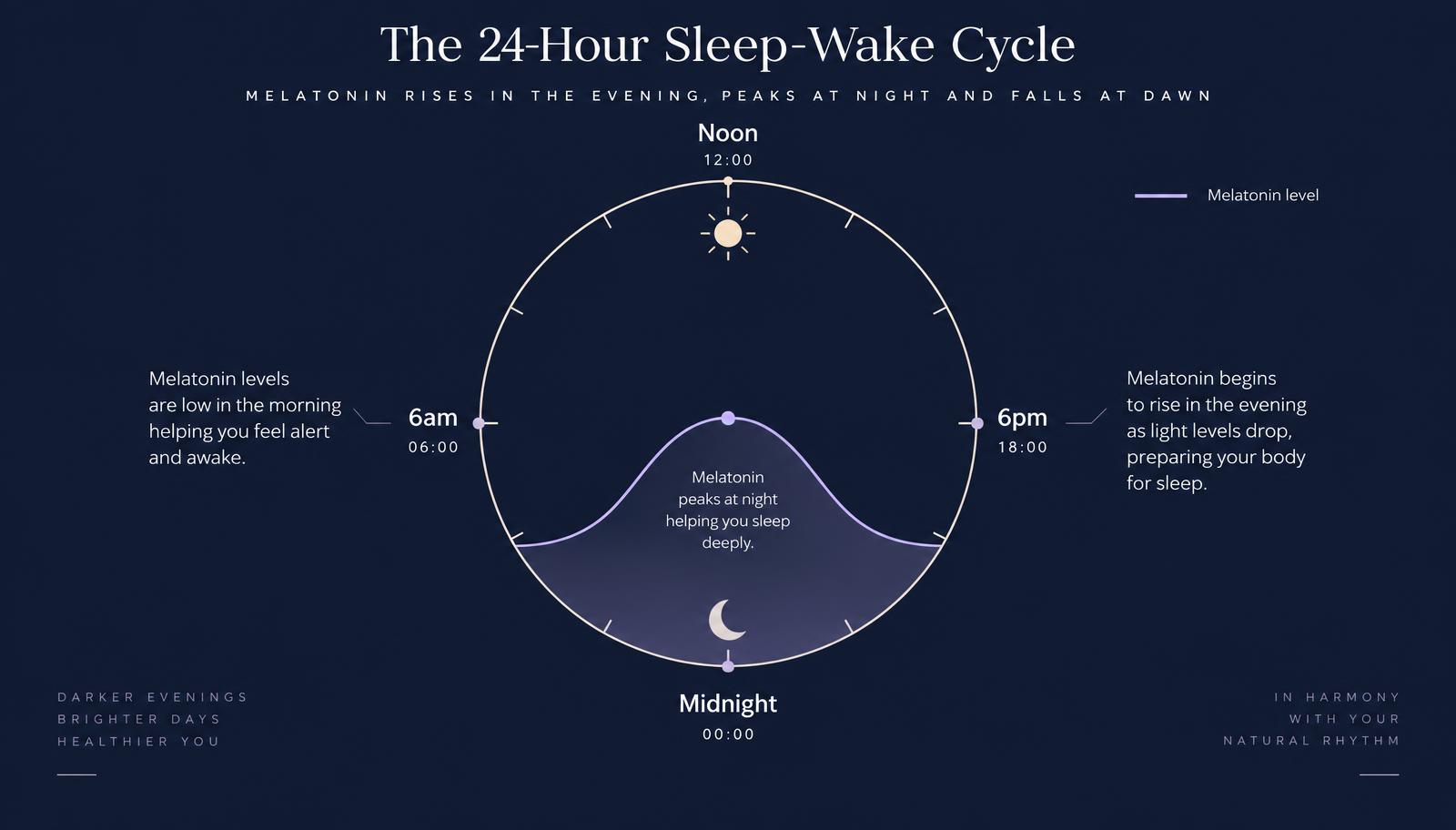
Melatonin and the circadian rhythm
A circadian rhythm is the roughly 24-hour internal cycle that governs when the body expects to be awake or asleep, alert or drowsy. Melatonin is one of the key signals used to keep this rhythm aligned with day and night, and the rhythm itself can gradually shift earlier or later depending on light exposure and routine.
6 min readRead the guide →
The Body Clock
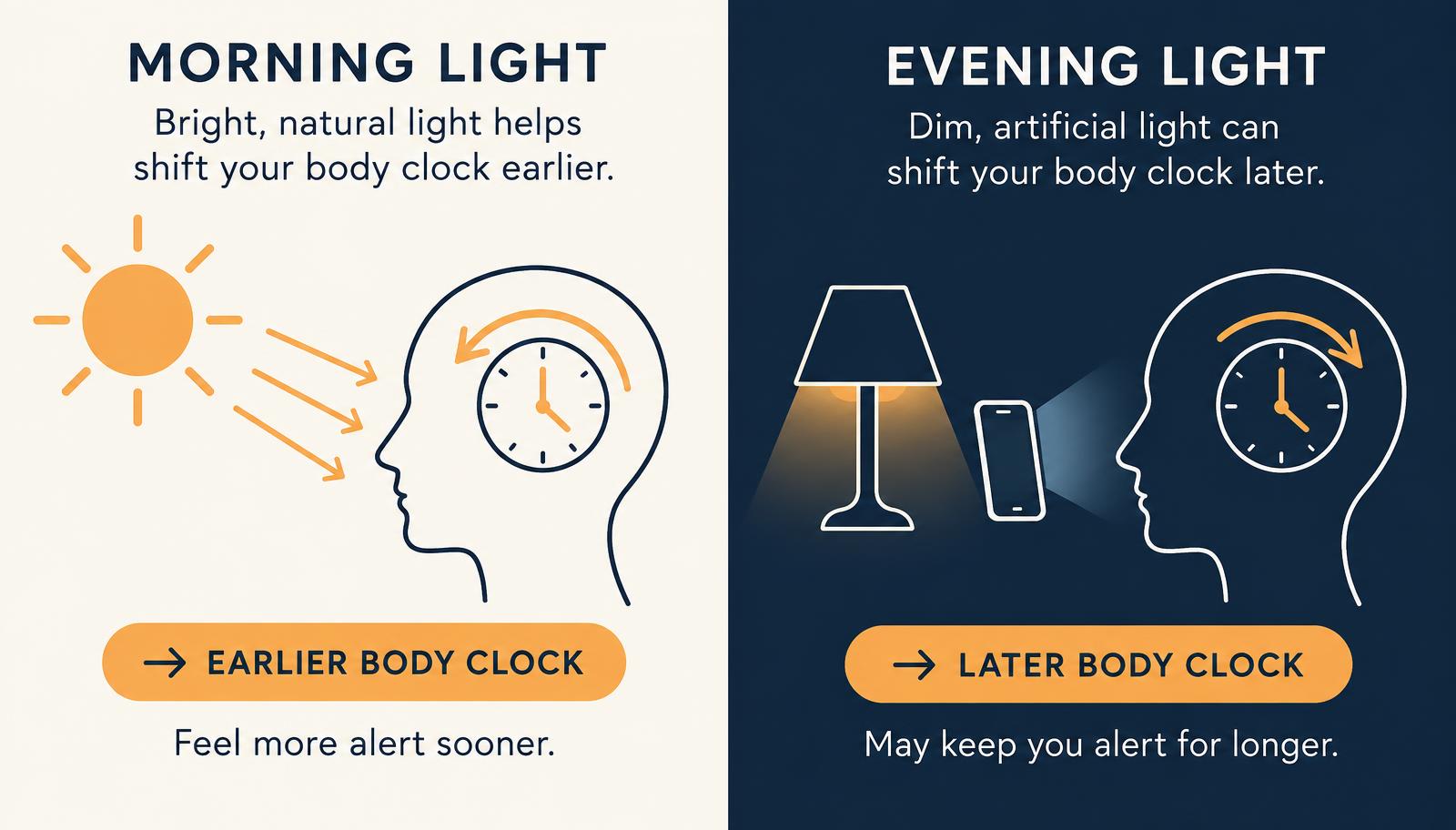
Why does light affect melatonin?
Light is the single strongest signal your body uses to time melatonin release. Specialised cells in the eye detect brightness, quite separately from normal vision, and pass that information to the brain's master clock, which controls the pineal gland. Brightness, timing and duration of light exposure all matter, not just its colour.
6 min readRead the guide →
The Body Clock
Morning light and your body clock
Morning daylight is one of the strongest signals for anchoring your body clock, helping set the timing for alertness during the day and melatonin release later that night. It is especially useful because it comes early in the light-sensitive window the body clock relies on. UK winters make this harder, but there are realistic ways to get more usable light.
6 min readRead the guide →