
Better Sleep
Why is it harder to sleep away from home?
Sleeping away from home can be harder because your surroundings, routine and expectations have changed. Bringing a few familiar comforts, keeping your usual wind-down habits and taking the pressure off sleep can make nights away feel more manageable.
5 min read · Published 20 November 2026

In short
- An unfamiliar room can make it harder to settle, even without a time-zone change.
- A few familiar bedtime cues can help a temporary bedroom feel more comfortable.
- Keep the broad shape of your usual routine rather than chasing a perfect night.
- Melatonin is not a general solution for an unfamiliar bed.
- One unsettled night does not mean the whole trip will be exhausting.
You have arrived, unpacked and finally climbed into bed. You are tired, the room looks comfortable — yet sleep feels further away than it does at home. Perhaps every corridor sound catches your attention, or you keep checking how many hours remain before breakfast.
This can happen in a hotel, a holiday cottage or a friend's spare room. You do not need to cross a time zone for a night away to feel different. The aim is not to recreate your bedroom perfectly, but to make the new setting comfortable enough and give yourself permission to settle.
Why can an unfamiliar bedroom make sleep harder?
At home, many details are predictable: the feel of your pillow, the position of the bathroom and the noises outside. Away from home, those details change. You may notice the hum of an air-conditioning unit, a brighter curtain edge or a mattress that feels surprisingly firm.
Noise, an uncomfortable bed and a room that is too hot or cold are recognised reasons for difficulty sleeping. Travel can also bring later meals, extra caffeine and a disrupted evening. Several small changes may add up, even when none seems especially troublesome on its own.
There can be an emotional element, too. Excitement about a holiday or worry about tomorrow's meeting may leave you mentally busy. Thinking, 'I must sleep well tonight,' adds another task at exactly the moment you want to stop trying. A difficult first night does not necessarily mean you have an ongoing sleep problem.
Make the room feel usable before bedtime
A quick check when you arrive can save bedtime frustration. Find the light switches, work out the temperature controls and see how the curtains close. Knowing where things are means fewer practical puzzles when you are ready to switch off.
- Choose the quieter sleeping space if you have a choice, away from busy shared areas.
- Check the bedding early, so there is time to ask for an extra blanket or a different pillow.
- Close curtains or blinds and reduce unnecessary light where possible.
- Unpack the things you will need overnight, including water and anything needed for a comfortable bathroom trip.
- Set your alarm once, then place the clock or phone where you will not keep watching it.
An eye mask or comfortable earplugs may be useful if light or noise is the main obstacle. They are options rather than essentials, and it is worth trying them at home first. Keep any necessary alarms audible and leave a clear route around the room.
If something is plainly uncomfortable, asking for help is reasonable. A quieter room or adjusted bedding may be more useful than searching for an elaborate sleep technique. Not every room will be ideal, but it does not have to be perfect for sleep to happen.
Bring the familiar parts of your evening
A portable bedtime routine can give your evening a recognisable shape. That might mean washing, putting on comfortable nightwear and reading a few pages before turning out the light. Choose things you already enjoy rather than creating a complicated travel-only ritual.
A familiar pillowcase, a paperback or your usual nightwear can make the setting feel more personal. These are comfort measures, not proven treatments for sleeping away from home. Their practical value is that they help you feel settled without requiring much effort or luggage.
Leave a little space between travel administration and bed. Checking tomorrow's route, preparing clothes and confirming an alarm earlier can reduce the temptation to keep planning under the duvet. If there is something you are afraid of forgetting, write it down and leave it for the morning.
Keep the next day steady after a restless night
After poor sleep, it is tempting to rearrange everything around recovery. Where practical, keep roughly your usual getting-up time and allow room for ordinary daytime activities. Sleeping in much later or spending a long time in bed can make your next bedtime less predictable.
Be mindful of travel habits that can work against sleep. Extra coffees to get through meetings may still affect you later. Alcohol may make you feel sleepy initially, but it can disrupt sleep during the night. Neither is a reliable way to manage an unsettled night away.
If you are awake during the night and becoming frustrated, a quiet break from trying to sleep may help. Read somewhere comfortable in gentle light, then return to bed when you feel sleepier. Avoid turning the break into work, news scrolling or repeated checks of the time.
One rough night does not tell you how every night of the trip will go. Give yourself some flexibility with non-essential plans, while taking genuine sleepiness seriously. Do not drive if you feel sleepy; having somewhere to be does not make drowsy driving safe.
Does melatonin help you sleep in a hotel?
Melatonin helps signal biological night to the body. Research supports its usefulness for some sleep-timing problems, particularly jet lag, but that is different from finding an unfamiliar room uncomfortable. A noisy corridor, an unsuitable pillow or worry about tomorrow is not automatically a melatonin problem.
Studies of melatonin for sleep difficulties have generally found modest benefits, with results depending on the condition being studied. Those findings do not establish it as a general solution for sleeping in hotels. For a trip without a time-zone change, addressing the specific things keeping you awake is a sensible starting point.
If you have crossed several time zones, your body clock may also be involved. That is a separate challenge from sleeping somewhere new, although both can happen together. Distinguishing between them helps explain why making a room more comfortable may help without immediately removing jet lag.
Common questions
Will I sleep better on the second night? You may find it easier once the surroundings feel more familiar, but there is no guarantee or fixed timetable. Avoid treating the next night as a test you have to pass.
Should I go to bed extra early before an important day? Allowing enough time for sleep is useful, but going to bed much earlier than usual may mean lying awake. A familiar bedtime and a calmer evening are generally more practical than forcing an early night.
What if this happens on every trip? Notice whether the same issue keeps appearing, such as noise, late work or worry about oversleeping. If sleep difficulties last for months, affect daily life or also happen at home, speak to a healthcare professional rather than assuming travel is the whole explanation.
Sources
Written by Melatonin UK editorial team.
Published 20 November 2026. This article is general information about sleep and the body clock. It is not medical advice, and it does not replace a conversation with your GP or pharmacist.
Read next
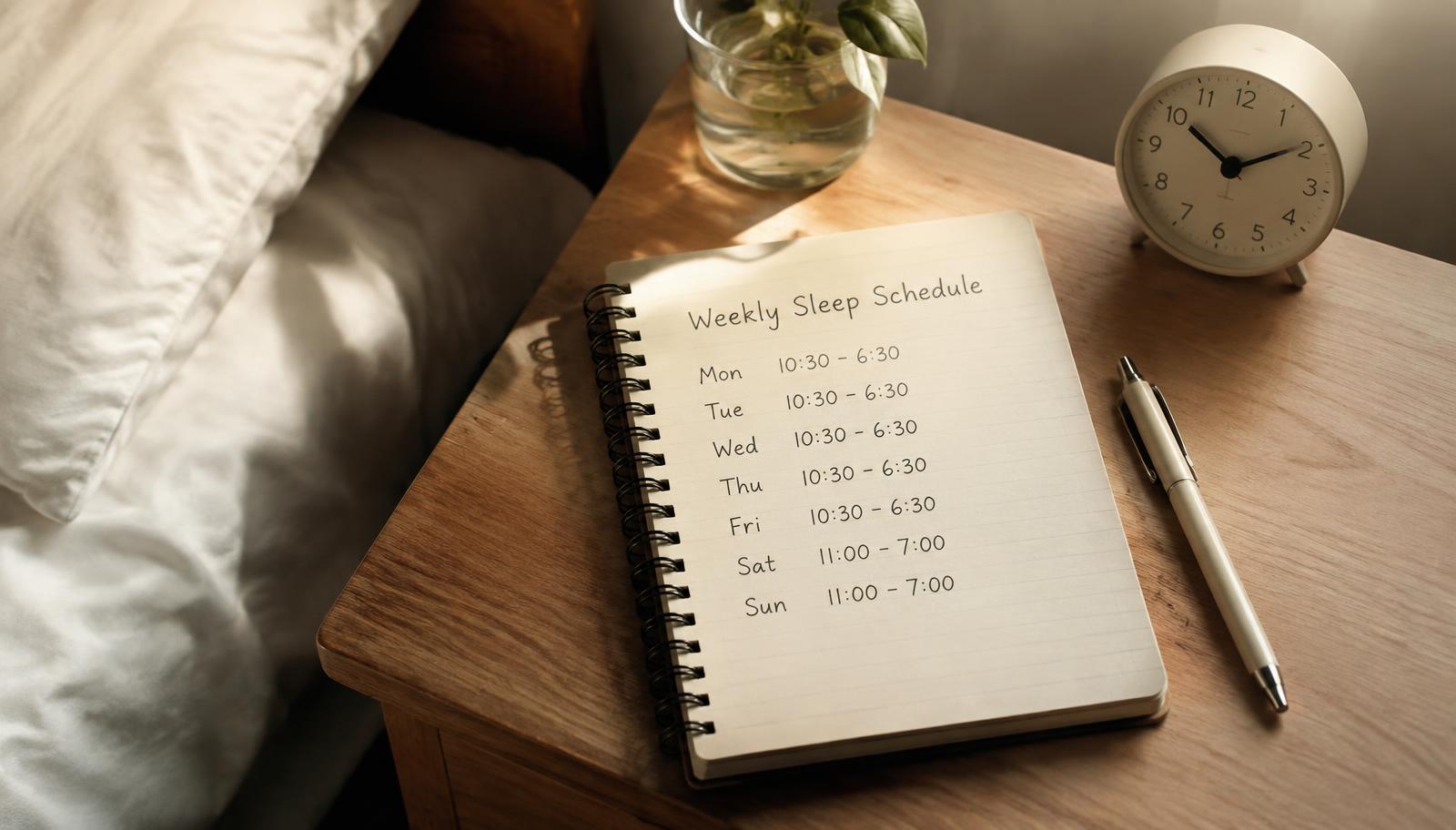
Better Sleep
How to build a more consistent sleep schedule
A more consistent sleep schedule is usually best built gradually, anchored around a fixed wake time rather than a fixed bedtime, supported by consistent light exposure. Small, sustainable adjustments over days or weeks tend to work better than sudden changes. The goal is a rhythm the body clock can rely on, not a single perfect night.
6 min readRead the guide →

Better Sleep
Caffeine and sleep: why timing matters
Caffeine blocks a chemical called adenosine that builds up sleep pressure through the day, and it can remain active in the body for many hours after it is drunk. Cutting off caffeine in the early-to-mid afternoon is a sensible default for most people, though individual sensitivity varies considerably and hidden sources are easy to miss.
6 min readRead the guide →

Better Sleep
Alcohol and sleep quality
Alcohol can make falling asleep feel easier because it is sedating, but sedation is not the same as normal, restorative sleep. As the body processes alcohol overnight, sleep tends to become lighter and more fragmented in the second half of the night, which is why a nightcap often leads to earlier or more frequent waking.
6 min readRead the guide →