
Better Sleep
Why does worrying about sleep keep me awake?
Worrying about sleep can keep your mind and body alert, making it harder to drift off even when you feel tired. Understanding this cycle and taking some pressure off bedtime can help sleep feel less like a task you have to complete.
5 min read · Published 26 October 2026

In short
- Sleep worries can create a cycle of alertness and frustration.
- Clock-checking and chasing a perfect sleep score may add pressure.
- A flexible routine can support sleep without becoming another test.
- Melatonin is a body-clock signal, not a way to switch off worries.
- Cognitive behavioural therapy for insomnia addresses thoughts and habits that keep sleep difficulties going.
You are tired, the day is finally over, and there is nothing left to do except sleep. Then the calculations begin: how many hours are left before the alarm, how difficult tomorrow might feel, and why you are still awake. A poor night can quickly turn into worry about the next one.
This is a recognisable pattern, not a personal failure. Sleep is not something we can produce through determination alone. The encouraging part is that the worry cycle can change: bedtime does not have to remain a nightly performance test.
How does the sleep–worry cycle work?
Stress and anxiety are common contributors to insomnia. When you worry, your mind becomes occupied with checking, predicting and problem-solving. Your body may also feel more alert or tense. Those responses are useful when there is a problem to deal with, but less helpful when you are hoping to drift off.
After a difficult night, sleep itself can become the problem your mind tries to solve. You might watch for signs of tiredness, calculate your remaining sleep opportunity or imagine everything that could go wrong tomorrow. This extra attention can make being awake feel increasingly urgent.
Over time, the bed may become associated with frustration and thinking rather than sleep. That does not mean the problem is imaginary. It means thoughts, physical alertness and habits can reinforce one another. Cognitive behavioural therapy for insomnia, often called CBT-I, is designed to address these connections.
Why trying harder can add pressure
Many everyday tasks improve with extra effort. Sleep is different: repeatedly checking whether it is happening keeps attention focused on being awake. Even a relaxing activity can become frustrating if its hidden purpose is to make you fall asleep within a particular number of minutes.
Clock-checking can feed this pattern. Seeing the time may trigger another calculation or prediction about tomorrow. Keeping the clock face out of direct view is one simple way to remove that prompt while leaving an alarm available.
Sleep tracking can create similar pressure for some people. A wearable may be interesting for broad patterns, but its nightly estimate is not a complete assessment of sleep or daytime wellbeing. If checking the result starts to feel like receiving a daily grade, the information may be adding worry rather than useful perspective.
The aim is not to become perfectly unconcerned about sleep. It is to leave a little less room for monitoring and judgement. Rest matters, but it does not need to be measured and evaluated throughout the night.
What can make bedtime feel less demanding?
A helpful routine provides familiar cues without promising a guaranteed result. Reading quietly or preparing for the next day can mark the transition out of daytime activity. These habits are best understood as support for sleep, not steps that must be completed perfectly.
General approaches that can reduce the sense of a nightly deadline include:
- Giving worries an earlier space: a brief period before the bedtime routine to note concerns and possible next steps can keep practical planning out of bed.
- Keeping the routine manageable: a few familiar activities are easier to live with than a long checklist of sleep rules.
- Separating comfort from results: a quiet activity can be worthwhile even when it does not lead straight to sleep.
- Avoiding an ever-earlier bedtime: spending extra hours in bed trying to force sleep can create more opportunity for frustration.
- Taking a quiet break when lying awake becomes frustrating: returning to bed when sleepy can help preserve the connection between bed and sleep.
These are general sleep-supporting ideas, not a personalised treatment plan. There is no need to adopt them all at once or turn them into another test. The useful direction is towards less struggle, rather than a more elaborate effort to control every night.
How can you put tomorrow's worries in perspective?
A common bedtime thought is: “If I do not sleep now, tomorrow will be a disaster.” Poor sleep can affect concentration, mood and alertness, so the concern is understandable. But predicting the whole day from the middle of the night can make the immediate situation feel more threatening.
A more balanced thought might be: “Tomorrow could feel harder, but I cannot know exactly how it will go.” This does not deny the value of sleep. It simply avoids treating the worst possible outcome as certain.
Keeping ordinary daytime anchors, including a reasonably consistent getting-up time, can also help prevent one poor night from reorganising the entire sleep schedule. The aim is steadiness, not punishment or pushing through everything regardless of how you feel.
Safety remains important. Sleepiness should not be brushed aside as just worry: driving or doing other safety-critical tasks while sleepy can be dangerous. A calmer outlook on a difficult night should sit alongside sensible limits on activities that require full alertness.
Where do melatonin and sleep therapy fit?
Melatonin helps signal biological night to the body. Research supports benefits in some sleep-timing situations, but it should not be presented as a way to switch off anxious thoughts. Worry about sleep and a body clock that is out of step are different issues, although they can occur together.
When insomnia persists, CBT-I is an established treatment that addresses both sleep-related thinking and behaviours. It is more than a list of sleep hygiene tips: it can help people change unhelpful expectations, reduce associations between bed and wakefulness, and develop patterns that support sleep.
Sleep difficulties that last for months or make daily life hard deserve professional assessment. Worry may be part of the picture, but it should not automatically be assumed to explain everything. An assessment can also consider other reasons for disrupted sleep.
Common questions
Does worrying about sleep mean I have insomnia? Not necessarily. Occasional worry and disrupted nights are common. Insomnia involves recurring sleep difficulties, often with effects during the day; assessment considers the wider pattern rather than one anxious evening.
Is resting quietly the same as sleeping? No. Quiet rest may feel comfortable and worthwhile, but it does not replace sleep. It can still be helpful to stop treating every awake minute as wasted time.
Do I need to empty my mind to fall asleep? No. A completely blank mind is not a requirement. Trying to eliminate every thought can become another demanding task; thoughts appearing at bedtime do not mean sleep is impossible.
What is the main takeaway? Support sleep without making it an exam. A manageable routine, less clock-watching and a more balanced view of difficult nights can take some pressure off, while persistent problems have established routes to support.
Sources
Written by Melatonin UK editorial team.
Published 26 October 2026. This article is general information about sleep and the body clock. It is not medical advice, and it does not replace a conversation with your GP or pharmacist.
Read next
Better Sleep
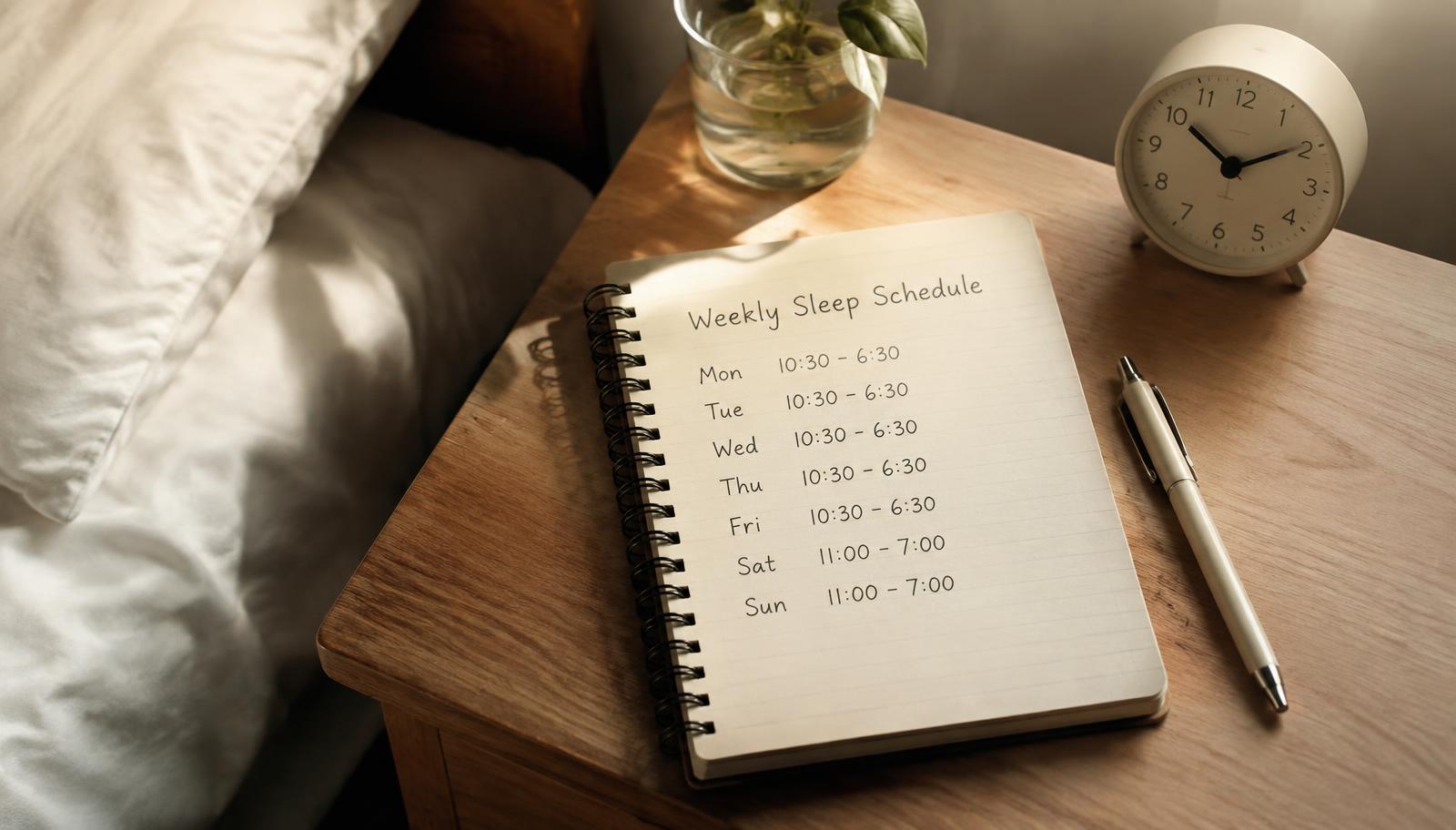
How to build a more consistent sleep schedule
A more consistent sleep schedule is usually best built gradually, anchored around a fixed wake time rather than a fixed bedtime, supported by consistent light exposure. Small, sustainable adjustments over days or weeks tend to work better than sudden changes. The goal is a rhythm the body clock can rely on, not a single perfect night.
6 min readRead the guide →

Better Sleep
Caffeine and sleep: why timing matters
Caffeine blocks a chemical called adenosine that builds up sleep pressure through the day, and it can remain active in the body for many hours after it is drunk. Cutting off caffeine in the early-to-mid afternoon is a sensible default for most people, though individual sensitivity varies considerably and hidden sources are easy to miss.
6 min readRead the guide →

Better Sleep
Alcohol and sleep quality
Alcohol can make falling asleep feel easier because it is sedating, but sedation is not the same as normal, restorative sleep. As the body processes alcohol overnight, sleep tends to become lighter and more fragmented in the second half of the night, which is why a nightcap often leads to earlier or more frequent waking.
6 min readRead the guide →