
Melatonin Basics
What is melatonin used for? The main everyday uses explained
Melatonin is used to help reduce jet lag, address certain sleep-timing problems and support sleep in some adults with sleep difficulties. Its benefits depend on the situation: evidence is stronger for jet lag than for shift-work sleep, while improvements in general sleep difficulties are usually modest.
5 min read · Published 6 October 2026
In short
- Melatonin helps signal biological night rather than simply switching sleep on.
- Research supports its use for reducing jet lag after crossing time zones.
- It may help with certain patterns of unusually late sleep timing.
- Benefits for general sleep difficulties are usually modest and vary between people.
- Evidence for improving sleep around shift work remains uncertain.
The main uses: sleep timing and selected sleep difficulties
Melatonin has two closely connected roles in sleep research: helping shift the timing of the body clock and helping some people fall asleep more easily. That makes it relevant to several everyday situations, including long-distance travel, a sleep pattern that runs unusually late, and certain sleep difficulties in adults. These uses share a theme, but they are not interchangeable.
The body naturally produces melatonin as a signal of biological night. Melatonin taken as a product acts on the same signalling system. It is not a general-purpose sleep switch: it cannot remove every reason someone is awake, such as pain, worry, a noisy room or a sleep-related breathing problem.
The useful question is therefore not just whether melatonin helps sleep, but which problem it is being used for. Research suggests that matching the use to the underlying sleep issue matters. Studies also differ in their participants, formulations and timing, so a positive result in one setting does not guarantee the same benefit in another.
Jet lag: helping with a temporary body-clock mismatch
Jet lag is one of the best-supported everyday uses of melatonin. After a journey across several time zones, the local clock may say bedtime while the body still expects daytime. This mismatch can mean difficulty sleeping at night, sleepiness during the day and a general feeling of being out of step with the destination.
A Cochrane review found that melatonin can help prevent or reduce jet lag, particularly after crossing five or more time zones. The practical upside is not simply feeling sleepy: it is reducing the disruption associated with moving between different day–night schedules. This can make settling into a trip more manageable, although the benefit varies between travellers.
Timing is central to this use because melatonin can influence the direction in which the body clock shifts. Studies used schedules linked to the destination and journey, rather than treating melatonin as something to take whenever tiredness appeared. Their findings should not be read as a universal travel routine.
Jet lag also differs from ordinary travel fatigue. A tiring journey without a time-zone change may leave someone exhausted, but it does not create the same clock mismatch. Melatonin's jet-lag evidence does not mean it is a remedy for every poor night's sleep away from home.
A very late sleep pattern: helping bring sleep timing forward
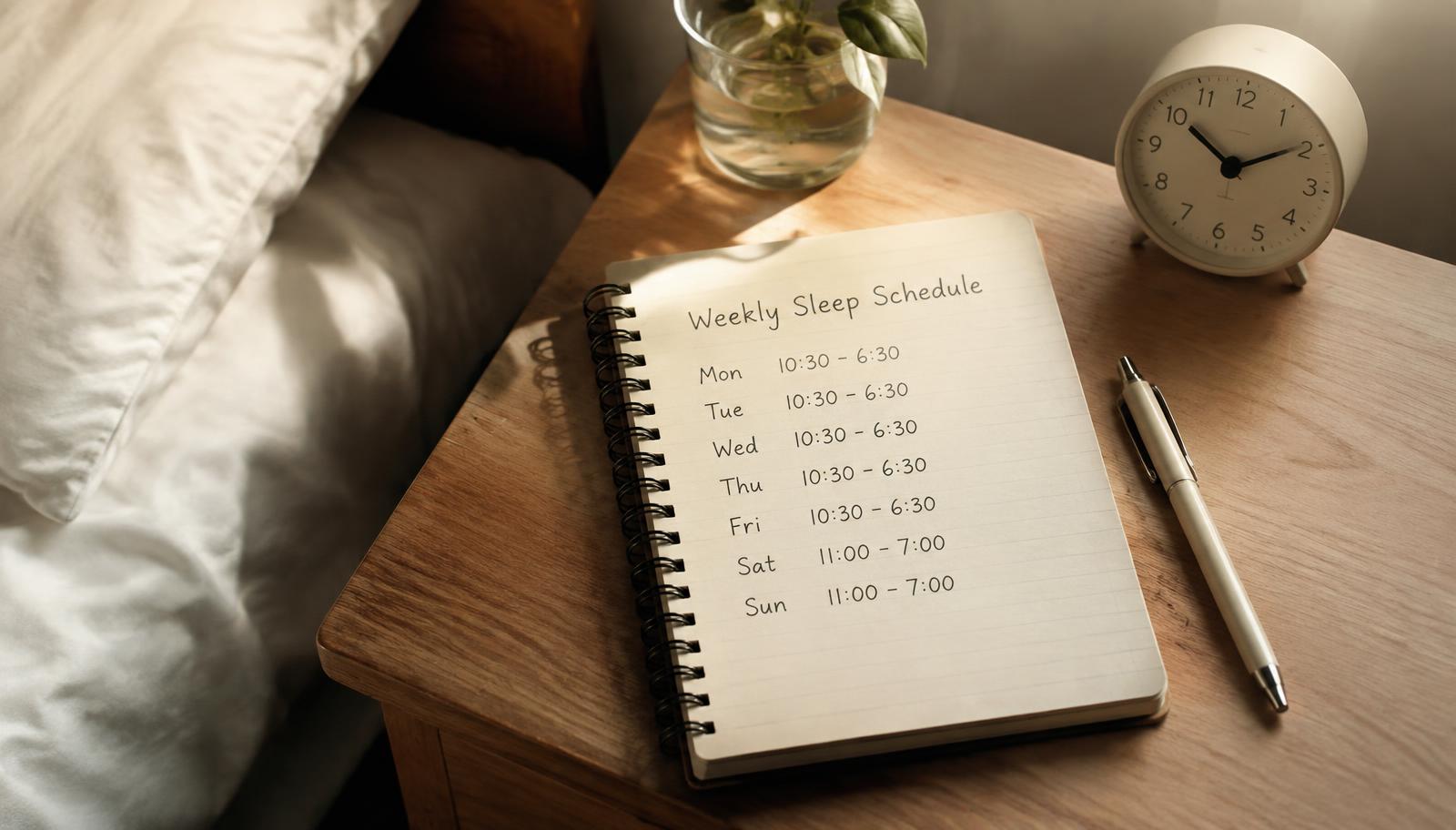
Another use is delayed sleep–wake phase disorder, a body-clock condition in which sleep naturally starts and finishes much later than the schedule someone needs to keep. An adult may sleep reasonably well when allowed to follow their preferred hours, yet struggle to fall asleep earlier and wake for work.
This is different from simply enjoying a late evening or occasionally staying up too long. The defining issue is a persistent mismatch between biological sleep timing and everyday commitments. Research suggests that appropriately timed melatonin may help bring sleep timing earlier in some people with this condition.
The potential benefit is a better fit between sleep and daily life, rather than a promise of deeper sleep. Because this is a clock-shifting use, the timing of melatonin is part of the treatment being studied, not a minor detail. Recognising the sleep pattern correctly matters more than assuming that every difficult bedtime has the same cause.
Sleep difficulties in adults: modest benefits, not a universal fix
Melatonin has also been studied in adults who have difficulty falling asleep or are unhappy with their sleep. Reviews of sleep-disorder trials have found modest average improvements in measures such as the time taken to fall asleep, total sleep time and perceived sleep quality. Not every study finds the same effects, and not everyone notices a useful change.
For someone expecting an immediate, full night's sleep, those findings can sound underwhelming. A more realistic interpretation is that melatonin may offer a small improvement for selected sleep problems. Evidence does not support treating it as a reliable answer to every form of insomnia, especially when sleep difficulties are long-standing or have several contributing causes.
Older adults are an important group in this research. Melatonin production and sleep patterns can change with age, and some studies of prolonged-release melatonin in older adults have reported improvements in sleep quality or falling asleep. However, ageing does not automatically mean someone needs extra melatonin, and a sleep complaint does not prove that natural melatonin levels are low.
Product formulation also matters when interpreting results. A formulation that releases melatonin gradually is not identical to one that releases it quickly. Evidence from one cannot simply be transferred to every other form. The positive takeaway is that research asks increasingly specific questions about who benefits, rather than treating all sleep difficulties as one problem.
Shift work: an understandable use, but uncertain evidence
Shift work can require sleep at a time when the body is signalling wakefulness. Melatonin has therefore been studied as a way to support daytime sleep after night work. It is an understandable idea, but the research is less convincing than it is for jet lag.
Reviews have reported mixed or limited evidence, with uncertainty about how much melatonin improves sleep for shift workers. Rotating schedules, different working hours and differences between studies make firm conclusions difficult. It should not be described as a proven way to adapt fully to night shifts or remain alert during work.
There is also an important distinction between helping sleep and preventing fatigue-related mistakes. Melatonin can cause sleepiness; it is not an alertness aid. Protecting enough time for sleep and creating a quiet, dark sleeping environment remain useful parts of managing an unusual schedule, whether or not melatonin is involved.
Common questions
Is melatonin mainly for jet lag or insomnia? Both have been studied, but the evidence differs. Jet lag is a relatively well-supported use. For general insomnia, average benefits are usually modest, and evidence is not strong enough to present melatonin as a standard solution for everyone.
Is it used for stress or winding down? Melatonin is primarily a sleep and body-clock signal, not a general relaxation treatment. Feeling mentally busy at bedtime is not necessarily a sign of a melatonin problem. A calming routine can support the transition towards sleep without assuming that extra melatonin is needed.
Does more melatonin mean better results? That is not a sound conclusion from the research. Studies have investigated different amounts, formulations and schedules for different conditions. Their results do not establish a single amount that works best for everyone, and the amount alone does not explain the outcome.
Can melatonin replace enough sleep? No. Its role is to support certain aspects of sleep timing or sleep onset, not to reduce the body's need for rest. The clearest way to understand its everyday uses is as a targeted tool with situation-specific benefits, rather than a shortcut around sleep.
Sources
- NCCIH – Melatonin: what you need to know
- Cochrane – Melatonin for the prevention and treatment of jet lag
- Ferracioli-Oda et al. (2013) – Meta-analysis: melatonin for the treatment of primary sleep disorders, PLoS One
- Auld et al. (2017) – Evidence for the efficacy of melatonin in the treatment of primary adult sleep disorders, Sleep Medicine Reviews
Written by Melatonin UK editorial team.
Published 6 October 2026. This article is general information about sleep and the body clock. It is not medical advice, and it does not replace a conversation with your GP or pharmacist.
Read next

Melatonin Basics
What is melatonin?
Melatonin is a hormone produced mainly by the pineal gland in the brain, released in response to darkness. It signals to the rest of the body that it is night-time, helping to time sleep rather than force it. It is not a sedative, and it does not knock you out the way a sleeping tablet might.
7 min readRead the guide →
Melatonin Basics
How does melatonin work?
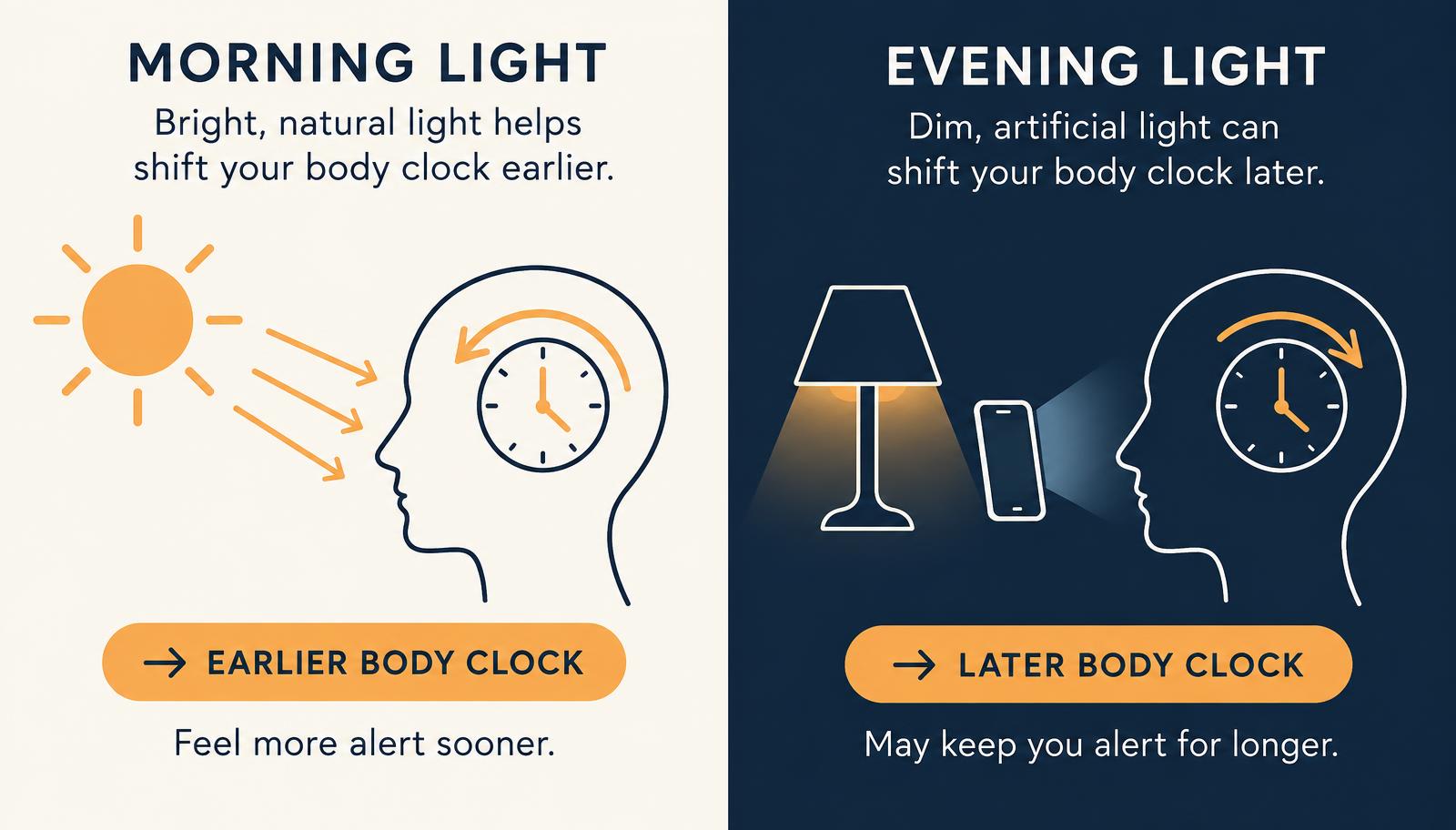
Melatonin works as part of a chain reaction that starts with light-detecting cells in the eyes, passes through the brain's master clock, and ends with the pineal gland releasing melatonin into the bloodstream. Darkness allows melatonin to rise, which helps signal that night-time conditions have arrived, while bright light suppresses it.
6 min readRead the guide →
Melatonin Basics
When does the body produce melatonin?
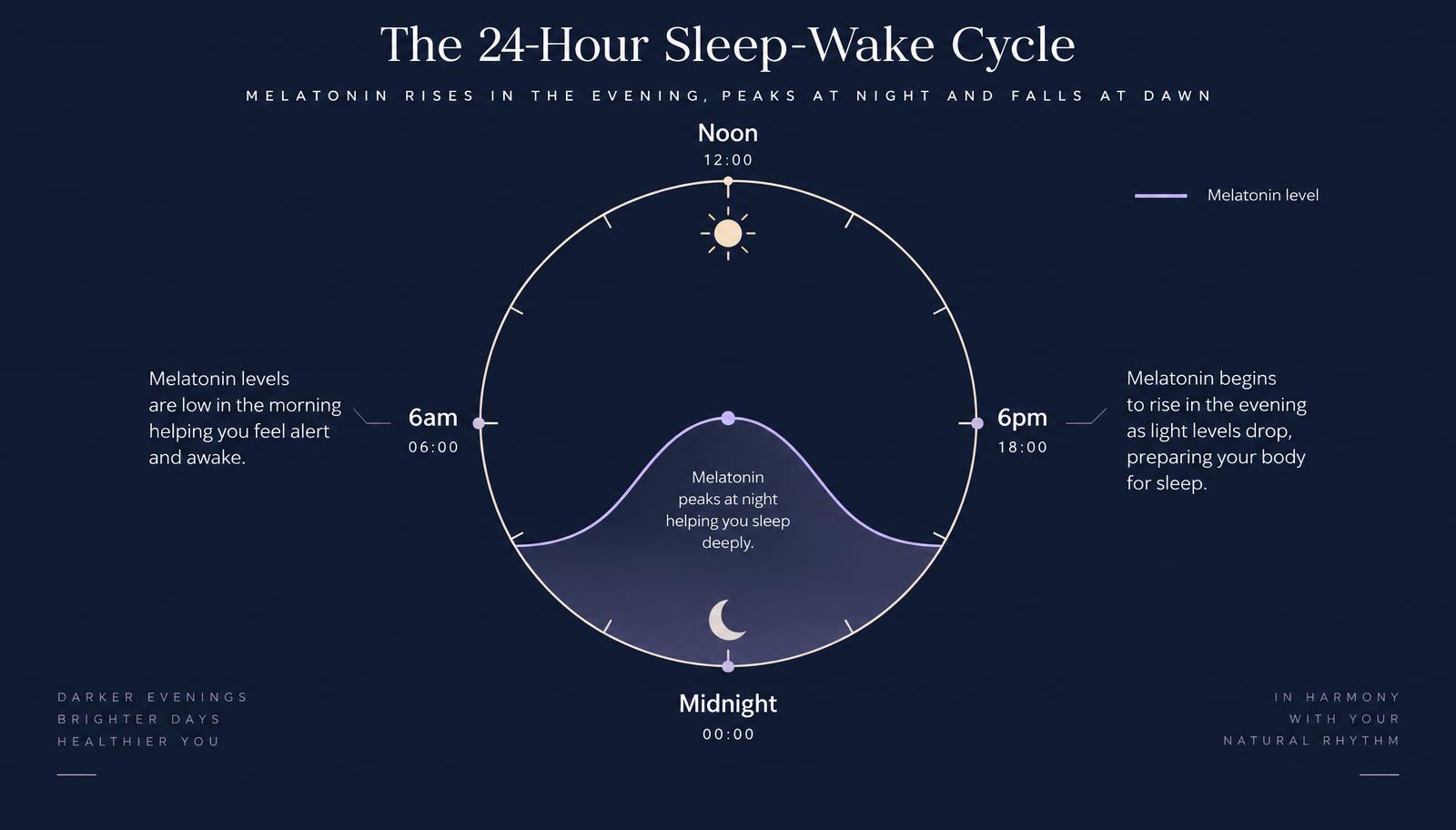
For most people, melatonin begins rising in the evening as light fades, stays elevated through much of the night, and falls again before or around waking. Researchers sometimes measure the exact starting point of this rise, known as dim-light melatonin onset, to understand an individual's body clock timing. The precise timing varies from person to person and is influenced by chronotype, age, and light exposure.
6 min readRead the guide →