
Better Sleep
Natural ways to boost your own melatonin
The best-supported natural approach is to give your body a clear contrast between daytime light and evening darkness: spend time outdoors during the day and reduce bright light as bedtime approaches. These habits support the timing of your own melatonin rather than guaranteeing higher levels; no particular food or bedtime ritual reliably produces a meaningful boost.
5 min read · Published 12 October 2026
In short
- Aim to support a well-timed melatonin rhythm, not the highest possible level.
- Daytime light and darker evenings give your body clearer time cues.
- Bright evening lighting can suppress your natural melatonin signal.
- Foods marketed as melatonin boosters have less convincing evidence.
- Better sleep does not necessarily mean your melatonin levels have increased.
What does “boosting melatonin naturally” really mean?
Your body already makes melatonin, mainly in a small gland in the brain called the pineal gland. Its production normally increases during the biological evening, helping signal that night has arrived. The useful goal is not to make as much as possible: it is to allow that signal to rise at the right time.
Melatonin is not an on-off switch for sleep. Sleep also depends on how long you have been awake, your body clock, your surroundings and how alert or relaxed you feel. That explains why someone can feel tired but still struggle to drift off, and why a soothing ritual can help without directly increasing melatonin.
Think of natural melatonin support as protecting a rhythm rather than adding an ingredient. Light is the clearest everyday lever because it directly influences the system controlling melatonin. Other healthy habits can make sleep easier, but their benefits should not automatically be described as a hormone boost.
Give your body a clear daytime light signal
It may sound surprising, but supporting your night-time signal starts during the day. Light reaching your eyes helps set your body clock. For adults following a daytime schedule, getting daylight after waking helps reinforce the distinction between the active part of the day and the darker period that follows.
The aim is not to raise melatonin while you are out in the sunshine. Daylight normally keeps melatonin low and helps anchor its later rise. An outdoor walk, time in the garden or a daylight break can fit naturally into daily life. There is no need to look directly at the sun.
Outdoor daylight is usually brighter than ordinary indoor lighting, even when the sky is overcast. That makes getting outside useful during a British winter too. There is no single exposure length that guarantees a melatonin boost: effects depend on brightness, timing, previous light exposure and your individual body clock.
Protect the evening rise with gentler lighting
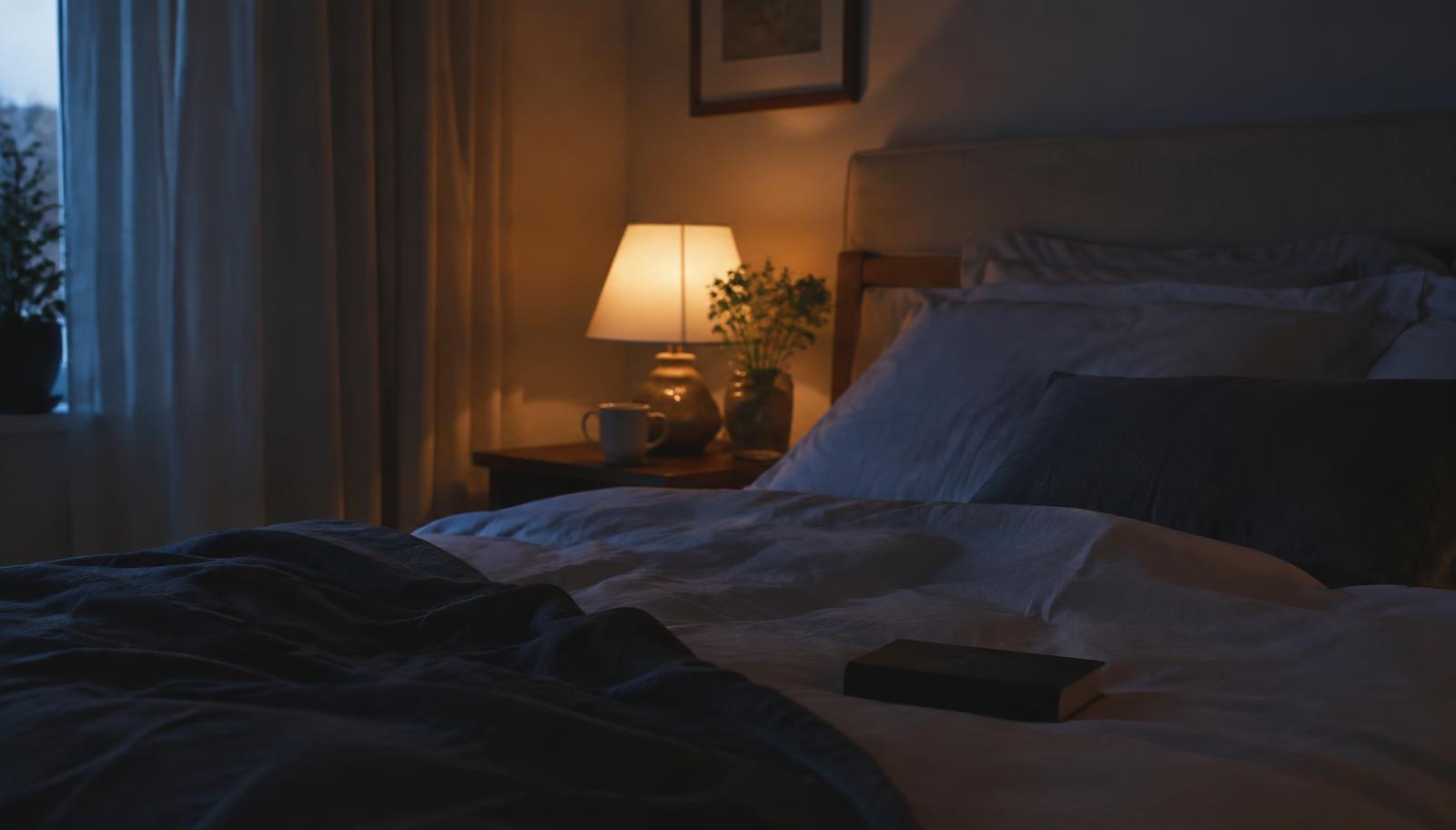
Evening light can suppress melatonin and shift the body clock later. Reducing bright light as bedtime approaches therefore removes something that can interfere with your natural signal. This is a more accurate description than saying that darkness forces your body to produce extra melatonin.
Look at the whole room, not just your phone. Bright ceiling lights, a glowing television and a tablet held close to your face all contribute to evening light exposure. The effect depends on brightness, duration, colour and timing. Short-wavelength, blue-rich light is particularly influential, but other bright light can matter too.
- Use lower-level lamps rather than bright overhead lighting when practical.
- Reduce screen brightness and avoid keeping a bright display close to your eyes.
- Keep unnecessary lights off in the bedroom, including distracting indicator lights.
- Use curtains, blinds or an eye mask if outside light makes the room bright.
- Keep enough light for safe movement if you get up during the night.
Warmer lighting and screen night modes can reduce some blue-rich light, but they do not cancel out brightness or stimulating content. A comfortable, dimmer room is generally a more useful starting point than relying on a particular bulb, filter or pair of glasses to guarantee higher melatonin.
Can foods increase your own melatonin?
Cherries, nuts, milk and other foods often appear on lists of natural melatonin boosters. Some foods contain melatonin, while others provide nutrients involved in the pathways your body uses to make it. However, containing a substance is not the same as reliably increasing your brain's night-time melatonin signal.
Your body uses the amino acid tryptophan in the pathway that produces serotonin and then melatonin. Tryptophan is found in many everyday protein-containing foods. Eating more of one ingredient does not necessarily push that pathway into making more melatonin: the process is regulated, and food intake is only one part of it.
Research on particular foods and sleep does not establish a dependable menu for boosting your own melatonin. Even when a study finds a sleep benefit, it may not show that increased melatonin caused it. Findings about melatonin taken as a supplement also cannot simply be transferred to cherries, juice or a bedtime snack.
A varied, balanced diet is a sensible foundation for general wellbeing. There is no established food portion that reliably boosts natural melatonin, and no need to turn an enjoyable evening drink or snack into a hormone project. Comfort and enjoyment can be worthwhile without a stronger biological claim.
Use sleep-friendly habits without overclaiming their effects
A reasonably regular sleep–wake pattern helps keep your daily cues aligned. In practice, a consistent waking pattern also makes daytime light exposure more predictable. This supports a stable body clock, although it does not mean that every consistent bedtime produces a measurable increase in melatonin.
Physical activity and a manageable wind-down routine can support sleep too. Reading, gentle stretching or quiet music may make the transition out of a busy day easier. Their practical value is reducing stimulation or helping you relax, rather than acting as proven direct melatonin boosters.
Caffeine can make it harder to settle, while alcohol can disrupt sleep even when it initially makes you feel sleepy. Neither effect needs to be explained solely through melatonin. Looking at the whole sleep picture is more useful than trying to optimise one hormone while overlooking habits that keep you awake.
Common questions
Does sleeping in complete darkness make more melatonin? Darkness helps avoid light-related suppression, but it does not guarantee higher levels throughout the night. Melatonin follows an internal rhythm. A comfortably dark bedroom supports that rhythm without needing to be perfectly black.
Can a warm bath boost melatonin? A warm bath can be part of a relaxing wind-down routine. Any sleep benefit should not automatically be attributed to increased melatonin; relaxation and changes in body temperature are separate parts of preparing for sleep.
How can I tell whether my melatonin has increased? Feeling sleepier or sleeping better cannot confirm a hormone change. For everyday purposes, the useful outcome is a more comfortable sleep pattern and better daytime functioning, not chasing a melatonin number.
What if these changes do not help? Ongoing sleep difficulties do not necessarily mean low melatonin. Persistent problems deserve attention beyond attempts to boost it, especially when they affect everyday life. General sleep guidance recommends seeking professional support when sleep problems continue.
Sources
Written by Melatonin UK editorial team.
Published 12 October 2026. This article is general information about sleep and the body clock. It is not medical advice, and it does not replace a conversation with your GP or pharmacist.
Read next
Better Sleep
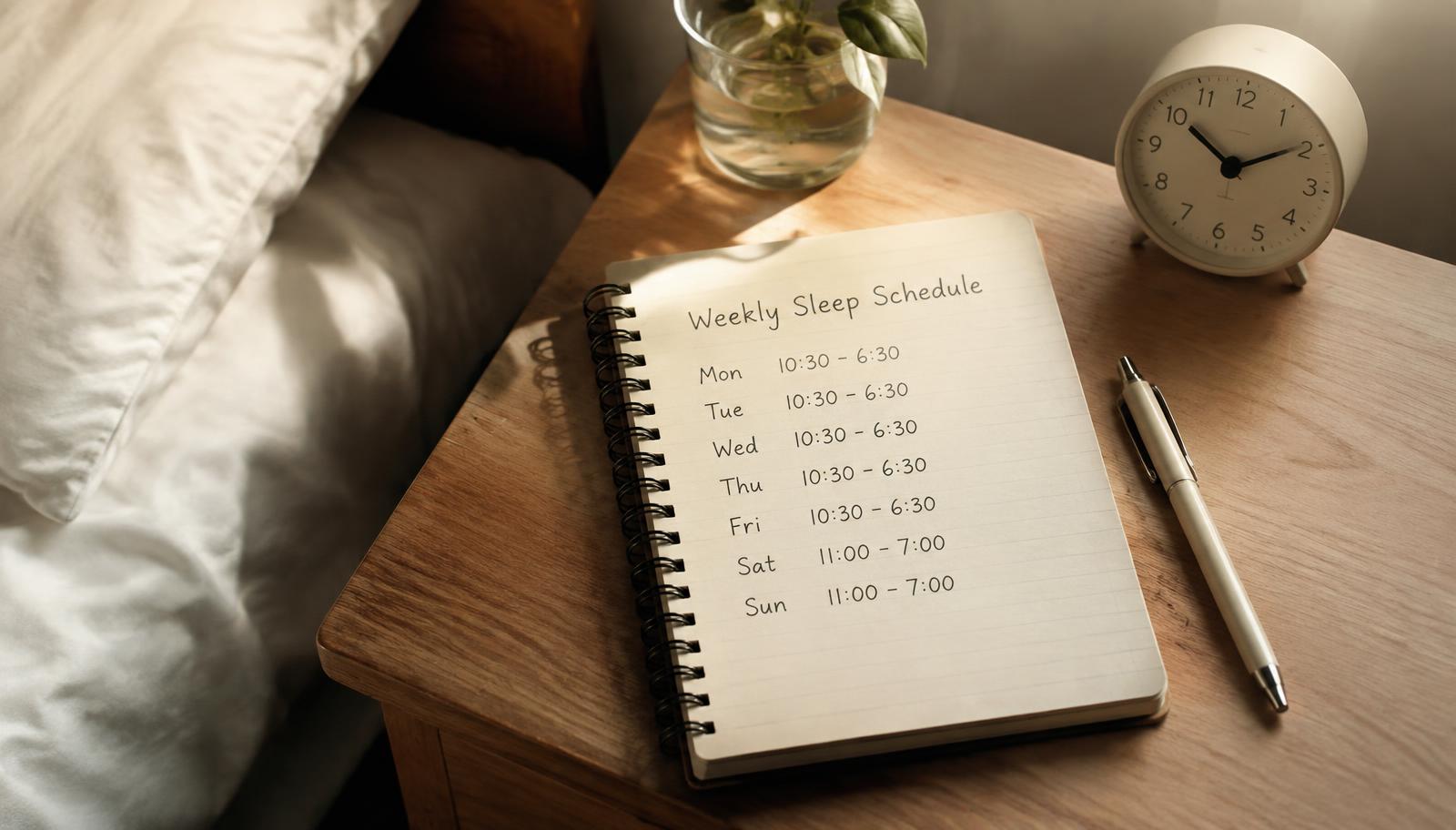
How to build a more consistent sleep schedule
A more consistent sleep schedule is usually best built gradually, anchored around a fixed wake time rather than a fixed bedtime, supported by consistent light exposure. Small, sustainable adjustments over days or weeks tend to work better than sudden changes. The goal is a rhythm the body clock can rely on, not a single perfect night.
6 min readRead the guide →
Better Sleep
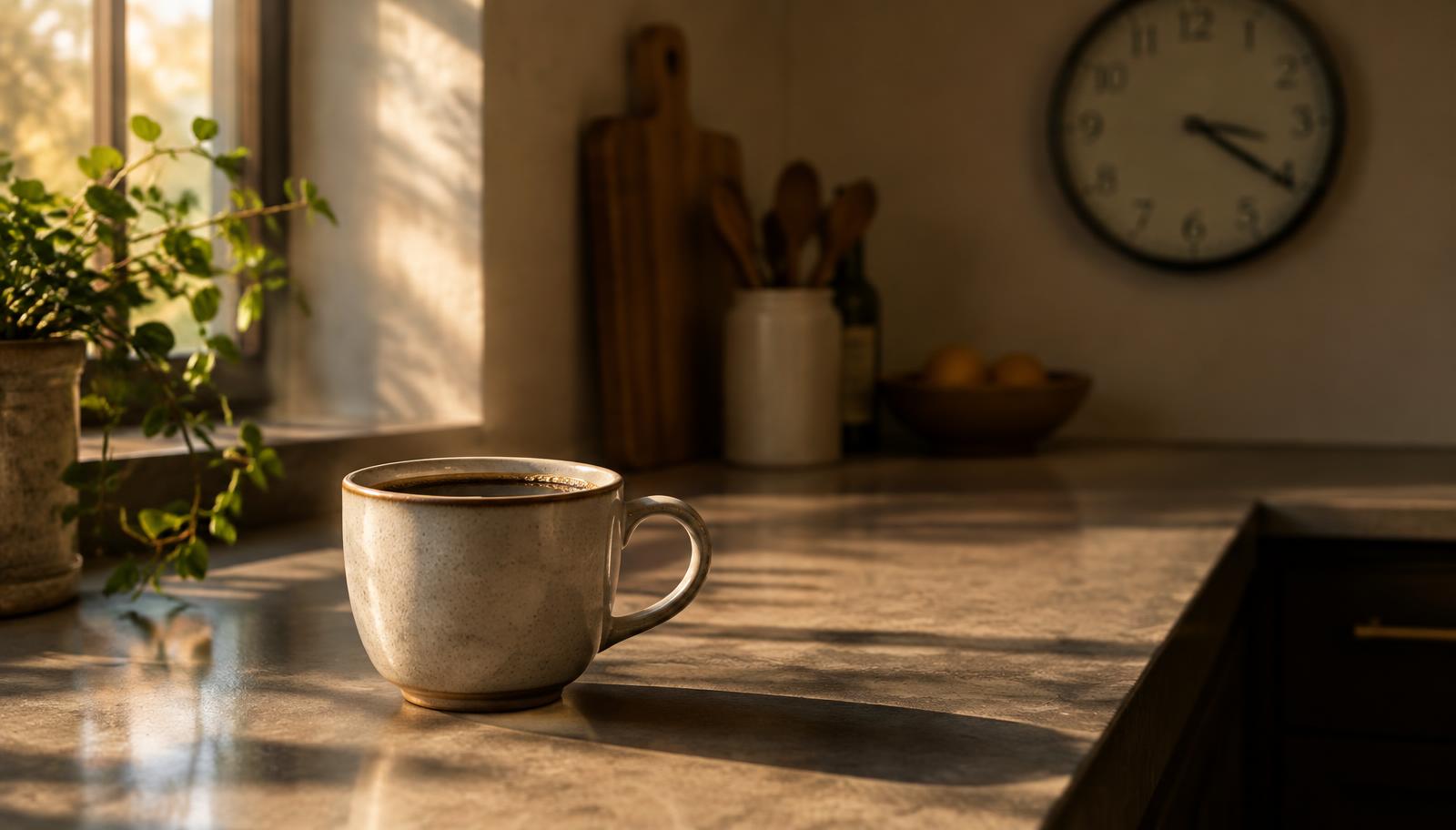
Caffeine and sleep: why timing matters
Caffeine blocks a chemical called adenosine that builds up sleep pressure through the day, and it can remain active in the body for many hours after it is drunk. Cutting off caffeine in the early-to-mid afternoon is a sensible default for most people, though individual sensitivity varies considerably and hidden sources are easy to miss.
6 min readRead the guide →

Better Sleep
Alcohol and sleep quality
Alcohol can make falling asleep feel easier because it is sedating, but sedation is not the same as normal, restorative sleep. As the body processes alcohol overnight, sleep tends to become lighter and more fragmented in the second half of the night, which is why a nightcap often leads to earlier or more frequent waking.
6 min readRead the guide →