
Better Sleep
Is it better to exercise in the morning or evening for sleep?
There is no single best exercise time for everyone’s sleep. Regular activity can support better sleep, while the most useful time is one you can maintain without leaving yourself too alert at bedtime or cutting your night short.
5 min read · Published 28 October 2026
In short
- Regular exercise can support sleep, but benefits need not appear after every workout.
- Morning exercise outdoors combines movement with daylight.
- Evening activity can fit a healthy routine, although vigorous sessions close to bed may feel stimulating.
- Protecting your sleep time matters more than chasing a perfect workout time.
- Gentle movement and a manageable routine are worthwhile starting points.
An early walk can feel like a fresh start. An evening workout can be a welcome break after a busy day. But if better sleep is your goal, does one deserve a permanent place in your diary?
The reassuring answer is that exercise does not have to happen at a perfect hour to be worthwhile. Regular activity is part of NHS advice for better sleep. Timing matters mainly because it affects how you feel afterwards, how easily the habit fits your life, and whether it leaves enough room for sleep.
How can exercise support better sleep?
Research suggests that regular exercise can improve sleep, including how people rate their sleep quality. It can also help with stress and wellbeing, which may make settling down at night easier. These are useful benefits, but exercise is not an instant switch that guarantees a good night.
It helps to separate physical tiredness from readiness for sleep. Your muscles may feel worked after a demanding session while your mind still feels bright and alert. Sleep depends on more than using energy: your body clock, time spent awake, surroundings and emotional state all play a part.
That means a harder workout is not automatically a better sleep aid. Walking, swimming, cycling, dancing and other enjoyable activities can all contribute to a regular movement habit. The aim is not to exhaust yourself into sleeping, but to make activity a sustainable part of your week.
What are the advantages of morning exercise?
Morning exercise has a practical advantage: it happens before the day becomes crowded. If work, errands or social plans often push activity aside, an early session may be easier to repeat. That consistency can be more valuable than trying to identify a supposedly ideal hour.
Taking your activity outdoors also brings daylight into the picture. Daylight helps your body clock distinguish daytime from night-time. A morning walk therefore combines two useful habits, although it is important not to confuse the effects of outdoor light with the effects of exercise itself.
The main drawback is sacrificing sleep to fit it in. If an early workout means repeatedly setting your alarm much earlier without going to bed earlier, it may work against your sleep goals. A morning routine should fit around enough sleep, not compete with it.
- Choose a morning slot that does not regularly shorten your night.
- Keep the activity manageable enough to repeat on ordinary days.
- Consider an outdoor walk if you enjoy a gentler start.
- Use a lunchtime or later session if mornings consistently feel rushed.
Can evening exercise fit a good sleep routine?
Yes: an evening exercise habit is not automatically a problem. For many adults, it is the most realistic opportunity to move. It can also create a useful boundary between work and home life, giving you something enjoyable to focus on before the quieter part of the evening.
However, vigorous exercise can temporarily leave you feeling warm, energised and alert. That may be inconvenient when bedtime follows soon afterwards. NHS insomnia guidance advises avoiding exercise in the four hours before bed. This is particularly worth considering if you already struggle to settle after late sessions.
An easy stroll is a different experience from a demanding run or a competitive game. Rather than treating all evening movement as the same, consider its intensity and your response. If you regularly finish feeling ready for another busy hour, an earlier or gentler session may fit your bedtime better.
The surrounding routine matters too. A session that ends late may delay your journey home, evening meal and usual wind-down. Sometimes the issue is not exercise itself but how much of the night disappears around it. Leave room for an unhurried transition towards bed.
How can you find a time that works for you?
Start with your actual week, rather than an idealised routine. Think about when you have reliable free time, what activity you enjoy and when you normally sleep. A realistic plan you can maintain is usually more useful than an ambitious schedule that lasts three days.
If you want to compare timings, change one thing at a time. You could move your usual session earlier while keeping its length and intensity similar. Notice whether you feel calmer at bedtime, whether falling asleep seems easier, and how rested you feel the next day.
- Notice your post-exercise energy: pleasantly settled or still very alert?
- Check whether the session pushes bedtime later than intended.
- Keep your usual sleep and wake times reasonably steady while comparing routines.
- Consider other explanations for a difficult night, such as stress or late caffeine.
- Choose a workable alternative for days when your preferred slot disappears.
There is no need to turn this into a detailed tracking project. A brief note about exercise time and how the night felt may be enough. The goal is to make life easier, not to create another performance target around sleep.
Where does melatonin fit into the picture?
Melatonin is a hormone involved in signalling biological night. It is not a measure of how much energy you have used, and exercise does not simply build up melatonin until you fall asleep. Movement, daylight and a regular sleep routine support different parts of the wider sleep picture.
For an article about workout timing, the useful focus is therefore your routine rather than trying to manipulate a hormone. Protect your sleep opportunity, notice how late activity affects you, and avoid assuming that feeling physically exhausted means your body is ready for bed.
Common questions
Does walking count? Yes. You do not need a strenuous workout for movement to be worthwhile. A regular walk is a practical way to include activity, and walking outdoors during daylight also gives you exposure to natural light.
Should I get up early to exercise after a poor night? There is no need to treat an early workout as more important than sleep. If your routine repeatedly leaves you short of rest, reconsider the timing rather than assuming you must push through to gain a sleep benefit.
What if exercise does not improve my sleep? Exercise supports health, but it cannot resolve every cause of poor sleep. If sleep difficulties continue or affect daily life, seek professional support. The takeaway is encouraging: choose movement you enjoy, fit it around adequate rest, and let consistency matter more than the clock.
Sources
Written by Melatonin UK editorial team.
Published 28 October 2026. This article is general information about sleep and the body clock. It is not medical advice, and it does not replace a conversation with your GP or pharmacist.
Read next
Better Sleep
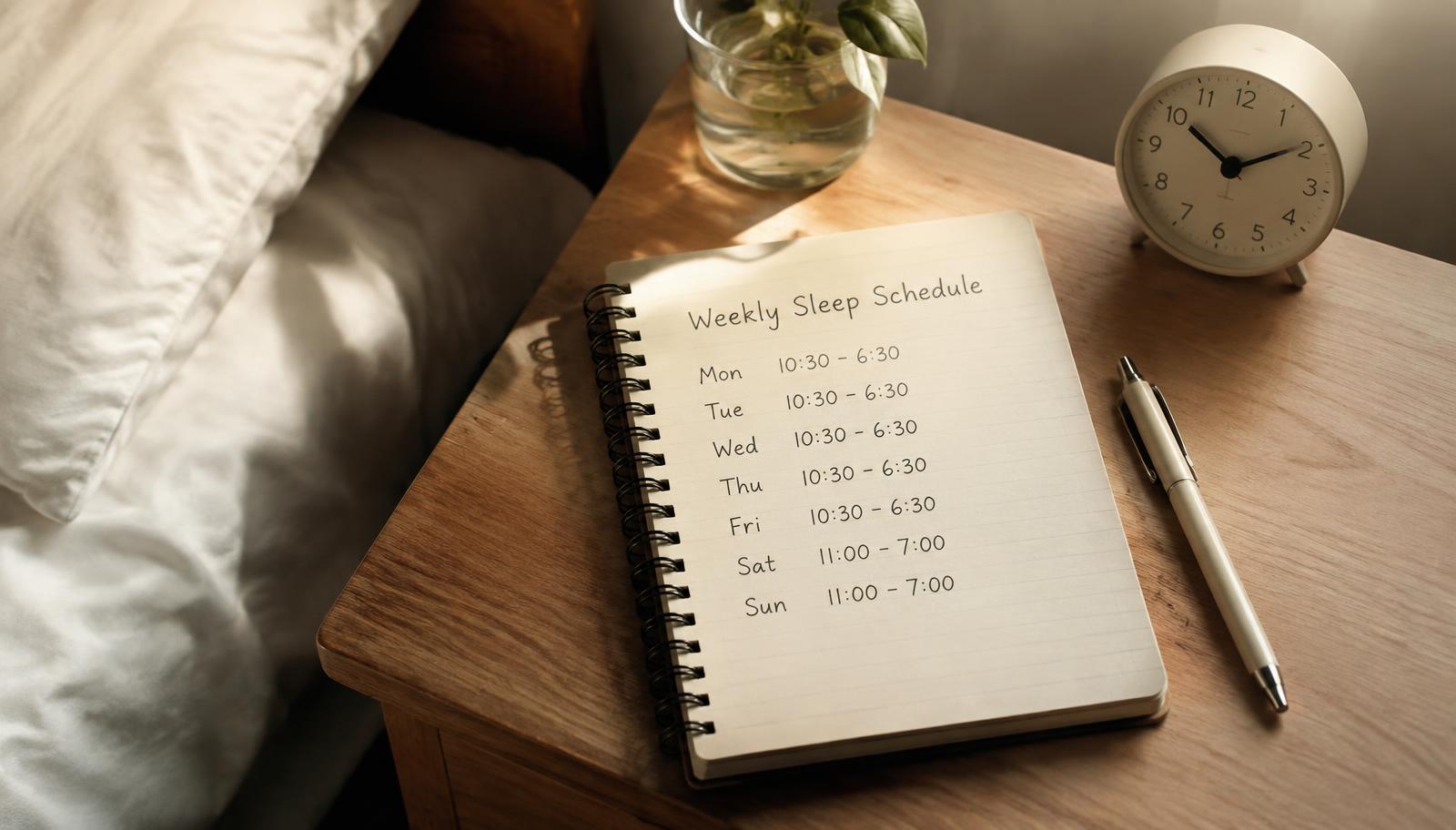
How to build a more consistent sleep schedule
A more consistent sleep schedule is usually best built gradually, anchored around a fixed wake time rather than a fixed bedtime, supported by consistent light exposure. Small, sustainable adjustments over days or weeks tend to work better than sudden changes. The goal is a rhythm the body clock can rely on, not a single perfect night.
6 min readRead the guide →

Better Sleep
Caffeine and sleep: why timing matters
Caffeine blocks a chemical called adenosine that builds up sleep pressure through the day, and it can remain active in the body for many hours after it is drunk. Cutting off caffeine in the early-to-mid afternoon is a sensible default for most people, though individual sensitivity varies considerably and hidden sources are easy to miss.
6 min readRead the guide →

Better Sleep
Alcohol and sleep quality
Alcohol can make falling asleep feel easier because it is sedating, but sedation is not the same as normal, restorative sleep. As the body processes alcohol overnight, sleep tends to become lighter and more fragmented in the second half of the night, which is why a nightcap often leads to earlier or more frequent waking.
6 min readRead the guide →