
Melatonin Basics
How long does melatonin take to work?
Standard immediate-release melatonin is usually absorbed quickly, with blood levels typically peaking within about an hour, and it is cleared fairly fast. Prolonged-release forms release melatonin gradually over several hours. But "working" depends on more than absorption: melatonin mainly shifts timing, so whether it has an effect also depends on where your body clock is and what is keeping you awake.
6 min read · Published 24 September 2026
In short
- Immediate-release melatonin is typically absorbed within about an hour.
- Its half-life in the blood is short, often described as under an hour.
- Prolonged-release forms spread release over several hours to resemble the body's night-time pattern.
- Effects on body-clock timing can build over days, not just on the first night.
- Individual differences in absorption and clearance are large, so experiences vary widely.
It is natural to want a simple number: take melatonin, and you will feel sleepy in so many minutes. The body's response is less tidy than that. There are two separate questions hidden inside this one: how quickly melatonin reaches the bloodstream, and how quickly it changes sleep. The first has a reasonably clear answer. The second depends on the person.
How quickly melatonin is absorbed
Melatonin taken by mouth in a standard, immediate-release form is absorbed from the gut fairly quickly. Reference sources such as StatPearls describe blood levels typically peaking within roughly an hour, although the range between people is wide. A large share of each dose is broken down by the liver before it circulates, so the amount that reaches the bloodstream varies considerably from person to person.
Melatonin is then cleared relatively quickly, with a half-life commonly described as less than an hour. Half-life means the time it takes for the level in the blood to fall by half. This short window is why manufacturers developed other release types, described in What are the different forms of melatonin?
Immediate release and prolonged release
- Immediate-release: a relatively rapid rise and fall, over a few hours.
- Prolonged-release (sometimes sold as time-release or slow-release): gradual release over several hours, designed to resemble the body's own overnight pattern more closely.
- Sublingual and liquid forms: intended to be absorbed or swallowed easily, although direct comparisons of speed with tablets are limited.
Melatonin tablets: standard, prolonged-release and sublingual explains these types in more detail.
Why "working" is about timing
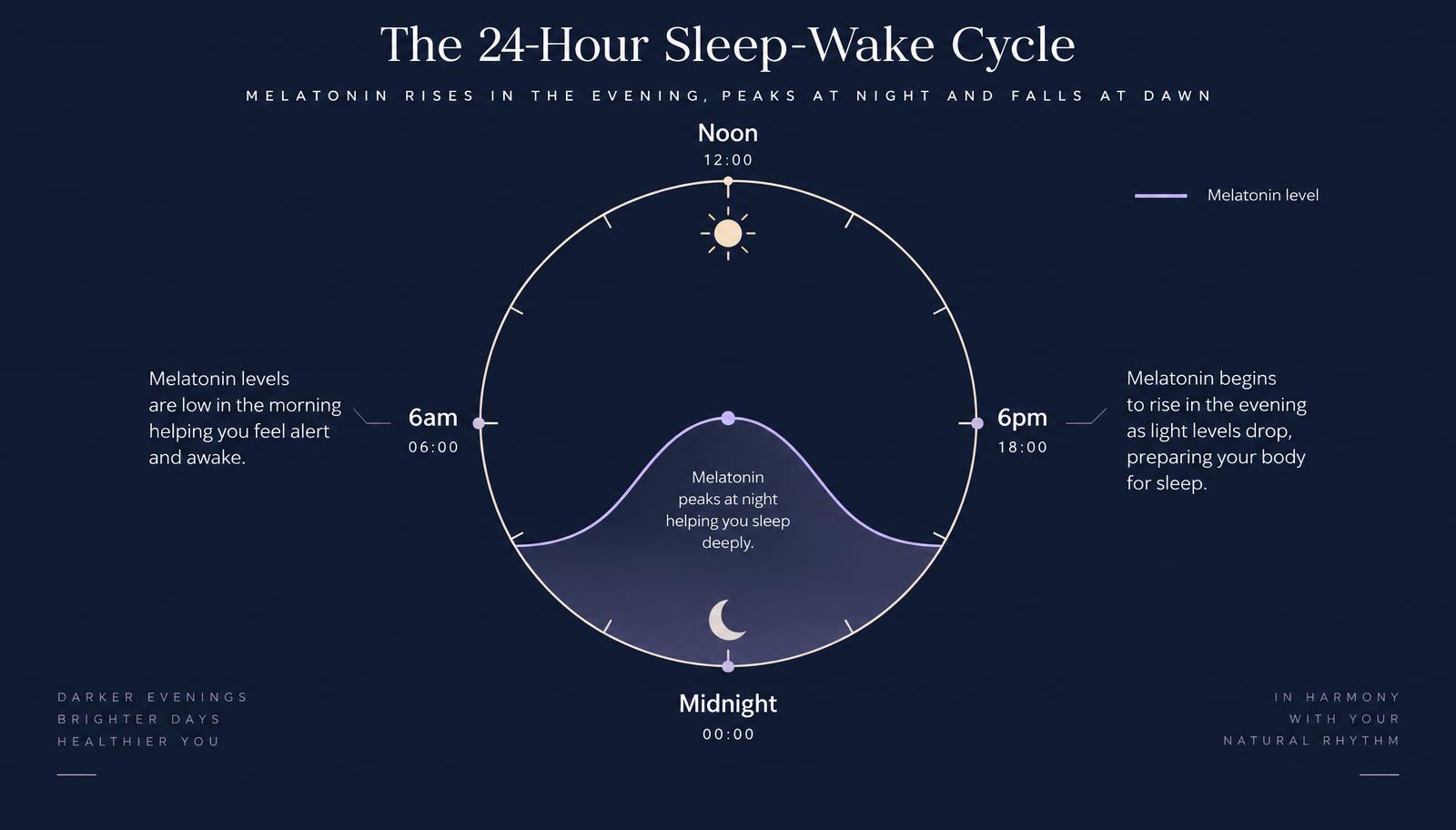
Melatonin is not a sedative. Its main effect is to send a night-time signal to the body clock. Research on jet lag and on delayed sleep timing suggests that this signal can gradually move the clock earlier or later, depending on when it arrives. That kind of change typically builds over several days rather than appearing in full on the first night. Melatonin and the circadian rhythm explains how the clock responds to signals.
Some people do notice drowsiness soon after melatonin, and trials of general insomnia have reported, on average, modestly shorter times to fall asleep. But if what keeps you awake is worry, noise, pain or caffeine, a timing signal will not remove the cause. Why do I struggle to fall asleep? explores these.
What affects how fast it works
- Food in the stomach, which can slow absorption.
- Liver enzyme activity, influenced by age, smoking, caffeine and some medicines.
- Bright light at the same time, which works against the melatonin signal.
- Where your own melatonin rhythm is at that moment.
Common questions
How long does melatonin stay in your system?
Immediate-release melatonin is mostly cleared within a few hours; prolonged-release forms last longer by design. Clearance varies between people.
Why did melatonin not work for me?
Common reasons include timing, bright evening light, an underlying cause of poor sleep unrelated to timing, and product variability. Melatonin myths and misconceptions covers expectations.
Does melatonin work straight away for jet lag?
Research on jet lag looks at effects over several days after travel. Melatonin and jet lag explains the findings.
Sources
Written by The Melatonin UK editorial team.
Published 24 September 2026. This article is general information about sleep and the body clock. It is not medical advice, and it does not replace a conversation with your GP or pharmacist.
Read next

Melatonin Basics
Forms of melatonin: tablets, capsules, gummies, drops and more
Melatonin is made in several forms: standard tablets and capsules, prolonged-release (time-release) tablets, sublingual tablets or sprays that dissolve under the tongue, liquid drops or oral solutions, and chewable gummies. The main practical differences are how quickly melatonin is released, how long it stays active, how easily the amount can be measured, and what else the product contains. There is limited research comparing everyday forms head to head, so a pharmacist is the best person to help match a form to your situation.
7 min readRead the guide →
The Body Clock
Melatonin and the circadian rhythm
A circadian rhythm is the roughly 24-hour internal cycle that governs when the body expects to be awake or asleep, alert or drowsy. Melatonin is one of the key signals used to keep this rhythm aligned with day and night, and the rhythm itself can gradually shift earlier or later depending on light exposure and routine.
6 min readRead the guide →

Sleep Questions
Does melatonin help you sleep?
Melatonin can help some people, but mainly by adjusting the timing of sleep rather than forcing it. Research shows the clearest benefits in situations where the body clock is out of step, such as jet lag and delayed sleep timing, and some benefit for certain older adults. For general insomnia in adults, average effects are modest, and UK guidance puts other approaches first.
7 min readRead the guide →