
Better Sleep
How does sleep affect your mood?
Sleep supports emotional wellbeing, and poor sleep can leave you feeling more irritable, worried or overwhelmed. The relationship works both ways: stress and low mood can also disturb sleep. Melatonin helps signal biological night, but it should not be presented as a general mood booster.
5 min read · Published 14 October 2026

In short
- Good sleep supports mood as well as daytime energy.
- Poor sleep can make everyday frustrations feel harder to manage.
- Stress and sleep can affect each other in both directions.
- Melatonin’s role in sleep does not establish it as a mood treatment.
- Persistent sleep difficulties or low mood deserve attention.
A delayed train, a missing set of keys or an overflowing inbox can feel quite different after a restful night. When you have slept poorly, the same small frustrations may seem bigger, and finding patience can take more effort. That does not mean every difficult feeling comes from sleep. It does mean that sleep is an important part of the background against which everyday emotions happen.
The encouraging message is not that perfect sleep guarantees happiness. It is that supporting sleep can give you a steadier foundation for daily life. Understanding the connection also helps keep expectations realistic: neither a carefully planned bedtime nor melatonin can remove every source of stress.
Why does sleep matter for emotional wellbeing?
Sleep is not simply time when the body stops working. It supports brain function, including processes involved in attention, learning and emotional wellbeing. Research links insufficient or disturbed sleep with poorer mood, although the relationship is complex and varies between people.
One useful way to think about it is emotional breathing room. When you feel rested, it may be easier to pause before responding, keep a minor problem in perspective or stay engaged in a conversation. After poor sleep, tiredness and difficulty concentrating can make those same tasks feel more demanding.
This is not a promise that another hour in bed will produce a particular emotional benefit. Mood also reflects relationships, health, work, life events and many other influences. Sleep is one meaningful contributor, rather than a complete explanation for how someone feels.
How can poor sleep show up in everyday mood?
The effects are not always dramatic. Sometimes poor sleep shows up as a shorter temper, less enthusiasm or a sense that ordinary tasks require more effort. A person may notice the emotional effect before recognising how tired they are.
- Irritability: small interruptions or inconveniences may feel more frustrating.
- Worry: it may be harder to step back from concerns or stop dwelling on them.
- Lower mood: the day may feel flatter or less enjoyable than usual.
- Feeling overwhelmed: decisions and competing demands may seem harder to handle.
These experiences are not proof that sleep is the cause. They are possible clues, especially when they repeatedly follow disrupted nights. Equally, some people feel mainly sleepy or mentally foggy rather than noticeably emotional.
A single difficult night does not mean the following day is ruined. Mood can shift throughout the day, and people differ in how strongly sleep loss affects them. Treating tiredness as useful context, rather than a prediction of disaster, can help avoid adding unnecessary worry to an already demanding morning.
Why do stress and sleep affect each other?
The connection runs in both directions. Poor sleep can leave everyday stress feeling harder to manage, while stress can make it more difficult to settle into sleep. Worries that stay in the background during a busy day may become more noticeable once the lights are out.
Sometimes sleep itself becomes the worry. Thoughts such as “I must fall asleep now or tomorrow will be awful” can turn bedtime into a test. Trying harder to sleep does not necessarily help, because sleep is not something that can be forced on command.
Low mood and ongoing anxiety can also occur alongside sleep difficulties. This does not establish which came first, and it is not always possible to untangle them without support. Improving sleep may help wellbeing, but a sleep-only approach can miss other important needs.
Does melatonin improve mood?
Melatonin is a hormone involved in signalling biological night. Its main relevance here is sleep timing, not a direct promise of feeling happier, calmer or more resilient. The body clock helps organise when sleep and wakefulness are expected, while mood has many additional influences.
Research has examined melatonin for certain sleep difficulties and jet lag. Findings depend on the situation and the outcome being measured. Evidence that it can help with a particular sleep problem does not automatically demonstrate that it treats anxiety, depression or everyday stress.
Someone who sleeps better may also feel better during the day. However, that possible knock-on benefit is different from showing that melatonin itself has a direct mood-enhancing effect. Consumer claims can blur this distinction, especially when words such as “wellbeing” or “calm” are used without explaining what research actually measured.
The practical takeaway is to keep the goal clear. Melatonin belongs in a discussion about sleep and body-clock timing; it is not a general solution for difficult emotions or a replacement for mental health support.
What everyday habits can support sleep and wellbeing?
The most useful approach is usually a manageable pattern, rather than a complete lifestyle overhaul. Regular sleep opportunities, daytime activity and time to unwind can support sleep. The aim is to make the day and night work together, without expecting immediate or guaranteed changes in mood.
- Build in a transition after a demanding day. A quiet activity can create some distance between work pressures and bedtime.
- Make space for enjoyable daytime movement. Physical activity can support both sleep and mental wellbeing.
- Keep practical worries somewhere other than the pillow. Writing down tomorrow’s tasks may help put unfinished business aside.
- Protect ordinary sources of wellbeing, such as social contact and enjoyable activities, rather than making sleep the only priority.
It can also be useful to notice broad patterns: whether irritability tends to follow short nights, or whether stressful periods bring more disrupted sleep. This does not require scoring every morning. The purpose is understanding, not constant monitoring or blaming yourself for how you feel.
Common questions
Can one bad night affect my mood? Yes. Even a short period of poor sleep can leave some people feeling irritable or less able to concentrate. The effect varies, though, and one unsettled night does not guarantee a difficult day.
Will more sleep always make me happier? No. Getting enough sleep matters, but more is not automatically better. Mood depends on much more than time in bed, and persistent low mood should not be dismissed as simply needing extra rest.
What if I sleep well but still feel low? That experience deserves attention in its own right. Sleep is only one part of mental wellbeing. Persistent low mood, anxiety or sleep problems that affect daily life are good reasons to speak with a healthcare professional.
Sources
Written by Melatonin UK editorial team.
Published 14 October 2026. This article is general information about sleep and the body clock. It is not medical advice, and it does not replace a conversation with your GP or pharmacist.
Read next
Better Sleep
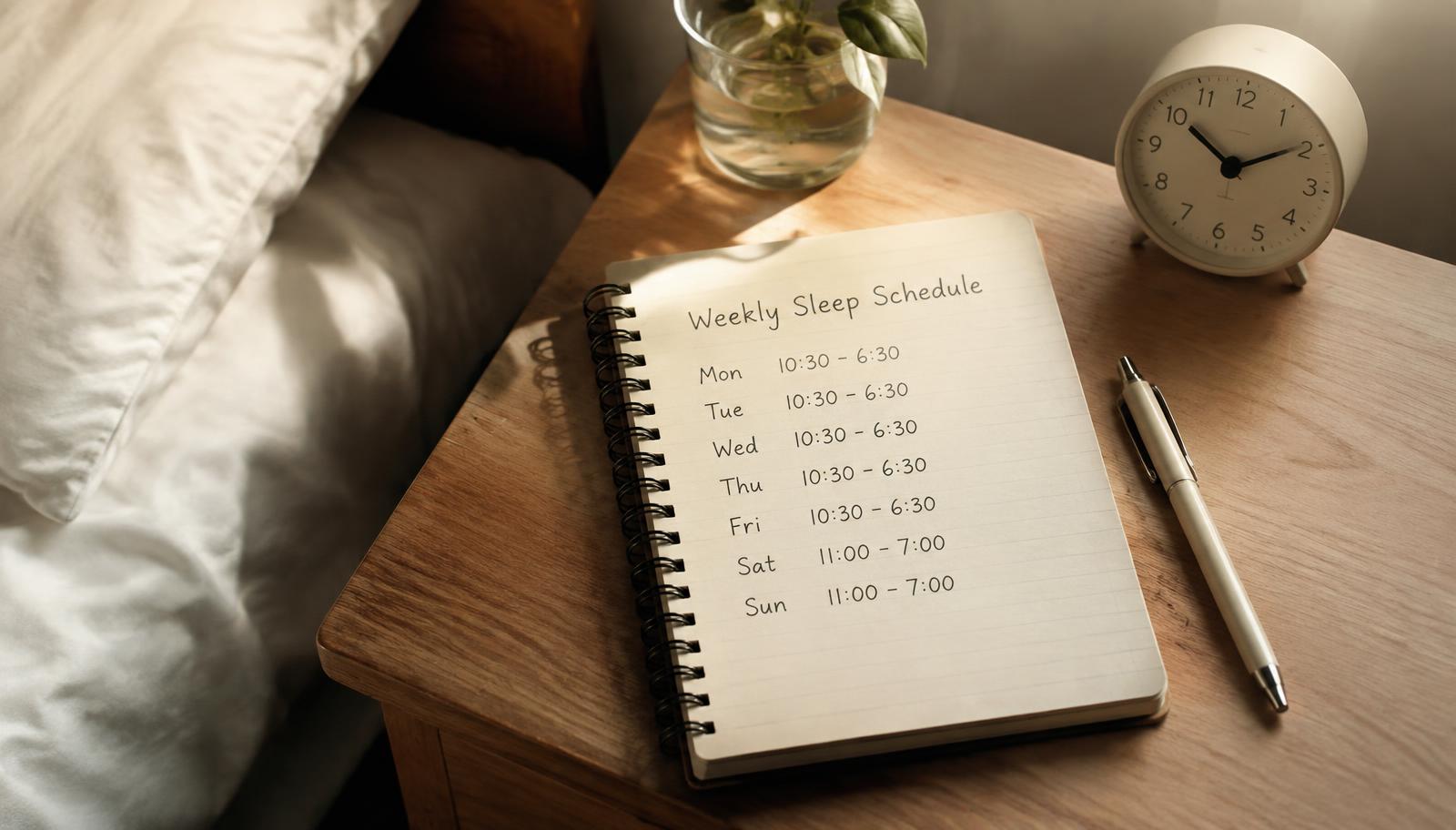
How to build a more consistent sleep schedule
A more consistent sleep schedule is usually best built gradually, anchored around a fixed wake time rather than a fixed bedtime, supported by consistent light exposure. Small, sustainable adjustments over days or weeks tend to work better than sudden changes. The goal is a rhythm the body clock can rely on, not a single perfect night.
6 min readRead the guide →

Better Sleep
Caffeine and sleep: why timing matters
Caffeine blocks a chemical called adenosine that builds up sleep pressure through the day, and it can remain active in the body for many hours after it is drunk. Cutting off caffeine in the early-to-mid afternoon is a sensible default for most people, though individual sensitivity varies considerably and hidden sources are easy to miss.
6 min readRead the guide →

Better Sleep
Alcohol and sleep quality
Alcohol can make falling asleep feel easier because it is sedating, but sedation is not the same as normal, restorative sleep. As the body processes alcohol overnight, sleep tends to become lighter and more fragmented in the second half of the night, which is why a nightcap often leads to earlier or more frequent waking.
6 min readRead the guide →