
Better Sleep
How can you sleep better during menopause?
Menopause can disrupt sleep through night sweats, hot flushes and changes in mood, but poor sleep is not inevitable. A more comfortable sleep environment and manageable daily habits can help, while persistent problems deserve support rather than simply being accepted as part of menopause.
5 min read · Published 23 October 2026

In short
- Sleep can change during perimenopause, before periods stop.
- Night sweats are one possible cause of disturbed sleep, not the only one.
- Adjustable bedding and a comfortable room can make warm nights easier.
- Regular waking times and daytime movement support better sleep.
- Melatonin is not an established treatment for menopausal night sweats.
If sleep has become lighter, more broken or less refreshing around menopause, you are not imagining it. You might wake feeling too warm, struggle to settle after a night sweat, or find yourself wide awake with tomorrow’s jobs running through your mind.
The encouraging news is that disrupted sleep is not something everyone experiences, and it does not have to become your permanent new normal. Understanding what is disturbing the night makes it easier to identify useful changes, without turning bedtime into another demanding project.
Why can menopause affect sleep?
Sleep difficulties can begin during perimenopause, the transition leading up to menopause, when hormone levels fluctuate and periods often become less predictable. They can also continue after menopause. The pattern varies: some people struggle to fall asleep, while others wake repeatedly or earlier than they would like.
Hot flushes and night sweats are a common reason for disturbed nights. A sudden feeling of heat, sweating or damp bedding can wake you or make it harder to settle again. Even a brief awakening may feel more disruptive if you then begin worrying about how tired you will be tomorrow.
Changes in mood, including anxiety and low mood, can also affect sleep during this stage of life. At the same time, work pressures, caring responsibilities, pain and other health concerns may play a part. There is not always one single cause.
That distinction matters. Menopause may be part of the picture, but it should not become an automatic explanation for every sleep problem. Loud snoring, breathing interruptions or marked daytime sleepiness, for example, warrant attention in their own right.
Make warm nights easier to manage
Bedroom changes cannot stop the hormonal changes behind menopausal symptoms. They can, however, make it easier to stay comfortable and deal with a night sweat with less fuss. Think flexible rather than perfect: what feels comfortable at bedtime may feel too warm a few hours later.
- Use bedding in layers that are easy to remove or pull back on.
- Choose nightwear that feels light and comfortable against your skin.
- Keep a spare top or pillowcase nearby if damp fabric often disturbs you.
- Consider ventilation or a fan if it makes the room more comfortable.
- Keep any light needed during the night gentle enough to avoid fully brightening the room.
There is no need to chase a supposedly perfect bedroom temperature. Personal comfort, bedding and whether you share the room all matter. Separate bedcovers can be a practical compromise when one person feels hot and the other prefers more warmth.
Be cautious about products promising to solve menopausal sleep problems through a special fabric or cooling feature. A product may feel pleasant without having strong evidence that it improves sleep. Simple, affordable adjustments are a reasonable starting point.
Support sleep without building a complicated routine
When nights are unpredictable, it is tempting to overhaul everything at once. A few repeatable habits are usually easier to maintain. The aim is to support sleep and reduce unnecessary disruption, not to guarantee an uninterrupted night through perfect behaviour.
A reasonably consistent waking time provides a useful daily anchor. After a difficult night, going to bed much earlier can mean spending longer awake in bed. Allowing sleepiness to guide bedtime, while keeping mornings fairly steady, can help avoid that frustrating pattern.
Regular physical activity can support sleep and general wellbeing. Walking, swimming, dancing or another enjoyable activity all offer ways to build movement into the day. It does not need to be an ambitious fitness programme, and activity need not be judged solely by whether that night’s sleep improves.
Caffeine and alcohol are worth considering too. Caffeine can make settling harder, while alcohol may fragment sleep even when it initially makes you feel drowsy. Looking for patterns between these drinks and disturbed nights can be more useful than assuming they affect everyone in exactly the same way.
A quieter transition into bed can also help. Reading, gentle breathing or putting tomorrow’s tasks on paper may make evenings feel less mentally crowded. These habits do not treat menopausal symptoms, but they can reduce some of the extra stimulation surrounding bedtime.
What role might melatonin have?
Melatonin is a hormone involved in signalling biological night. It helps the body organise sleep timing, which makes it relevant to some sleep difficulties. However, waking because you are hot or uncomfortable is not necessarily a sign that your body lacks melatonin.
Research in people with certain sleep disorders suggests melatonin can offer modest benefits, particularly for the time it takes to fall asleep. That does not establish it as a reliable solution for menopause-related waking, or as a treatment for hot flushes and night sweats.
It is helpful to separate three questions: is sleep happening at an awkward time, is something interrupting it, or has being awake in bed become stressful? These can overlap, but they are not interchangeable. A body-clock approach will not necessarily address discomfort or an underlying sleep disorder.
When is extra support worthwhile?
Sleep difficulties that continue for months, or make everyday life hard to manage, deserve professional attention. The same applies when night sweats or other menopausal symptoms are significantly affecting wellbeing. You do not need to wait until you feel completely exhausted.
A brief record of waking times, night sweats and daytime tiredness can help explain the pattern. It need not be a detailed scoring exercise. Noting whether you woke feeling hot, uncomfortable, worried or unsure may be more useful than repeatedly checking the clock.
For persistent insomnia, cognitive behavioural therapy for insomnia, often called CBT-I, is an evidence-based approach. It works on patterns of thinking and behaviour that can keep sleep problems going. This is more structured than a list of sleep tips, and does not imply that the original symptoms were imagined.
Common questions
Can sleep problems start before periods stop? Yes. Sleep can change during perimenopause, when periods may still occur. Night sweats, mood changes and other symptoms can appear during this transition.
Does everyone sleep badly during menopause? No. Experiences vary considerably. Some people notice little change, while others have substantial disruption. Other health conditions and life circumstances also influence sleep.
Will better sleep habits stop night sweats? Not necessarily. Sleep habits can make nights more manageable, but they do not reliably remove the underlying cause of menopausal symptoms. Continued disruption is a reason to seek support, not evidence that you have failed at your routine.
Sources
Written by Melatonin UK editorial team.
Published 23 October 2026. This article is general information about sleep and the body clock. It is not medical advice, and it does not replace a conversation with your GP or pharmacist.
Read next
Better Sleep
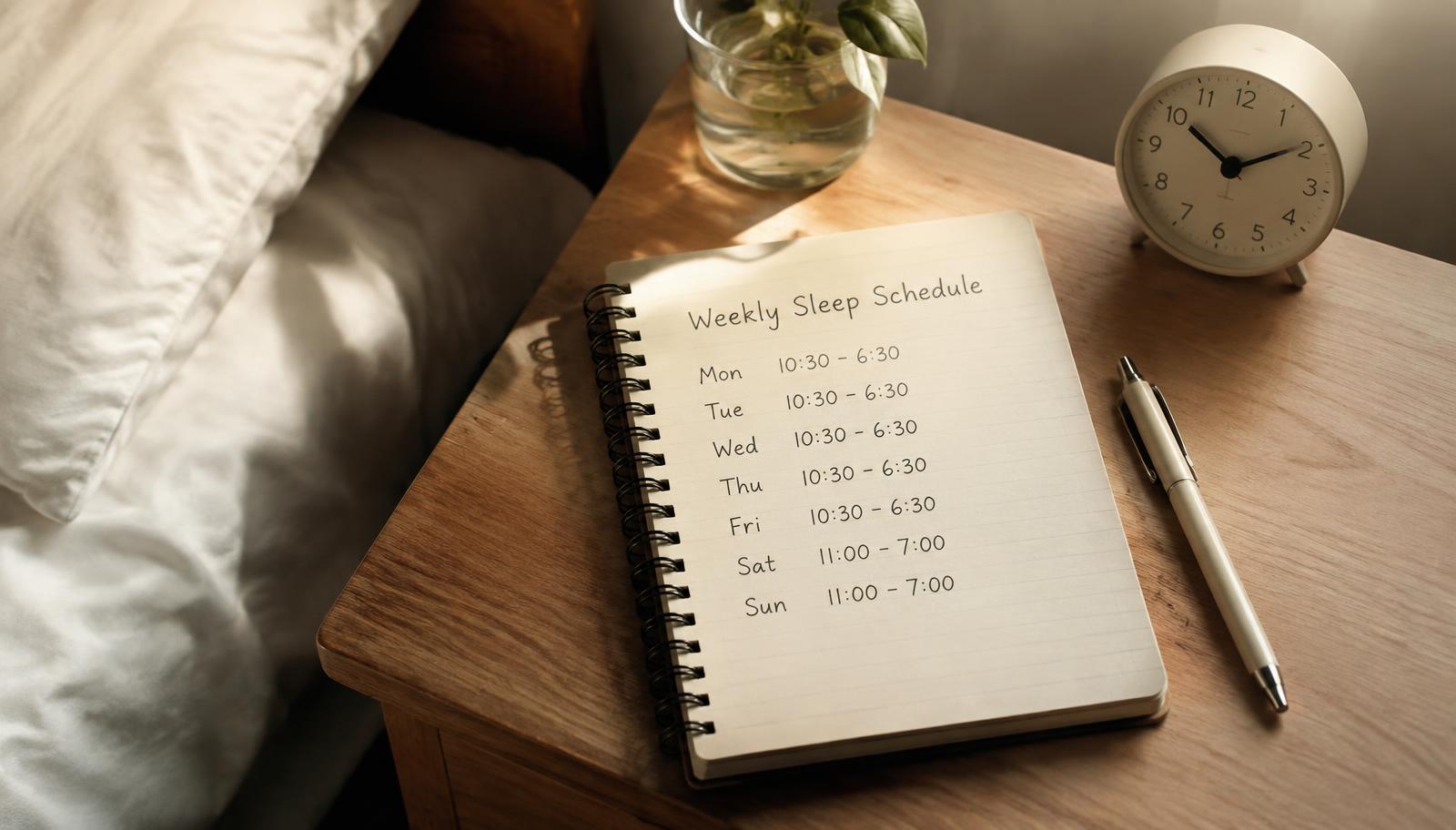
How to build a more consistent sleep schedule
A more consistent sleep schedule is usually best built gradually, anchored around a fixed wake time rather than a fixed bedtime, supported by consistent light exposure. Small, sustainable adjustments over days or weeks tend to work better than sudden changes. The goal is a rhythm the body clock can rely on, not a single perfect night.
6 min readRead the guide →

Better Sleep
Caffeine and sleep: why timing matters
Caffeine blocks a chemical called adenosine that builds up sleep pressure through the day, and it can remain active in the body for many hours after it is drunk. Cutting off caffeine in the early-to-mid afternoon is a sensible default for most people, though individual sensitivity varies considerably and hidden sources are easy to miss.
6 min readRead the guide →

Better Sleep
Alcohol and sleep quality
Alcohol can make falling asleep feel easier because it is sedating, but sedation is not the same as normal, restorative sleep. As the body processes alcohol overnight, sleep tends to become lighter and more fragmented in the second half of the night, which is why a nightcap often leads to earlier or more frequent waking.
6 min readRead the guide →