
Better Sleep
Can you catch up on sleep at the weekend?
Extra sleep at the weekend can ease tiredness after a short night, but it does not reliably undo all the effects of repeatedly missing sleep. The most helpful balance is enough sleep throughout the week, with room for occasional recovery rather than relying on a big weekend reset.
5 min read · Published 1 October 2026

In short
- Catch-up sleep can help you feel more rested after lost sleep.
- Feeling better does not necessarily mean every effect of sleep loss has resolved.
- Large weekend lie-ins can push your sleep timing later.
- Melatonin does not replace sleep or clear a sleep debt.
- Regular opportunities for enough sleep offer a stronger foundation than weekend recovery alone.
A busy working week, a late journey or a few evenings that run on longer than planned can leave sleep squeezed into whatever time remains. By Saturday, a lie-in can feel less like a luxury and more like a necessity. The good news is that recovery sleep has a purpose: extra rest can help after missed sleep. The important distinction is between recovering from an occasional short night and expecting two mornings in bed to make up for a regular shortage.
What is sleep debt?
Sleep debt is a useful name for the gap between the sleep your body needs and the sleep you actually get. It can build after one very short night or several nights that are each a little too short. Most adults need around seven to nine hours, although individual needs vary. Spending that much time in bed does not always mean spending it asleep.
The effects are not limited to yawning. Insufficient sleep can make concentration harder, shorten your patience and leave everyday tasks feeling more demanding. You might notice that reading takes longer, your attention wanders in meetings or small frustrations feel bigger than usual. These are reasons to value sleep as part of everyday wellbeing, not simply downtime.
The word “debt” can make recovery sound like a straightforward calculation. In reality, there is no dependable rule that every missed hour needs exactly one extra hour later. Recovery depends on how much sleep was lost, how long the shortage lasted and the quality of the sleep that follows. A running total can therefore be less useful than noticing whether your usual week leaves you rested.
What can a weekend lie-in actually help with?
After a short night, allowing more time for sleep can reduce sleepiness and help you feel more refreshed. Recovery is not just about spending longer in bed: sleep pressure, the drive to sleep that builds while you are awake, also influences how you sleep. Your body responds to missed rest, although recovery is not an instant reset.
That makes an occasional lie-in understandable rather than something to feel guilty about. If a late event has cut a night short, extra sleep afterwards can be helpful. There is no benefit in treating tiredness as a test of willpower or assuming that an early alarm is always more virtuous than rest.
However, feeling noticeably better is not proof that every effect of sleep loss has disappeared. Different aspects of alertness and performance can recover at different rates. It is especially important not to assume that one long night makes driving safe if you still feel sleepy. The practical aim is genuine recovery, not simply logging an impressive number of hours.
Why can a long lie-in make Sunday night harder?
Sleep is influenced by both sleep pressure and your body clock. Sleep pressure builds during waking hours and falls while you sleep. Your body clock helps organise when you feel alert and when your body is ready for sleep. A weekend spent going to bed and waking much later changes the timing of both.
If you wake at lunchtime on Sunday, fewer waking hours separate getting up from an early Sunday bedtime. You may simply not have built enough sleep pressure to feel ready for bed. Later light exposure and later daily routines can also encourage a later body-clock pattern, making Monday's early start feel more abrupt.
A mismatch between workday and free-day sleep timing is sometimes called “social jet lag”. It does not involve travelling, but it can feel like switching between two schedules. This does not mean every lie-in is harmful. The useful distinction is between allowing some recovery and repeatedly moving your whole sleep window several hours backwards and forwards.
What is a more helpful approach to catching up?
A sustainable approach makes space for recovery without turning the weekend into a completely different time zone. There is no single perfect amount of extra sleep for everyone. A few general principles can help keep the focus on rest rather than rigid rules:
- Look at the whole week. If almost every weekday feels too short on sleep, the underlying issue is the weekday sleep opportunity, not the quality of the weekend lie-in.
- Keep weekend timing reasonably close to your usual pattern where possible. Consistency need not mean an identical alarm every day.
- Make room for sleep before exhaustion builds. Protecting evening downtime can reduce the temptation to squeeze essential relaxation into the hours meant for sleep.
- Treat naps as a supplement, not a replacement for night-time sleep. Long or late naps can make it harder to feel sleepy at bedtime.
- Allow recovery to take more than one night. Returning to adequate, regular sleep is more useful than trying to force one marathon sleep.
Work, caring responsibilities and social commitments can make this difficult. The goal is not perfect sleep or giving up every late evening. It is to make adequate rest the usual pattern, with enough flexibility for real life.
Can melatonin help you catch up on lost sleep?
Melatonin is a hormone involved in signalling biological night. It is not a substitute for sleep, and taking melatonin does not clear a sleep debt. It cannot make a short night provide all the benefits of an adequate one. That distinction matters when looking for a way to feel better after a busy week.
Research suggests melatonin can help with certain sleep-timing difficulties, including jet lag. Evidence for benefits in some other sleep problems is more limited, and any benefit depends on the situation being studied. Those findings should not be stretched into a claim that melatonin repairs the effects of routinely missing sleep.
For weekend catch-up, the key distinction is between not having enough time to sleep and having difficulty sleeping despite enough opportunity. They can feel similar during the day, but they are not the same problem. Persistent tiredness despite adequate sleep, or ongoing difficulty sleeping, deserves assessment rather than an assumption that another lie-in will solve it.
Common questions
Is sleeping in at the weekend bad? Not automatically. Extra sleep after an occasional short night can be useful. The potential drawback is a large, repeated shift in timing that makes returning to your weekday schedule harder.
How many nights does it take to recover? There is no universal number. One short night and weeks of restricted sleep are different situations. Feeling better can happen before every effect on alertness has fully resolved.
Can I catch up without sleeping very late? Recovery does not have to mean one huge lie-in. Several nights with enough opportunity for sleep may fit everyday life better, without moving wake-up time so far.
What if I need a long lie-in every weekend? It is a useful signal to review whether weekday sleep is sufficient. If tiredness continues despite enough sleep, a healthcare professional can help explore possible causes.
Sources
Written by Melatonin UK editorial team.
Published 1 October 2026. This article is general information about sleep and the body clock. It is not medical advice, and it does not replace a conversation with your GP or pharmacist.
Read next
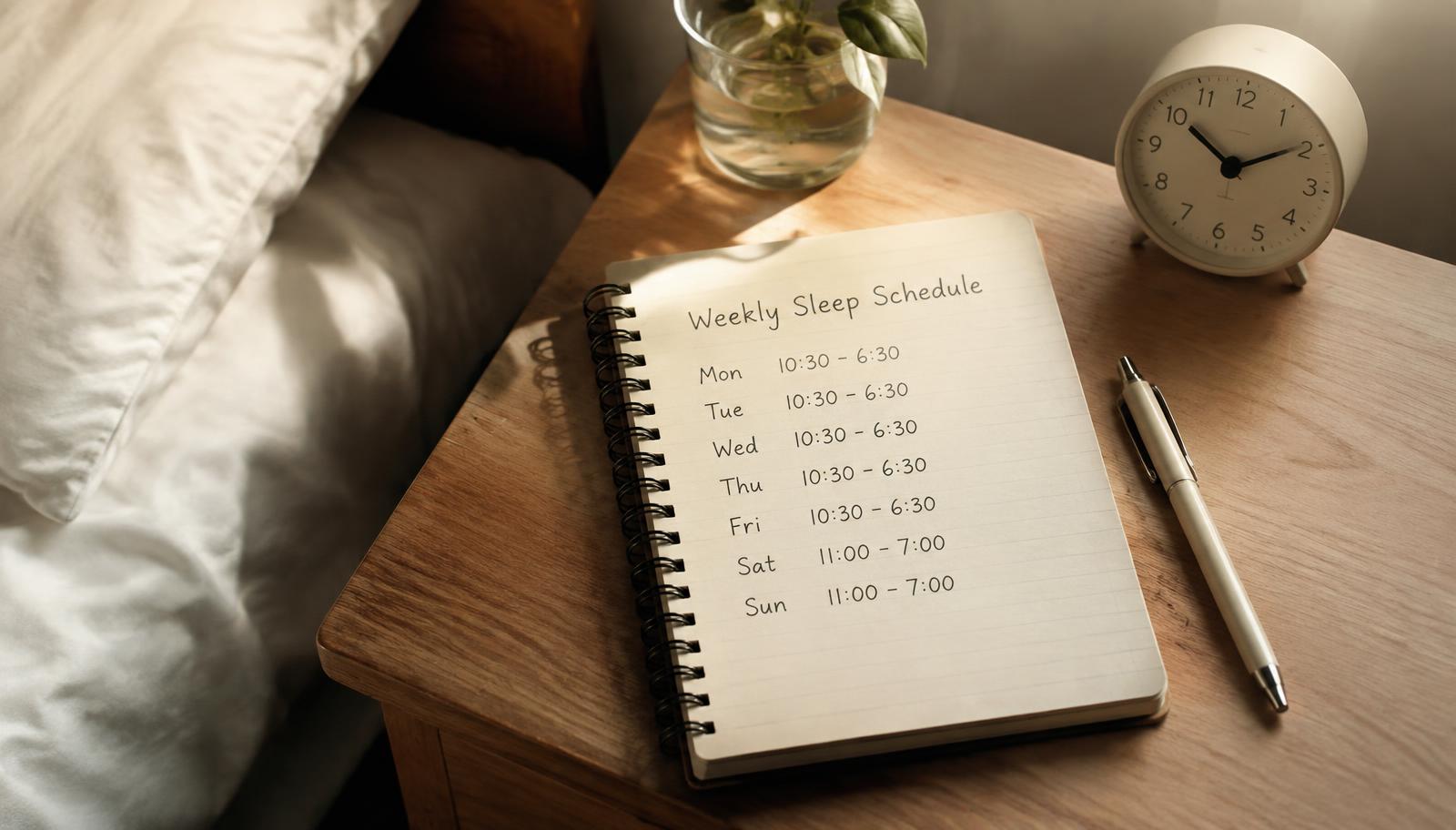
Better Sleep
How to build a more consistent sleep schedule
A more consistent sleep schedule is usually best built gradually, anchored around a fixed wake time rather than a fixed bedtime, supported by consistent light exposure. Small, sustainable adjustments over days or weeks tend to work better than sudden changes. The goal is a rhythm the body clock can rely on, not a single perfect night.
6 min readRead the guide →

Better Sleep
Caffeine and sleep: why timing matters
Caffeine blocks a chemical called adenosine that builds up sleep pressure through the day, and it can remain active in the body for many hours after it is drunk. Cutting off caffeine in the early-to-mid afternoon is a sensible default for most people, though individual sensitivity varies considerably and hidden sources are easy to miss.
6 min readRead the guide →

Better Sleep
Alcohol and sleep quality
Alcohol can make falling asleep feel easier because it is sedating, but sedation is not the same as normal, restorative sleep. As the body processes alcohol overnight, sleep tends to become lighter and more fragmented in the second half of the night, which is why a nightcap often leads to earlier or more frequent waking.
6 min readRead the guide →