
Better Sleep
Can reading before bed help you sleep?
Reading before bed can help you unwind, especially if it replaces work, scrolling or other stimulating activities. It is a useful relaxation option rather than a guaranteed sleep aid, and works best when your book and reading set-up leave you feeling calmer rather than more alert.
5 min read · Published 18 November 2026
In short
- The NHS includes reading among activities that can help you relax before bed.
- Choose something enjoyable that feels easy to put down.
- Use enough light to read comfortably without making the whole room brightly lit.
- Paper books, e-readers and audiobooks each have practical advantages.
- Reading supports winding down; it is not known to directly increase melatonin.
A few pages of a good book can offer a welcome change of pace at the end of the day. Instead of answering messages or planning tomorrow, you have one thing to focus on, with no need to respond. For some people, that makes reading a comfortable bridge between being busy and feeling ready for bed.
The useful distinction is between reading to relax and reading to make yourself fall asleep. The first can be enjoyable and sustainable. The second can turn another pleasant activity into a sleep test. Here is how to get the practical benefits without putting pressure on yourself.
Why reading can make winding down easier
The NHS includes reading a book among its suggestions for relaxing before bed. That supports treating it as a sensible wind-down option, but it does not mean every book will help everyone sleep, or that reading alone treats insomnia. Its main practical value is giving you a quiet, absorbing activity before you try to sleep.
Reading may also provide a break from activities that keep you mentally switched on. A novel asks something different of you from a work inbox, a running news feed or an awkward conversation. If your usual evening ends with those demands, swapping some of that time for a book may make the transition towards bedtime feel gentler.
Enjoyment matters. You do not need to read a particular genre, finish a chapter or achieve a daily target. If reading feels like homework, another quiet activity may suit you better. The aim is a calmer end to the day, not becoming a more productive reader.
What makes a good bedtime book?
There is no established best genre for sleep. Your response matters more than the label on the cover. A crime novel might be relaxing for one reader and impossible to put down for another. Equally, a supposedly soothing book is unlikely to help you unwind if you find it frustrating or dull.
A useful starting point is something interesting enough to hold your attention but not so gripping that you keep extending bedtime. Familiar books can be convenient because there is less urgency to discover what happens next. Short chapters, essays or gentle poetry can also offer natural stopping places.
- Try a familiar favourite if suspense tends to keep you reading.
- Choose shorter sections if you find it difficult to stop halfway through a chapter.
- Save demanding study or work-related reading for another time if it leaves you mentally busy.
- Switch books if the content feels upsetting or makes you more alert.
These are practical preferences, not proven rankings of bedtime reading material. You can judge a choice by a simple question: do you usually feel more settled afterwards, or more eager to stay awake?
How to keep bedtime reading sleep-friendly
Give reading a place in the evening without letting it take over the night. There is no universal number of pages or minutes that produces better sleep. A small, comfortable stretch of reading is enough to try; you do not need to wait until a book falls from your hands.
A comfortable chair outside the bed can be a helpful setting, especially if reading in bed tends to become a long session. When you feel sleepy, bookmark your place and move towards sleep. There is no prize for reaching the end of a chapter.
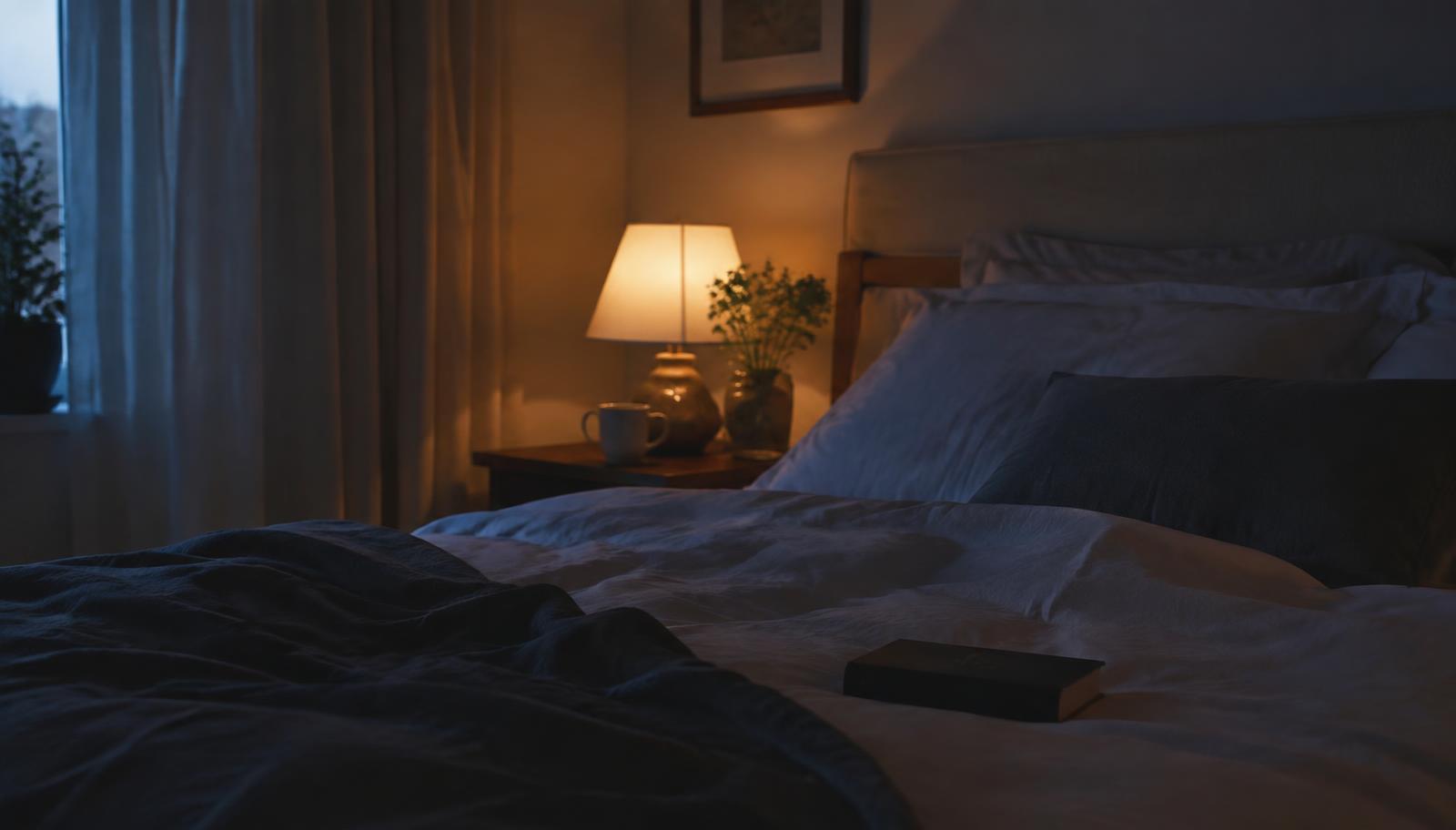
Keep the lighting practical. You need enough light to see the page comfortably, so struggling to read in near-darkness is not the goal. A local reading lamp can light the book without brightly illuminating the whole room. Position it to avoid glare and choose a comfortable posture rather than holding yourself awkwardly.
If reading regularly delays bedtime, try moving it earlier rather than abandoning it. That preserves the pleasure of the activity while leaving room for sleep. Notice the overall pattern rather than judging the habit after one unusually good or bad night.
Paper, e-reader or audiobook?
A paper book is a straightforward option because it has no notifications or built-in light. Its main practical needs are a comfortable reading position and a suitable lamp. It can also create a useful boundary between reading and the messages or apps on your phone.
An e-reader may be easier to hold and can offer adjustable text size. Devices differ: a non-illuminated screen is not the same as a brightly lit tablet. If your device has lighting, keep it comfortable rather than unnecessarily bright. Do not assume a warmer display setting makes evening light irrelevant.
An audiobook offers a way to enjoy a story without looking at a page. A sleep timer can prevent it continuing all night, while a comfortable volume avoids making listening feel intrusive. However, an exciting plot can still keep your attention engaged. None of these formats is a guaranteed sleep aid; choose the one that makes relaxing easiest.
Where does melatonin fit in?
Melatonin is a hormone involved in signalling night-time to the body. Reading does not act in the same way, and there is not good evidence that the act of reading directly boosts melatonin. It is better understood as a possible relaxation habit than as a way to change hormone levels.
That distinction is helpful: a book can make your evening feel calmer without needing a biological shortcut to explain its value. The surrounding light and your sleep timing still matter. Reading under bright lighting or continuing far beyond your usual bedtime does not become sleep-friendly simply because you are enjoying a book.
Common questions
Is it bad to read in bed? Not necessarily, but lengthy awake periods in bed can be unhelpful when sleep is already difficult. A chair elsewhere gives you a separate place to enjoy reading before going to bed when sleepy.
Should I choose a boring book? There is no need. Something pleasant and easy to put down is a more useful aim. Boredom is not a requirement for relaxation, and forcing yourself through an unwanted book can feel like another obligation.
What if reading does not help? It is optional, not a test you have failed. Another quiet activity may suit you better. If sleep problems continue for months or affect everyday life, seek professional support rather than relying on bedtime reading alone.
Sources
Written by Melatonin UK editorial team.
Published 18 November 2026. This article is general information about sleep and the body clock. It is not medical advice, and it does not replace a conversation with your GP or pharmacist.
Read next
Better Sleep
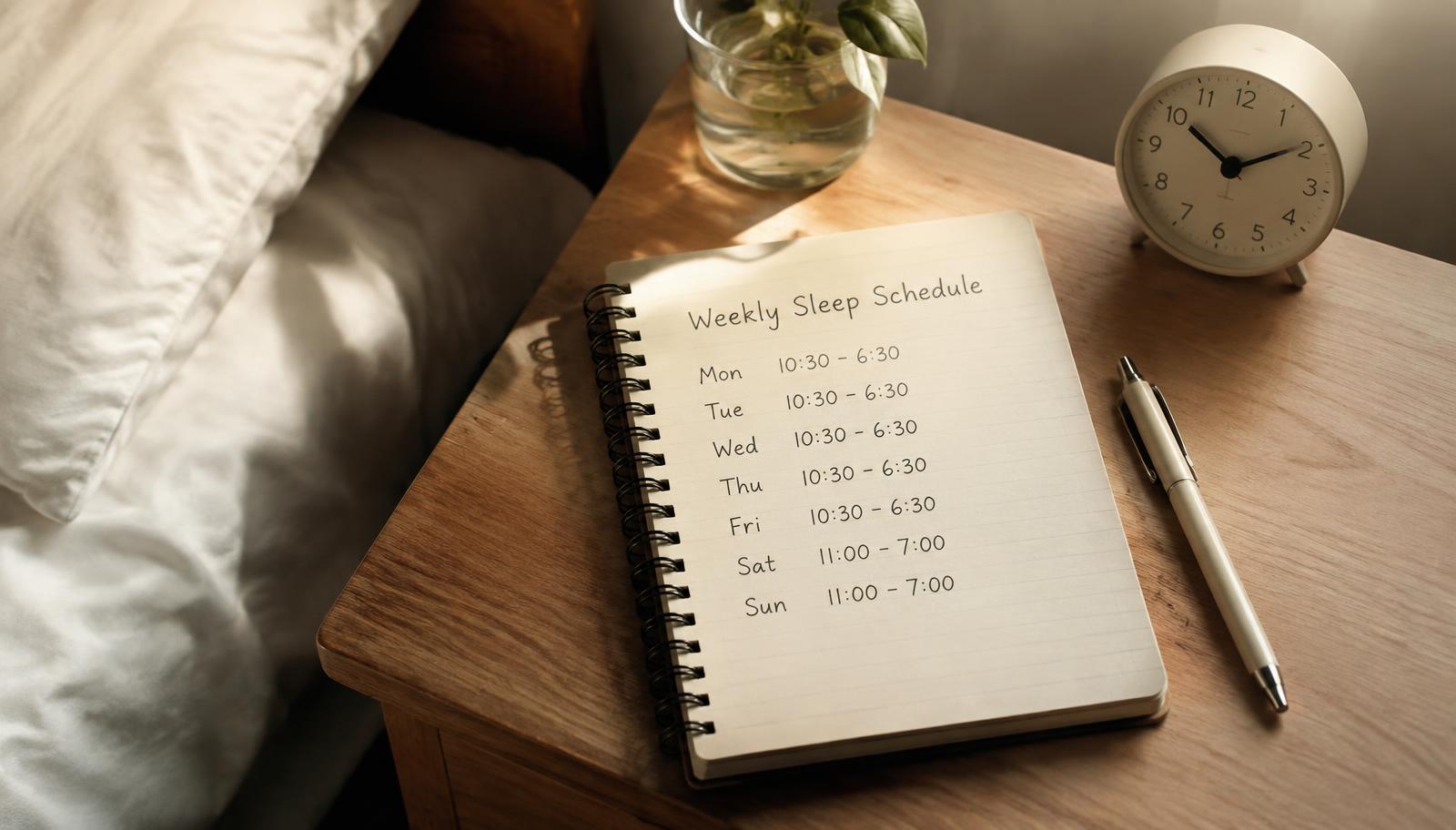
How to build a more consistent sleep schedule
A more consistent sleep schedule is usually best built gradually, anchored around a fixed wake time rather than a fixed bedtime, supported by consistent light exposure. Small, sustainable adjustments over days or weeks tend to work better than sudden changes. The goal is a rhythm the body clock can rely on, not a single perfect night.
6 min readRead the guide →

Better Sleep
Caffeine and sleep: why timing matters
Caffeine blocks a chemical called adenosine that builds up sleep pressure through the day, and it can remain active in the body for many hours after it is drunk. Cutting off caffeine in the early-to-mid afternoon is a sensible default for most people, though individual sensitivity varies considerably and hidden sources are easy to miss.
6 min readRead the guide →

Better Sleep
Alcohol and sleep quality
Alcohol can make falling asleep feel easier because it is sedating, but sedation is not the same as normal, restorative sleep. As the body processes alcohol overnight, sleep tends to become lighter and more fragmented in the second half of the night, which is why a nightcap often leads to earlier or more frequent waking.
6 min readRead the guide →