
Better Sleep
Can listening to music before bed help you sleep?
Listening to music before bed may help you relax and feel more settled, and research suggests it can improve people's impressions of their sleep. It is best treated as an optional wind-down tool, rather than a guaranteed way to fall asleep or a treatment for an underlying sleep problem.
5 min read · Published 23 November 2026

In short
- Relaxing music may make the transition from a busy day to bedtime easier.
- Evidence is more encouraging for perceived sleep quality than for reliably changing sleep measurements.
- Comfortable, familiar music is a sensible starting point; there is no proven perfect playlist.
- Keep the volume low and avoid playlists with sudden changes or interruptions.
- Silence is equally valid if music keeps your mind busy.
A familiar song can change the feel of an evening. When the day has been noisy, demanding or simply busy, gentle music may offer a welcome bridge between being on the go and getting ready for bed. It is an accessible option that does not require learning a technique or buying special equipment.
But can it actually help you sleep? The answer is encouraging, with some limits. Music may support relaxation and improve how restful sleep feels, but it does not work like an off switch. The most useful approach is to choose audio you enjoy and let it support bedtime without turning sleep into another task.
Why might music help you wind down?
Bedtime is often the first quiet moment of the day. Without work, conversation or other distractions, unfinished tasks and tomorrow's plans can suddenly feel louder. Music gives your attention somewhere gentle to rest. For some people, that makes it easier to step away from mentally rehearsing the day.
Your response matters more than a track's label. Something marketed as relaxing might irritate you, while a familiar piece may feel comforting. Music that leaves you calmer is more useful at bedtime than music you feel you ought to like.
A regular listening habit can also become part of a recognisable wind-down sequence: finishing everyday tasks, lowering the lights and switching to quieter activities. Music is one possible ingredient in that routine, not a requirement. The aim is to make the evening feel less demanding, rather than to force sleep to happen.
What does the evidence actually suggest?
Research in adults suggests that listening to music may improve self-reported sleep quality. In plain language, people may say they slept better after using music at bedtime. That is a worthwhile outcome, but it is different from demonstrating that music consistently increases sleep time or changes sleep stages.
Sleep research can use questionnaires, sleep diaries and equipment that records sleep. These measures do not always tell the same story. Evidence about music is more encouraging for people's ratings of their sleep than for clear, reliable changes in objectively measured sleep.
Studies also differ in the music used, the listening routine and the people taking part. That makes it difficult to name a best genre or promise a particular result. Claims that one track will send everyone to sleep within minutes go beyond what the evidence can support.
What kind of music is worth trying?
There is no universally effective bedtime playlist. A practical starting point is music that feels gentle, predictable and emotionally comfortable to you. Consider how it affects your attention: does it let your thoughts settle, or make you want to sing along, analyse the lyrics or hear the next track?
- Try familiar tracks if discovering new music tends to keep you interested and alert.
- Consider instrumental music if lyrics draw you into a story or encourage singing along.
- Look for fairly even volume, without startling introductions or dramatic changes.
- Skip music linked with upsetting memories, even if its pace is slow.
- Choose something you genuinely enjoy rather than enduring a supposedly perfect sleep soundtrack.
Slow music is often suggested for bedtime, but a precise tempo is not a proven recipe for better sleep. Classical, acoustic, ambient and other styles can all be reasonable options if they feel soothing. Personal preference is part of the decision, not a distraction from it.
Be cautious about recordings advertised as having special sleep frequencies or guaranteed effects on melatonin. There is not strong evidence that a particular musical frequency reliably boosts melatonin or resets the body clock. Ordinary music does not need an impressive-sounding label to be enjoyable.
How can you make bedtime listening simple?
Set things up before you are ready to settle down. Choosing a short playlist in advance avoids endless browsing, and disabling unnecessary notifications reduces interruptions. If you use a phone, you can start the audio and put the screen away rather than keeping it in your hand.
Keep the sound quiet and comfortable. Music should not need to overpower the room or block every outside noise. A bedside speaker may be more comfortable than headphones when lying down, although the best arrangement will depend on your surroundings and whether someone else shares the space.
A sleep timer can stop playback automatically, so you do not have to decide when to turn it off. There is no established listening duration that suits everyone. Music can accompany a quiet activity before bed, or play briefly while you settle; it does not have to continue all night.
Judge the experience gently over several evenings. You might simply notice whether bedtime feels calmer and whether the sound is welcome. Avoid repeatedly checking the clock or treating each night as an experiment you must pass.
When might music be less helpful?
Some people find any sound distracting. Others get a tune stuck in their head, become absorbed in choosing tracks or feel frustrated when a playlist fails to make them sleepy. In those situations, switching it off is a perfectly good outcome. Silence is not a less effective choice simply because it involves doing less.
Music also has limits. It cannot replace enough time for sleep, remove the effects of a demanding schedule or resolve every reason for disrupted nights. If sleep difficulties persist or affect daily life, seeking professional advice is more useful than continually searching for a better soundtrack.
Common questions
Is it better to listen before bed or while falling asleep? Either can fit a wind-down routine. Listening beforehand may suit you if sound becomes distracting once you lie down. There is no need to keep music playing until you are asleep.
Should music play all night? It does not need to. Overnight playback may disturb you or a partner, particularly if tracks change in volume. A timer is a straightforward option when you only want music for settling down.
Are rain sounds or white noise the same as music? No. They are different forms of background audio, with different evidence behind them. Neither is automatically better. Comfort, preference and whether the sound interrupts sleep are useful considerations.
What if music does nothing for me? That is fine. It is an optional comfort, not an essential sleep habit. The best bedtime soundtrack may be a favourite gentle playlist, a few quiet minutes or no sound at all.
Sources
Written by Melatonin UK editorial team.
Published 23 November 2026. This article is general information about sleep and the body clock. It is not medical advice, and it does not replace a conversation with your GP or pharmacist.
Read next
Better Sleep
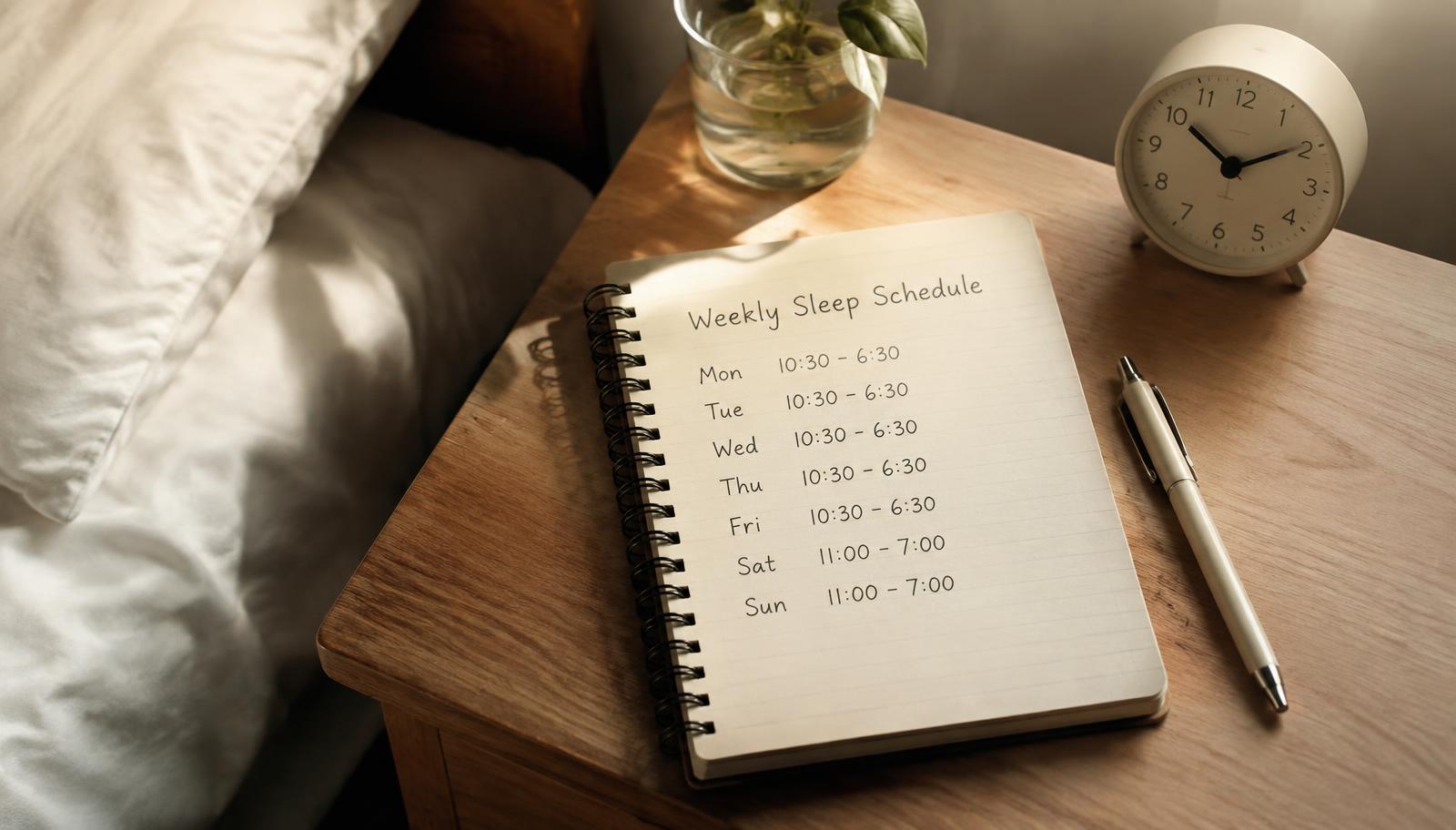
How to build a more consistent sleep schedule
A more consistent sleep schedule is usually best built gradually, anchored around a fixed wake time rather than a fixed bedtime, supported by consistent light exposure. Small, sustainable adjustments over days or weeks tend to work better than sudden changes. The goal is a rhythm the body clock can rely on, not a single perfect night.
6 min readRead the guide →

Better Sleep
Caffeine and sleep: why timing matters
Caffeine blocks a chemical called adenosine that builds up sleep pressure through the day, and it can remain active in the body for many hours after it is drunk. Cutting off caffeine in the early-to-mid afternoon is a sensible default for most people, though individual sensitivity varies considerably and hidden sources are easy to miss.
6 min readRead the guide →

Better Sleep
Alcohol and sleep quality
Alcohol can make falling asleep feel easier because it is sedating, but sedation is not the same as normal, restorative sleep. As the body processes alcohol overnight, sleep tends to become lighter and more fragmented in the second half of the night, which is why a nightcap often leads to earlier or more frequent waking.
6 min readRead the guide →