Better Sleep
Can eating before bed affect your sleep?
Eating before bed can affect sleep, particularly if a large meal leaves you feeling uncomfortable, but going to bed hungry is not necessarily helpful either. A comfortable balance matters more than finding a special sleep food, and foods containing melatonin are not proven substitutes for established sleep habits.
5 min read · Published 6 November 2026
In short
- Large meals close to bedtime can make settling down less comfortable.
- A small snack may be a practical option when hunger is distracting.
- No single food is a reliable treatment for sleep difficulties.
- Melatonin in food does not guarantee a meaningful sleep benefit.
- Flexible meal habits are more useful than strict bedtime food rules.
Perhaps dinner ran late, or perhaps you ate early and now your stomach is rumbling just as you are getting ready for bed. Advice about eating at night can sound contradictory: avoid food, have a snack, try a particular fruit, or finish everything by a fixed hour. It is easy for an ordinary evening meal to become another thing to worry about.
The reassuring answer is that there is no universal bedtime food rule. What you eat, how much you eat and whether you feel comfortable afterwards can all matter. The most useful goal is to arrive at bedtime neither unpleasantly full nor distracted by hunger, without expecting any food to act as a sleeping tablet.
Why can a late meal make sleep less comfortable?
Eating late does not automatically mean you will sleep badly. However, a large meal shortly before bed can leave you feeling full, bloated or uncomfortable when you lie down. NHS sleep advice includes avoiding big meals late at night. This is a practical comfort measure, rather than a claim that digestion switches sleep off.
Heartburn can also get in the way of settling down. Lying down after eating may make reflux symptoms more noticeable, and rich or spicy meals can be troublesome for some people. The important distinction is between a food being universally bad for sleep and a food causing discomfort that makes sleeping harder.
Individual responses vary. One person may feel fine after a later dinner, while another finds the same meal uncomfortable. An occasional late meal is not a reason to assume the night is ruined. Looking for a repeated pattern is more helpful than blaming one restless night on whatever happened to be on your plate.
Is it better to have a snack or go to bed hungry?
Avoiding a heavy meal does not mean that all evening food is off limits. Hunger can feel distracting when everything else becomes quiet. If dinner was early or unusually small, a modest snack can be a reasonable way to feel more comfortable. That is different from eating because you believe a particular snack will force sleep to happen.
Simple, familiar foods are often the easiest options. A small bowl of porridge, some plain yoghurt or a piece of toast may suit an evening appetite. These are examples of ordinary snacks, not scientifically established sleep remedies. Personal preferences, dietary needs and how comfortably a food sits matter more than its reputation online.
- Keep the distinction between a light snack and another substantial meal.
- Choose something familiar rather than experimenting with a supposed sleep superfood.
- Notice whether the snack leaves you comfortable, still hungry or overly full.
- There is no need to add a bedtime snack if you are not hungry.
A snack is not a requirement for good sleep, and skipping one is not an achievement. A flexible approach makes room for evenings when dinner was filling and evenings when a little extra food is welcome.
Do foods containing melatonin help you sleep?
Melatonin is a hormone involved in signalling biological night to the body. It is also found in some foods, which helps explain the interest in products such as tart cherry juice and in lists of foods described as natural sleep aids. But finding melatonin in a food is not the same as showing that eating it reliably improves sleep.
Several questions sit between those two claims: how much melatonin the food contains, how much is absorbed, and whether that produces a meaningful effect in people. Food composition also varies. It would therefore be misleading to treat a serving of fruit or a glass of juice as equivalent to a melatonin product.
The same caution applies to foods containing tryptophan, an amino acid the body uses in pathways involved in making serotonin and melatonin. This biological role does not prove that a tryptophan-containing snack will make someone fall asleep faster. The body’s sleep systems are more complicated than topping up one ingredient.
What about warm milk, chocolate and evening drinks?
A warm, caffeine-free drink can be a pleasant part of winding down. For some people, warm milk is familiar and comforting. That does not establish it as a treatment for insomnia, but an enjoyable ritual does not need a dramatic biological explanation to earn a place in your evening.
It is worth remembering that caffeine is not limited to coffee. Tea, cola, energy drinks and chocolate can also contribute. Amounts vary, and people differ in sensitivity. A chocolate-based drink is therefore not necessarily caffeine-free simply because it is marketed or thought of as a bedtime drink.
Alcohol is another example of why feeling sleepy and sleeping well are not identical. Although it may initially feel relaxing, it can disturb sleep later. Neither alcohol nor a large, rich drink is needed to round off dinner. An ordinary caffeine-free option can keep the evening simpler, if you fancy one.
How can meal timing fit around real life?
There is no single evening cut-off that suits every adult. Someone who goes to bed early has a different evening from someone whose work finishes late. Rather than treating a particular clock time as a deadline, consider the gap between your main meal and lying down, alongside how you actually feel.
Where practical, leaving room between a substantial dinner and bedtime may help avoid that uncomfortably full feeling. On busy evenings, a less heavy late meal may be easier to manage than a very large one. The aim is comfort and adequate nourishment, not skipping meals to satisfy a rigid sleep rule.
If you notice a possible food-and-sleep pattern, keep the observation simple: what you ate, roughly when, and whether hunger or digestive discomfort bothered you. One night cannot establish cause and effect. Persistent heartburn or ongoing sleep difficulties deserve attention in their own right rather than an increasingly restrictive list of forbidden foods.
Common questions
Is eating after 8 pm bad for sleep? Not automatically. A fixed time ignores differences in bedtimes, work patterns and meal sizes. Whether a meal leaves you uncomfortable near bedtime is more useful than the clock alone.
Will a banana make me sleepy? A banana can be an ordinary, convenient snack, but it should not be presented as a reliable sleep aid. Its nutrients do not guarantee an immediate effect on sleep.
Should I eat before bed if I am not hungry? There is no general sleep-related reason to add food when you already feel comfortable. Bedtime snacks are optional, not an essential part of a good routine.
What is the best bedtime food? There is no established winner. A small, familiar snack that suits your needs may help with hunger, while avoiding an overly heavy meal may help with comfort. Neither needs to become a complicated nightly ritual.
Sources
Written by Melatonin UK editorial team.
Published 6 November 2026. This article is general information about sleep and the body clock. It is not medical advice, and it does not replace a conversation with your GP or pharmacist.
Read next
Better Sleep
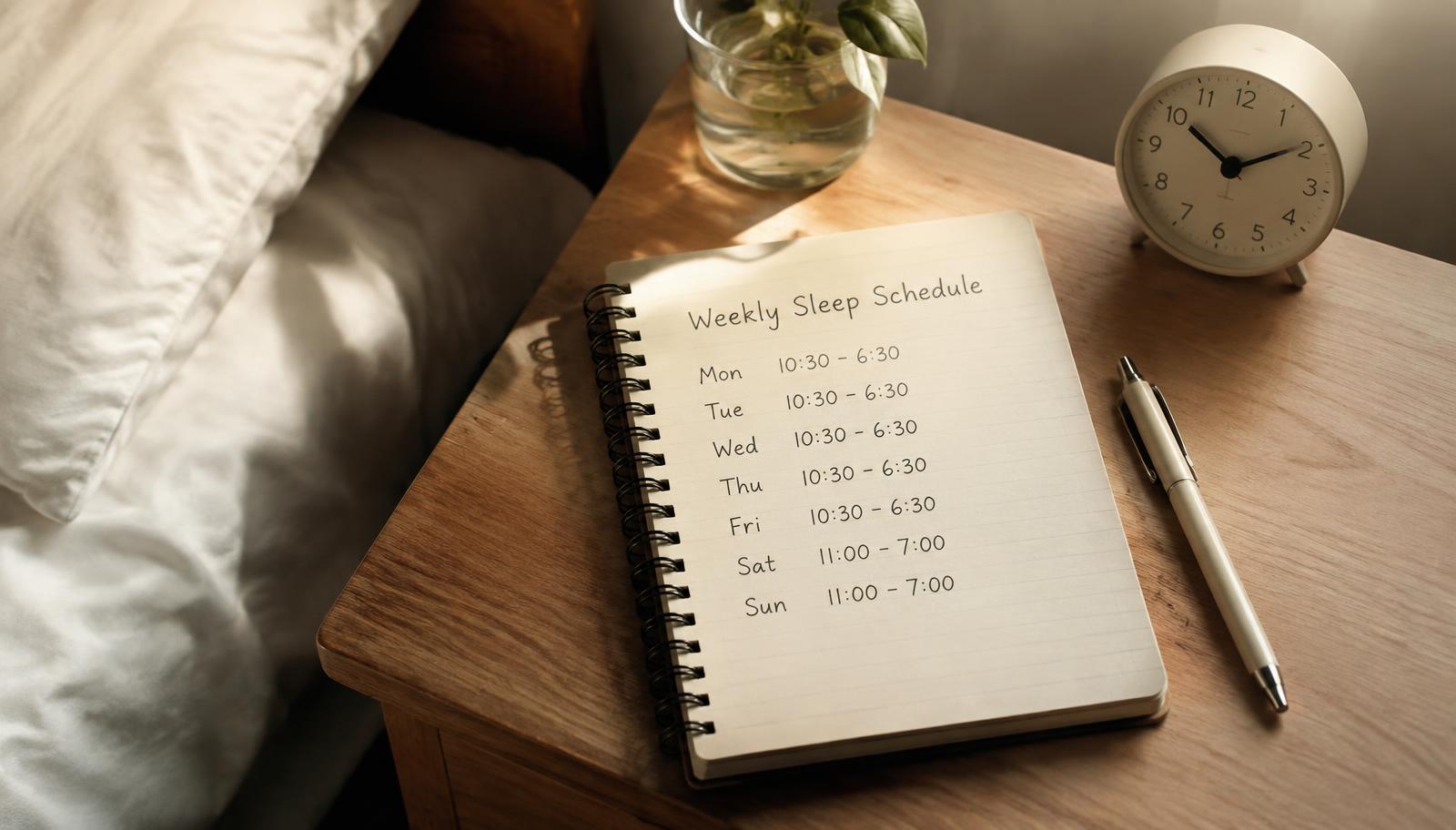
How to build a more consistent sleep schedule
A more consistent sleep schedule is usually best built gradually, anchored around a fixed wake time rather than a fixed bedtime, supported by consistent light exposure. Small, sustainable adjustments over days or weeks tend to work better than sudden changes. The goal is a rhythm the body clock can rely on, not a single perfect night.
6 min readRead the guide →
Better Sleep
Caffeine and sleep: why timing matters
Caffeine blocks a chemical called adenosine that builds up sleep pressure through the day, and it can remain active in the body for many hours after it is drunk. Cutting off caffeine in the early-to-mid afternoon is a sensible default for most people, though individual sensitivity varies considerably and hidden sources are easy to miss.
6 min readRead the guide →

Better Sleep
Alcohol and sleep quality
Alcohol can make falling asleep feel easier because it is sedating, but sedation is not the same as normal, restorative sleep. As the body processes alcohol overnight, sleep tends to become lighter and more fragmented in the second half of the night, which is why a nightcap often leads to earlier or more frequent waking.
6 min readRead the guide →